
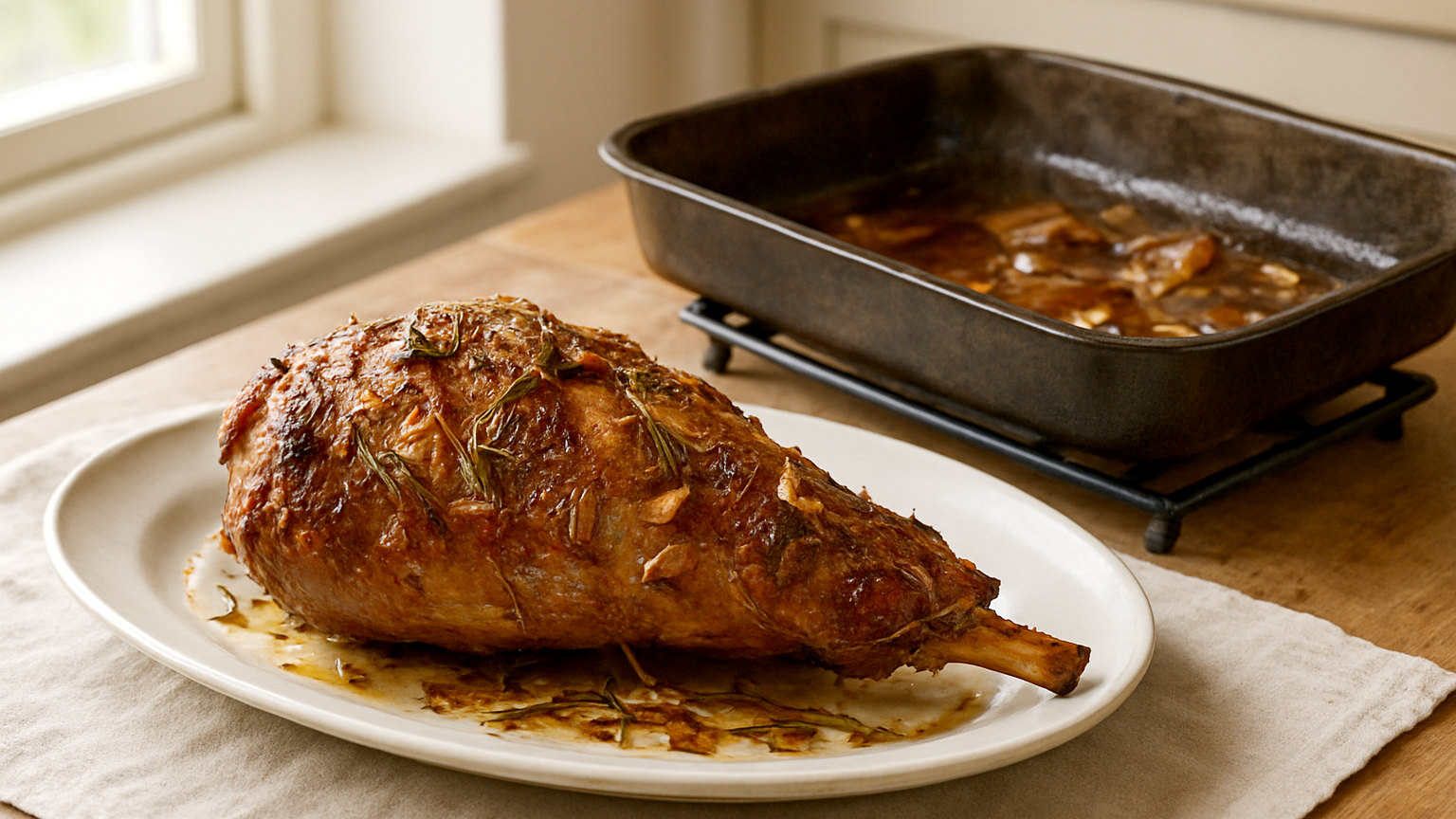
Tough lamb and dry lamb sound like the same complaint and they are usually opposite mistakes. Tough generally means a cut full of connective tissue was not given enough time. Dry means a lean cut was given too much. Working out which one you have had tells you exactly what to change, and the two fixes point in opposite directions.
Was it the wrong cut for the method?
Shoulder, breast, neck and shank are all full of collagen and stay chewy until they have spent hours above 70C. Roasted for ninety minutes they will be tough no matter how carefully you watch the temperature.
Leg, rack, rump and loin are the opposite. They have little collagen and nothing to gain from long cooking, so hours in the oven only dry them out.
Was it simply overcooked?
Past about 68C a lean joint has squeezed out most of its moisture. The meat will not be chewy in a stringy way, but it will be dry and slightly crumbly, and gravy is the only thing that helps.
A digital probe removes this problem permanently. On a leg, the difference between pink and grey is roughly fifteen minutes, which is easily lost to an oven that runs hot or a joint that came out of the fridge late.
Did it rest long enough?
A joint carved straight from the oven loses its juices onto the board rather than keeping them in the meat. Thirty minutes for a leg and twenty for anything smaller.
The lamb will still be hot. Warm the plates and pour hot gravy over the slices, and nobody will notice the wait.
Was it carved the wrong way?
Lamb has a clear grain, and cutting along it leaves long fibres intact in the slice. Find the direction the fibres run and cut across them.
Thickness matters too. Lean lamb carved thickly feels chewy even when perfectly cooked, so keep the slices thin and the knife sharp.
Did the joint go in cold?
A joint straight from the fridge forces the outside to stay in the heat for longer while the middle catches up, which widens the band of overdone meat under the surface.
Ninety minutes on the worktop for a large leg makes a genuine difference, and it costs nothing but planning.
Was the oven too hot throughout?
High heat for the first twenty minutes builds the crust, and it is unhelpful after that. A joint held at 220C fan for its whole cooking time browns beautifully and dries out underneath.
Drop to 180C fan once the fat has coloured, or 140C fan if you are slow roasting a shoulder.
Was the joint too lean to start with?
Some supermarket legs are trimmed very close, leaving almost no fat cap to baste the meat. If yours looks bare, lay a few rashers of streaky bacon over the top for the first hour, or ask the butcher to leave the fat on.
New season spring lamb is leaner than autumn lamb and less forgiving, which is worth knowing when the same recipe works in October and fails in April.
Does the age of the animal matter?
A great deal. New season spring lamb is only a few months old, very lean and easy to dry out. Autumn lamb has had longer to put on fat and is more forgiving in a hot oven.
Hogget and mutton are older still and behave like shoulder whatever the cut, so a leg of mutton roasted like a leg of lamb will always be tough. Give it three hours at 150C fan with liquid instead.
Can a dry or tough joint be rescued?
A tough one can. Cut it into chunks, put it in a casserole with stock and a lid, and give it two hours at 150C fan. The collagen will finally break down and you will have a stew rather than a roast.
A dry one cannot be made moist again, but it can be carved very thinly and warmed in hot gravy, or minced for a shepherds pie where nobody will notice. Cool it quickly and refrigerate within two hours if you are keeping it for the next day.
For something along the same lines, see What Goes With Roast Lamb Besides Mint Sauce?, or browse all our Roasts recipes.


