
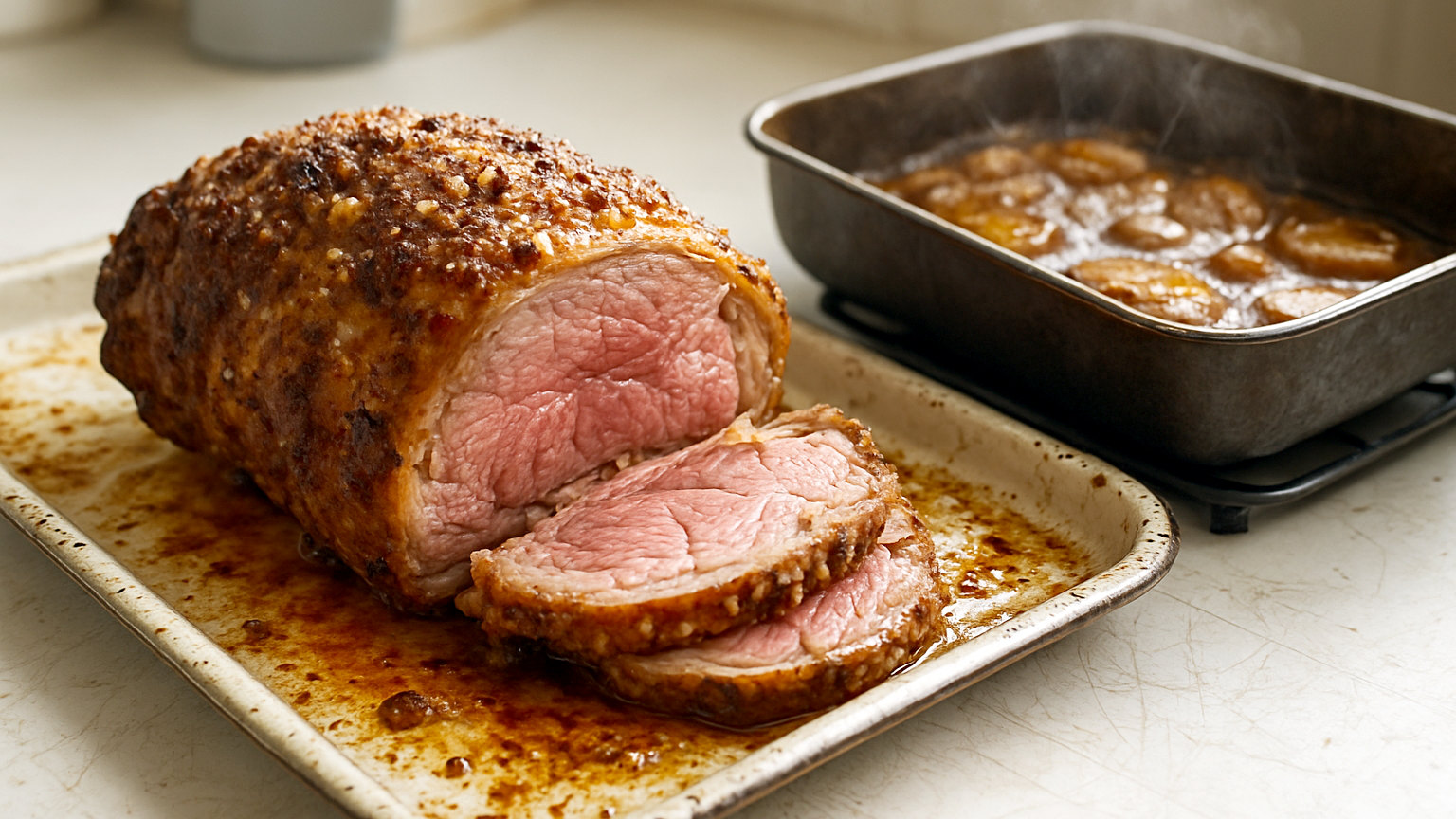
Mint sauce is not on the table by accident. Lamb is a fatty meat with a strong flavour, and it needs something acidic to cut through it rather than something rich to add to it. Once that is clear, the other options make sense, and several of them do the job better than a jar of mint sauce that has been open since Easter.
How do you make proper mint sauce?
Chop a large handful of mint leaves finely, put them in a small bowl with a tablespoon of caster sugar and pour over two tablespoons of boiling water. Stir until the sugar dissolves, leave for ten minutes, then add three tablespoons of malt or white wine vinegar.
The boiling water is the step people miss. It draws the flavour out of the mint before the vinegar goes in, and without it you get vinegar with green bits rather than a sauce that tastes of mint.
Why redcurrant jelly?
It provides sweetness and a little acidity, and it suits lamb cooked with rosemary and garlic better than mint does. A spoonful stirred into the gravy is arguably its best use.
Rowan jelly, quince cheese and crab apple jelly all do the same job and are worth looking out for at farm shops in autumn.
What is salsa verde and does it work?
It is a green herb sauce of parsley, mint, capers, anchovy, garlic, mustard, vinegar and olive oil, chopped rather than blended. It is sharper and more savoury than mint sauce and it is superb with lamb.
Make it an hour ahead so the flavours settle, and go easy on the anchovy until you have tasted it.
Is onion sauce worth making?
It is the traditional English partner to mutton and it deserves to be better known. Soften two sliced onions in butter for twenty minutes without colouring, stir in a tablespoon of flour, then add 400ml of milk and simmer until thick.
Season with nutmeg and plenty of pepper. It suits slow roast shoulder far better than mint sauce does.
What if you want something lighter?
Greek yoghurt with grated cucumber, garlic and chopped mint takes five minutes and works with almost any lamb, particularly anything cooked with cumin or ras el hanout.
Lemon and olive oil whisked with oregano is even simpler and suits a butterflied leg cooked on a barbecue.
Should you serve gravy as well?
Yes. Gravy moistens the meal and the sauce sharpens it, so they are doing different jobs. Lamb gravy made from the tin juices with a splash of white wine and a spoonful of redcurrant jelly needs nothing else.
Allow 150ml of gravy per person and a heaped teaspoon of the sauce, served separately so people can choose.
What can you use if the cupboard is bare?
Chopped mint stirred into malt vinegar with a pinch of sugar is a passable emergency mint sauce. Cranberry sauce loosened with vinegar stands in for redcurrant jelly.
Failing that, a spoonful of piccalilli or a sharp chutney from the fridge door does more for a plate of lamb than nothing at all.
What vegetables suit lamb?
Anything green and slightly bitter. Purple sprouting broccoli from February to April, spring greens, or a dish of peas cooked with lettuce and spring onions.
Roasted roots work with slow cooked shoulder, and boulangere or dauphinoise potatoes suit lamb better than roast potatoes if the gravy is thin.
Flageolet or butter beans warmed with garlic and parsley are the classic French accompaniment and turn a modest joint into a full meal.
How far ahead can these be made?
Mint sauce keeps a week in the fridge, though it darkens after a day or two. Salsa verde is best within a few hours, since the herbs dull. Onion sauce keeps three days and reheats gently with a splash of milk.
Anything containing dairy should be cooled quickly, refrigerated within two hours and used within three days, following Food Standards Agency guidance.
See also Why Is My Roast Lamb Tough or Dry?, or browse more Roasts recipes.


