
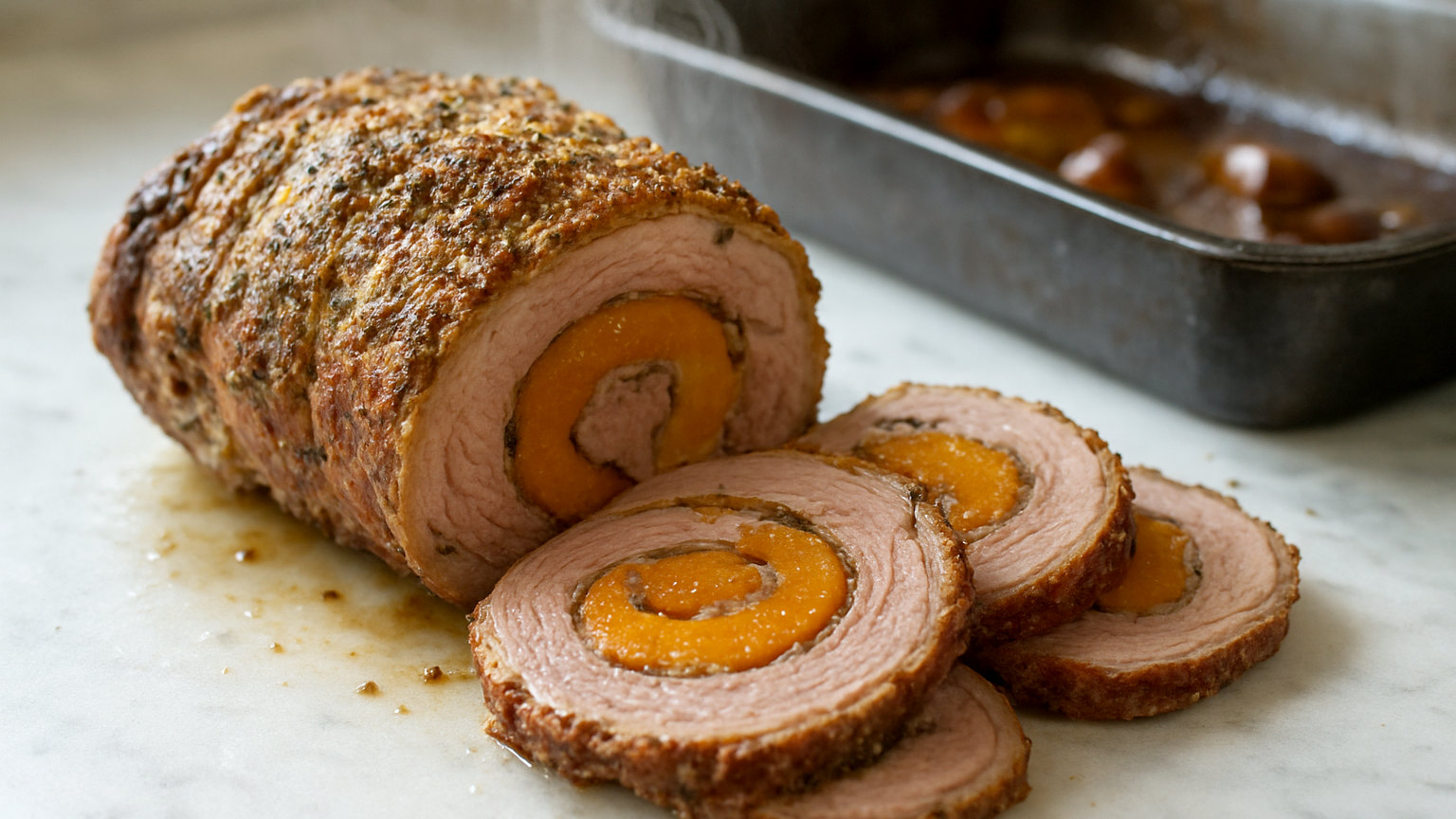
A boned shoulder rolled around a stuffing is the most practical way to serve lamb to a table of eight. It carves into neat spirals rather than falling into shreds, the stuffing pads out the meat so a 2kg joint goes further, and the whole thing can be tied up the day before. Ask the butcher to bone the shoulder and it costs you nothing but the asking.
What do you need for 8 people?
- 2kg shoulder of lamb, boned and opened out flat
- 150g dried apricots, chopped
- 100g fresh breadcrumbs
- 1 onion, finely chopped
- 50g pine nuts or flaked almonds, toasted
- 2 cloves of garlic, crushed
- A large handful of parsley and mint, chopped
- 1 teaspoon ground cumin and half a teaspoon of cinnamon
- 1 egg, beaten
- 40g butter, plus oil for the tin
How do you make the stuffing?
Soften the onion in the butter for eight minutes, add the garlic and spices and cook for one more. Take it off the heat, stir in the apricots, breadcrumbs, nuts and herbs, season well and let it cool completely before binding with the egg.
The stuffing must be cold before it goes in. Warm stuffing inside a raw joint sits in the temperature range where bacteria multiply for far too long, and it also makes the meat difficult to roll tightly.
How do you roll and tie it?
- Lay the shoulder skin side down and season the inside.
- Spread the stuffing over it, leaving a 3cm border all round.
- Roll it up from the long side, as tightly as you can manage.
- Tie with butchers string at 3cm intervals, starting in the middle and working outwards.
- Season the outside heavily and rub with oil.
How long does it take to cook?
Start at 220C fan for 25 minutes, then drop to 160C fan and give it 30 minutes per 500g of total weight, which for a stuffed 2.5kg roll is about 2 and a half hours.
A rolled shoulder wants to be cooked through rather than pink, and the stuffing must reach 75C. Check the centre of the stuffing rather than the meat.
Why is a rolled joint slower?
Because it is denser and thicker than the same weight spread flat, and because heat has to travel through the stuffing as well as the meat. Add roughly five minutes per 500g compared with a bone in joint.
Do not be tempted to raise the temperature to catch up, since the outside will be dry long before the middle is safe.
What can you use instead of apricots?
Prunes, dried figs or dates all work and behave the same way. Fresh grated apple with sage suits a more traditional English direction, and cooked spinach with feta and lemon zest is excellent with lamb.
For a nut free version, use extra breadcrumbs or a handful of cooked bulgur wheat, which also keeps the stuffing from drying out.
Can it be prepared in advance?
Stuff and tie the joint up to 24 hours ahead and keep it covered in the fridge on the lowest shelf. Take it out 90 minutes before roasting and add 15 minutes to the time if it still feels cold.
The stuffing alone can be made two days ahead or frozen for three months.
What should you serve with it?
The stuffing is already sweet, so keep the vegetables savoury and sharp. Roasted carrots, braised chicory or a plain green salad all balance it better than anything glazed.
Couscous or roast potatoes both work. A yoghurt sauce with mint and lemon is a better partner here than mint sauce.
How do you carve it?
Remove every piece of string first, then cut straight down into slices about 1.5cm thick so each one holds a spiral of stuffing. A serrated knife handles the stuffing more neatly than a plain blade.
Cool leftovers quickly, refrigerate within two hours and use within three days, following Food Standards Agency guidance.
Next, try Slow Roast Shoulder of Lamb That Falls Apart, or see the rest of our Roasts recipes.


