
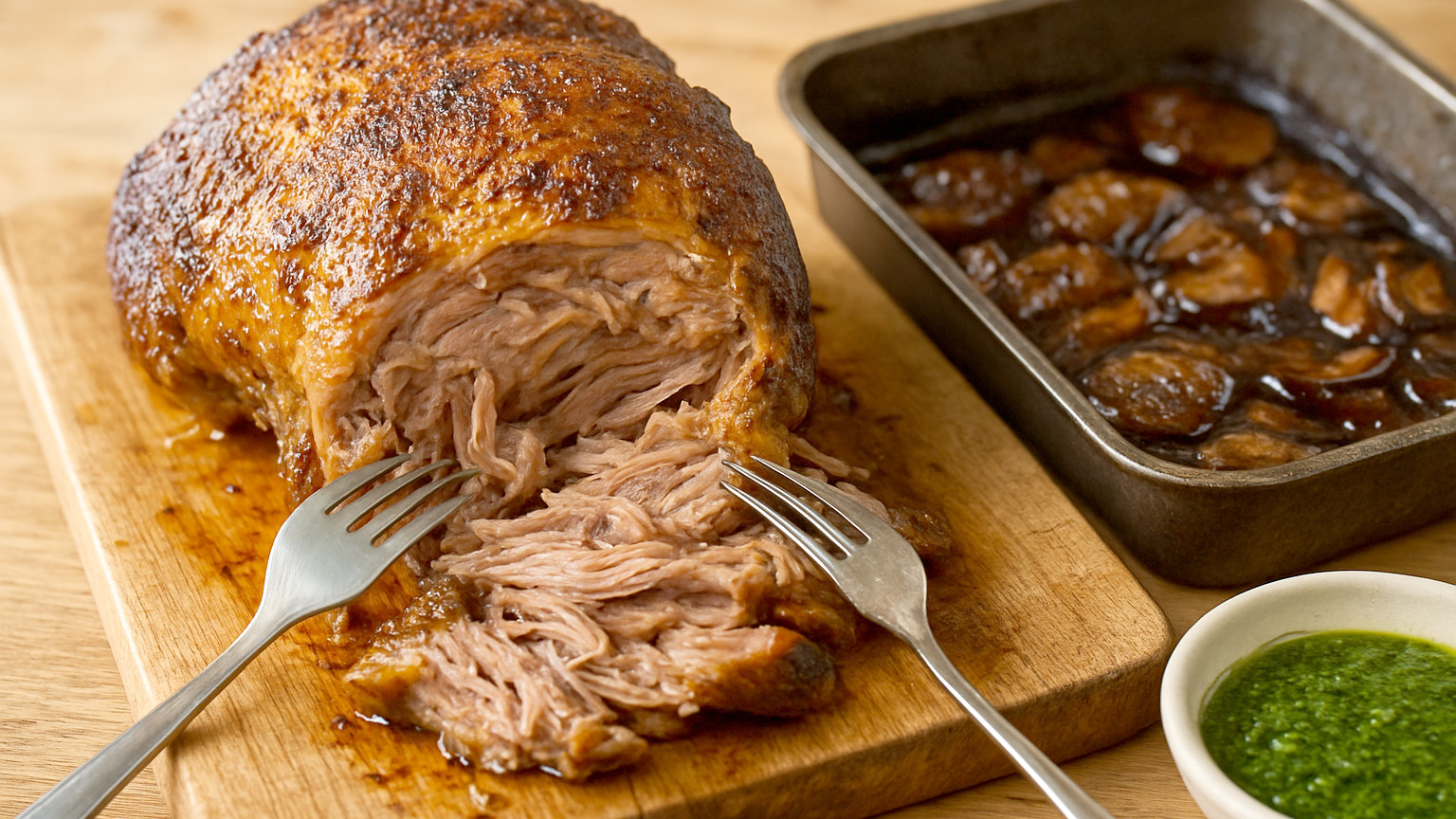
Shoulder of lamb is the cut to buy when you want the meal to look after itself. It carries far more fat and connective tissue than a leg, which makes it a poor choice for fast roasting and an excellent one for a long slow cook. After five hours it does not need carving at all, and two forks or a large spoon will do the job.
What do you need for 6 people?
- 2.5kg shoulder of lamb, bone in
- 1 whole head of garlic, halved across
- 4 sprigs of rosemary and 6 of thyme
- 3 onions, thickly sliced
- 500ml stock or a mixture of stock and white wine
- 2 tablespoons olive oil
- 2 anchovy fillets, optional
- Salt and coarse black pepper
How do you cook it?
- Heat the oven to 220C fan, gas mark 9.
- Score the fat in a diamond pattern, rub with oil and season very heavily.
- Sit the shoulder on the onions and garlic in a deep tin and roast for 25 minutes to colour the surface.
- Drop the oven to 140C fan, 160C conventional, gas mark 3.
- Pour the stock into the base, tuck in the herbs, and cover the tin tightly with two layers of foil.
- Cook for 4 and a half hours without opening it.
- Remove the foil and give it a final 30 minutes to crisp the top.
- Rest for 20 minutes, then pull the meat apart in the tin.
Seal the foil properly at the edges. The whole method depends on trapping steam around the joint, and a loose corner lets it escape, which is how a slow roast shoulder ends up dry on top and tough underneath.
Why does shoulder suit this better than leg?
Shoulder is a working muscle threaded with collagen. Held above 70C for several hours, that collagen turns to gelatine, which makes the meat feel succulent even though it is technically well done.
A leg has far less of it, so five hours simply dries it out. If a leg is what you have, cook it fast and pink instead.
Do you need to check the temperature?
Not really, which is part of the appeal. Slow roast shoulder is done when a fork twists easily in the thickest part, usually somewhere around 92C internally.
An extra thirty minutes does no harm at this temperature, so it is a forgiving dish for a day when the timings are uncertain.
What can you add to the tin?
Halved potatoes placed under the joint for the last two hours absorb the fat and juices and are arguably better than roast potatoes. Whole shallots, chunks of fennel or a tin of drained butter beans all work.
For a different direction, swap the stock for the same amount of cider, or add a tablespoon of ras el hanout and a handful of dried apricots.
How do you make the gravy?
Lift out the meat and pour everything from the tin into a jug. Let it settle for five minutes, then spoon off the thick layer of fat that rises.
Squash the softened garlic and onions through a sieve into the liquid, reduce it in a pan for ten minutes, and it needs no flour at all.
What should you serve with it?
Something to soak up the juices. Mashed potato, boulangere potatoes cooked underneath, or simply good bread all suit it better than a crowded plate of roast vegetables.
Braised red cabbage or a sharp salad of watercress and lemon provides the contrast the richness needs.
Can you use a slow cooker instead?
Yes, provided the shoulder fits. Brown it under a hot grill first, then give it 8 hours on low with only 250ml of liquid, since almost nothing evaporates from a sealed pot.
You lose the crisp top, so finish it under the grill for ten minutes before serving to get some colour back onto the fat.
Does it keep well?
Better than any other lamb roast. Pulled shoulder keeps three days in the fridge and freezes for three months in its own juices, which protect it from drying out.
Cool it quickly, refrigerate within two hours and reheat once only until piping hot throughout, in line with Food Standards Agency guidance.
Next, try Can You Roast Lamb in a Slow Cooker or Air Fryer?, or see the rest of our Roasts recipes.


