
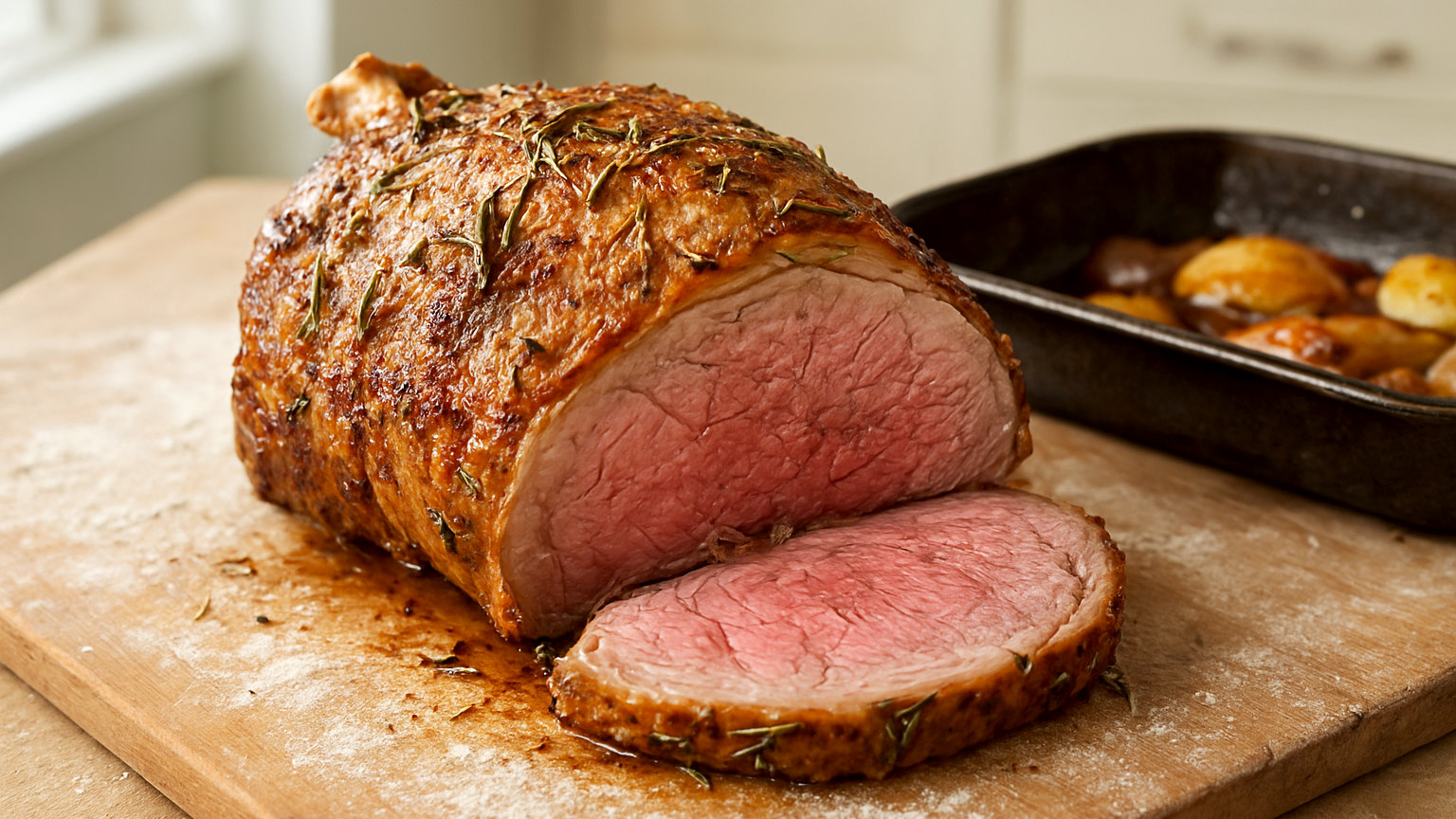
A leg of lamb is the easiest of the big roasting joints to get right, because it has enough fat to stay moist and enough size to give you a comfortable margin. Studding it with garlic and rosemary is not decoration, since both flavours travel into the meat during cooking in a way that surface seasoning never manages. The rest of the job is timing and patience.
What do you need for 6 people?
- 2.2kg leg of lamb, bone in
- 4 cloves of garlic, cut into thin slivers
- A large bunch of rosemary, broken into short sprigs
- 2 tablespoons olive oil
- 2 onions, thickly sliced
- 3 carrots, cut into chunks
- 300ml lamb or chicken stock
- 150ml white wine
- Flaky salt and black pepper
How do you roast it?
- Take the lamb out of the fridge 90 minutes before cooking and pat it dry.
- Heat the oven to 220C fan, 240C conventional, gas mark 9.
- Make small deep cuts all over the joint with the point of a knife and push a sliver of garlic and a rosemary tip into each one.
- Rub with oil and season heavily with salt and pepper.
- Sit it on the onions and carrots in a roasting tin and pour the wine and stock around, not over.
- Roast at high heat for 20 minutes.
- Turn down to 180C fan and cook for 15 minutes per 500g for pink, so about 66 minutes for this joint.
- Remove at 56C in the thickest part, well away from the bone.
- Rest for 30 minutes, loosely covered, before carving.
Make the cuts deep enough to bury the garlic. Slivers left sitting on the surface burn within twenty minutes and turn bitter, which is the usual reason people decide garlic and lamb do not suit each other.
Which internal temperature do you want?
Lamb is generally eaten pinker than pork and less rare than beef. Aim for 55C to 57C for pink, 60C for medium and 68C for well done, remembering that the joint climbs another 4C or so while it rests.
Bone conducts heat, so always probe into the meat rather than near it, and take two readings in slightly different spots before deciding.
Why does the liquid go around the joint?
Anything poured over the top washes away the seasoning and steams the surface, so the fat never crisps. Liquid in the base of the tin keeps the vegetables from scorching and gives you a ready made foundation for gravy.
Top it up with a splash of hot water if the tin looks close to dry at the halfway point.
What can you use instead of rosemary?
Thyme is the obvious swap and is gentler. Oregano suits lamb particularly well and gives it a Greek accent, especially with a squeeze of lemon over the joint before it goes in.
Anchovy fillets pushed into the cuts alongside the garlic melt away entirely and leave a deep savouriness rather than any fishiness. It is an old English trick and worth trying once.
What should you serve with it?
Roast potatoes cooked in the lamb fat, and something green with a bit of bite. In spring, when British lamb is at its best, purple sprouting broccoli or the first Jersey Royals suit it perfectly.
Mint sauce is traditional and redcurrant jelly is the usual alternative. A dish of flageolet beans cooked with garlic is the French approach and works better than it sounds.
Can a leg be cooked on the barbecue?
Not whole, but a butterflied leg with the bone removed cooks beautifully over indirect heat in about 40 minutes, and the garlic and rosemary can be worked into a marinade instead of studded in.
Ask the butcher to butterfly it, which costs nothing and takes them two minutes. Turn it every ten minutes and rest it exactly as you would an oven roast.
How long does it keep?
Cool leftovers quickly, refrigerate within two hours and use within three days, following Food Standards Agency guidance. Keep the meat on the bone if you can, since it dries out far more slowly that way.
The bone itself makes excellent stock or the base of a Scotch broth, and it freezes until you have time for it.
See also Slow Roast Shoulder of Lamb That Falls Apart, or browse more Roasts recipes.


