
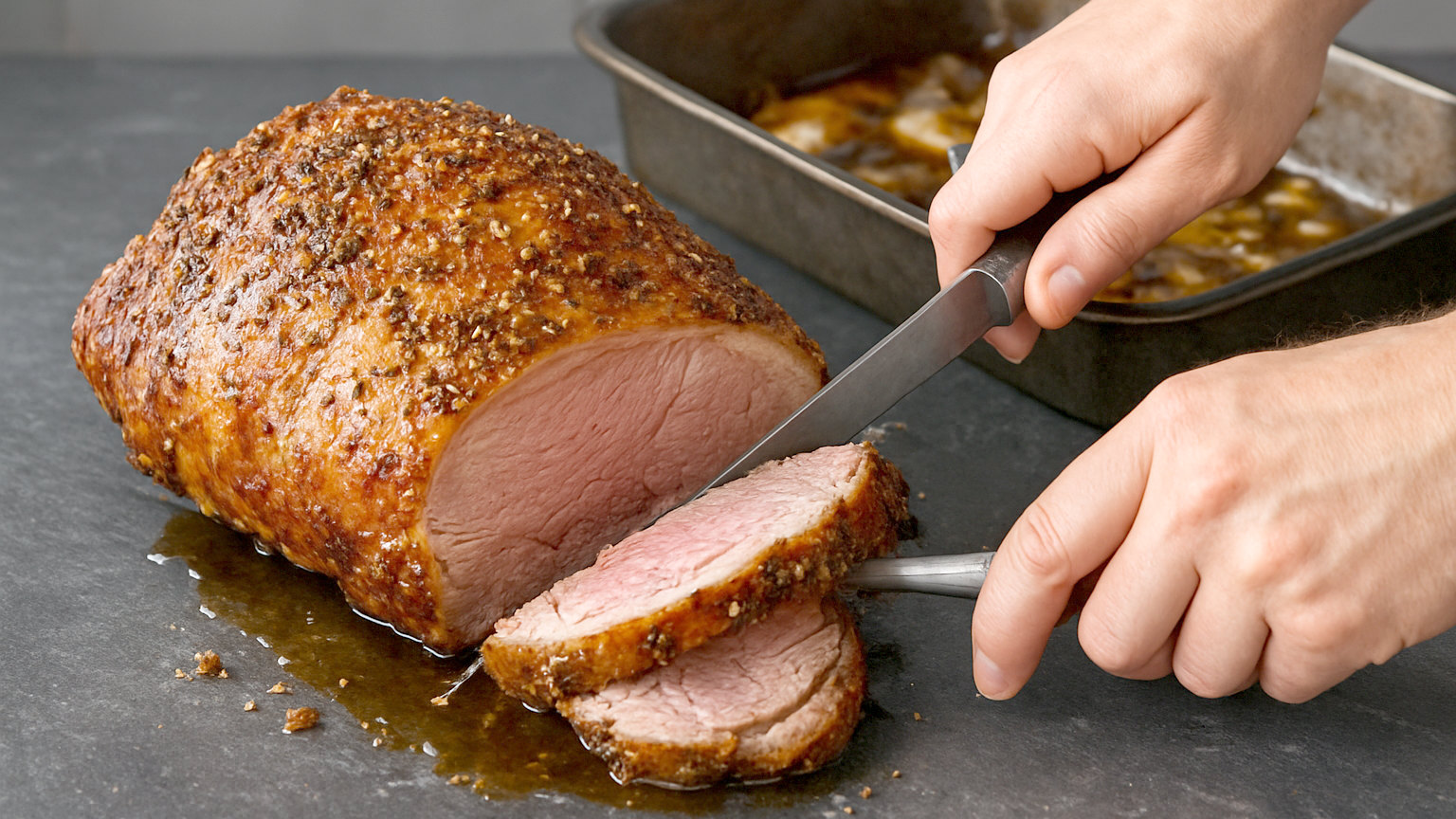
A leg of lamb is the trickiest of the common roasts to carve, because there is a bone running through the middle and the grain changes direction as you move along it. Neither is difficult once you know what you are looking at, and the alternative of hacking away at the table is what gives lamb an undeserved reputation for being awkward.
What knife do you need?
A long carving knife with a narrow blade of at least 20cm and a plain edge. Length matters because you want to draw the blade through in one stroke rather than sawing at the meat.
Sharpen it before every roast. A blunt knife tears the fibres and makes thin slices impossible, and it is more dangerous, since it needs pressure and can slip off the bone.
Where should you carve?
On a board with a channel around the edge, sitting on a damp cloth so it cannot move. Give yourself room, which usually means the kitchen worktop rather than a crowded table.
Hold the joint steady with a carving fork or by gripping the exposed bone end with a folded tea towel, which gives you a useful handle.
Where do you start?
Stand the leg with the thick end towards you and the bone running away. Take a thin slice off one side of the underside to create a flat base so the joint sits still.
Then carve from the thick meaty side first, since that is where the best slices are and where the grain is easiest to read.
How do you work around the bone?
Cut down to the bone in vertical slices, then run the knife along the length of the bone underneath to release them all at once. That gives you neat slices rather than a series of wedges.
Turn the joint over and repeat on the other side. The meat on the underside is thinner but perfectly good.
How thick should the slices be?
Around 5mm to 8mm, which is thicker than beef but thinner than most people cut it. Lamb has enough fat to stay tender at that thickness.
Slow roast shoulder is not carved at all. Pull it apart in chunks with two forks and pile it up, since trying to slice it produces shreds and frustration.
Does the grain direction change?
Yes, which is why a leg feels harder than a rolled joint. There are several muscles in a leg and they run at different angles.
Look at the cut surface every few slices and adjust the angle of the knife if the fibres start running parallel to the blade rather than across it.
How do you keep the slices hot?
Warm the plates and the serving dish first, carve as late as you can, and lay the slices overlapping rather than spread out. Pour a little hot gravy over just before it goes to the table.
Carve only what will be eaten. Lamb left on the bone stays warm and moist far longer than a plate of slices, and the remainder is better for the next day.
Should you carve at the table?
It is part of the pleasure of a Sunday roast, but a leg is genuinely harder to manage there. The board is usually smaller and the bone gets in the way.
A reasonable compromise is to bring the joint to the table, take a few slices, then finish in the kitchen where the knife has room and the bone can be turned freely.
What do you do with the bone?
Roast it for another twenty minutes if meat is still clinging on, then simmer it for three hours with an onion, a carrot and a bay leaf to make stock. It freezes for three months.
Any meat picked off the bone is worth keeping for a shepherds pie. Cool it quickly, refrigerate within two hours and use within three days, following Food Standards Agency guidance.
Next, try Butterflied Leg of Lamb in the Oven or on the Barbecue, or see the rest of our Roasts recipes.


