
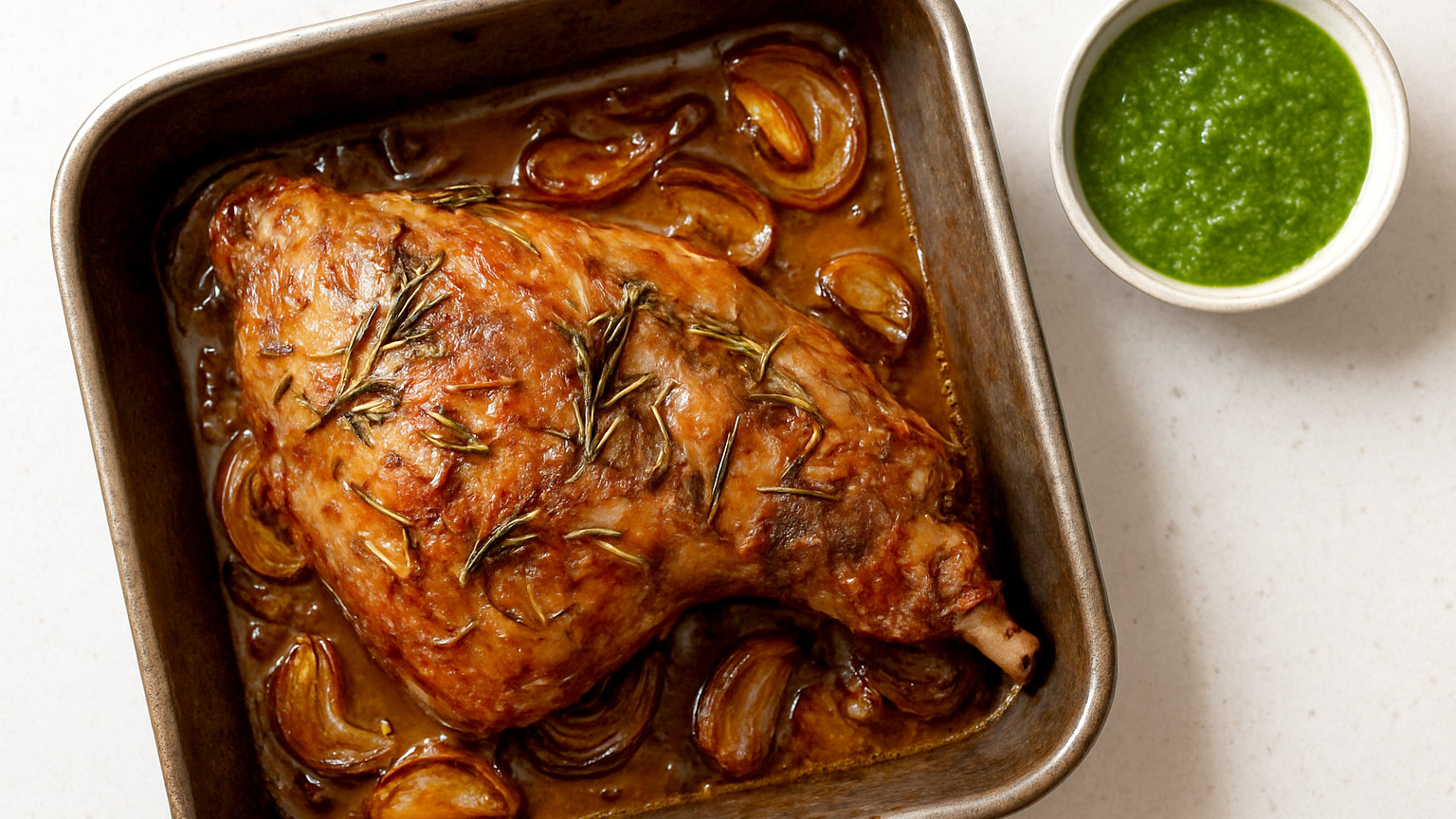
Butterflying a leg means removing the bone and opening the meat out flat, which changes the cooking time from around two hours to about forty minutes. It also gives you far more surface area for a marinade to work on, and it turns a Sunday joint into something you can cook over coals in July. Any butcher will do it while you wait.
What do you need for 6 people?
- 2kg leg of lamb, butterflied, giving about 1.6kg of meat
- 4 cloves of garlic, crushed
- Juice and zest of 1 lemon
- 4 tablespoons olive oil
- 2 tablespoons chopped rosemary or oregano
- 1 teaspoon ground cumin, optional
- 2 teaspoons flaky salt and plenty of black pepper
How long should it marinate?
Between four and twenty four hours. Mix everything, rub it into both sides and leave it covered in the fridge, turning once if you remember.
Add the salt at the start, not the end. Salt needs time to travel into a piece of meat this thick, and a joint salted only as it goes into the oven will taste seasoned on the outside and flat in the middle.
How do you cook it in the oven?
- Take the lamb out of the fridge an hour ahead and scrape off any excess marinade so it does not burn.
- Heat the oven to 220C fan, gas mark 9.
- Lay it flat on a rack over a roasting tin, fat side up.
- Roast for 20 minutes, then turn down to 190C fan for a further 15 to 20 minutes.
- Check the thickest part and remove at 54C for pink.
- Rest for 15 minutes before carving.
How do you cook it on a barbecue?
Bank the coals to one side and start the lamb over the cooler part, fat side up, with the lid on for 25 minutes. Then move it over direct heat for 5 to 7 minutes a side to char the surface.
Watch for flare ups when the fat drips. Move the joint rather than spraying water, which throws ash onto the meat.
Why does the thickness vary so much?
A butterflied leg is thick at one end and thin at the other, which is a feature rather than a fault. It means one joint gives you well done, medium and pink slices to suit different people.
If you want it even, make a few shallow cuts in the thickest section and press it flatter before marinating.
What can you use instead of lemon and garlic?
Yoghurt with garam masala and ginger gives a completely different dish and tenderises the surface. Anchovy, rosemary and red wine vinegar is the Italian version.
Pomegranate molasses with cumin and mint suits summer eating, and a simple mixture of oil, thyme and plenty of black pepper is fine when the cupboard is bare.
How do you carve it?
Lay it flat and cut across the width in slices about 1cm thick, working from the thin end. The grain runs lengthways, so cutting across the joint automatically cuts across the fibres.
Pour any resting juices over the sliced meat rather than making a separate gravy, since a marinated joint has plenty of flavour of its own.
Can it be cooked from frozen?
No. Defrost it fully in the fridge overnight, which for a butterflied leg takes about twelve hours, since the flat shape thaws faster than a whole joint would.
A partly frozen joint cooks unevenly and the marinade cannot penetrate, so you lose the main advantage of butterflying in the first place.
What should you serve with it?
This is summer lamb, so keep it light. Flatbreads, a tomato and red onion salad, and a bowl of yoghurt with cucumber and mint.
New potatoes crushed with olive oil and lemon suit it in early summer, when Jersey Royals are in season and need nothing done to them.
Does it keep?
Cold butterflied lamb is excellent in sandwiches and salads. Cool it quickly, refrigerate within two hours and use within three days, in line with Food Standards Agency guidance.
Worth reading next: How to Carve a Leg of Lamb. There is more in our Roasts recipes.


