
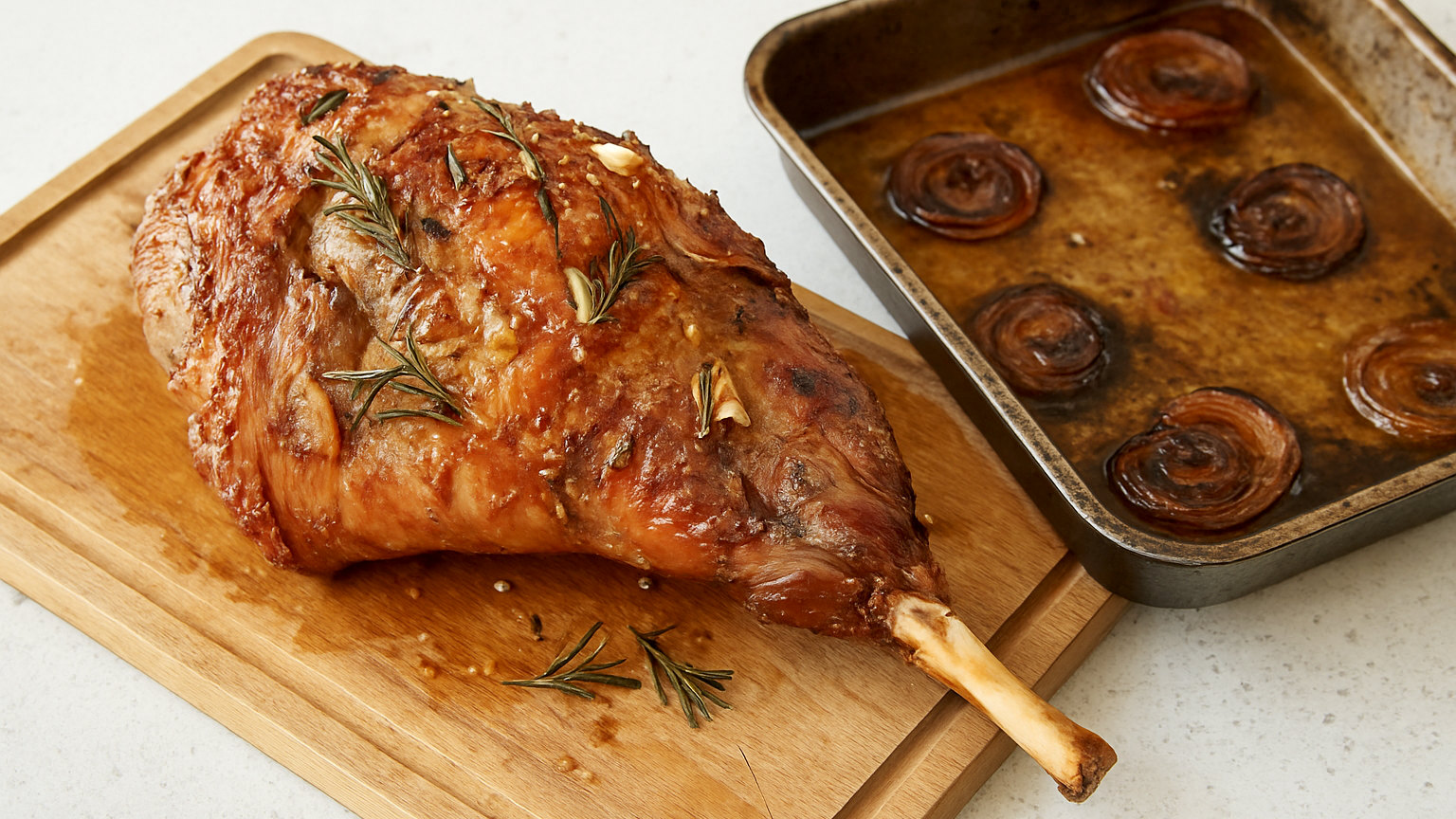
Lamb is the roast where the cut matters more than the clock. A leg and a shoulder of identical weight want completely different treatment: one is best cooked fast and served pink, the other needs several hours at a low temperature before it becomes good. Using a single timing chart for both is the most common way roast lamb goes wrong.
How long for a leg of lamb?
Start with 20 minutes at 220C fan, then reduce to 180C fan and count from there.
- Pink: 15 minutes per 500g
- Medium: 18 minutes per 500g
- Well done: 22 minutes per 500g
A 2kg leg cooked pink therefore needs the initial blast plus about an hour, coming to roughly 80 minutes in total.
How long for a shoulder?
Ignore per kilo figures and think in hours instead. A shoulder of 2kg to 2.5kg needs 25 minutes at 220C fan followed by 4 to 5 hours at 140C fan, covered.
It is done when a fork twists in the meat without resistance rather than at any particular time, and an extra half hour causes no harm.
Which internal temperatures matter?
For fast roasting, 55C to 57C gives pink, 60C to 63C medium and 68C or above well done. For slow roasting you are aiming much higher, around 90C to 95C, at which point the collagen has broken down.
Take a fast roasted joint out about 4C below target. Carryover keeps the centre climbing for a good fifteen minutes after it leaves the oven, and that is where perfectly timed lamb quietly turns grey.
How long should lamb rest?
Twenty minutes for a small joint, thirty for a 2kg leg and up to forty five for anything larger. Slow roast shoulder needs only twenty, since it is not going to be carved into slices.
Cover it loosely with foil and a tea towel. Resting is what gives a single oven the space to finish the potatoes.
What about a rack or a rump?
A rack of lamb is small and fast: 20 to 25 minutes at 200C fan for pink, then a 10 minute rest. A rump joint of around 400g takes about 25 minutes at 200C fan.
Both are easy to overcook by five minutes, so a thermometer earns its place more here than on a large leg.
Does bone in or boned change things?
A boned and rolled joint is denser and takes slightly longer per kilo than the same weight on the bone, since the bone helps carry heat inwards.
Add about 5 minutes per 500g for a rolled joint, and weigh it yourself rather than trusting the label, which may have been written before the butcher trimmed it.
Should lamb come out of the fridge first?
Yes, 90 minutes for a large joint and an hour for anything smaller. A cold centre forces the outside to spend longer in the heat, which widens the band of overdone meat under the surface.
Dry the surface with kitchen paper while it sits, since a wet joint steams for the first ten minutes rather than browning.
What about hogget and mutton?
Hogget is between one and two years old and needs roughly 10 per cent longer than lamb at the same temperature. Mutton is older again and should be treated like shoulder regardless of the cut, which means hours rather than minutes.
Both have a deeper flavour that stands up to strong seasoning, and both are considerably cheaper than spring lamb.
Does a covered joint cook faster?
Covering with foil traps steam and speeds up a slow roast noticeably, but it prevents browning, which is why the method is to brown first and cover afterwards.
For fast roasting, leave it uncovered throughout. If the fat is colouring too quickly, lay a loose sheet of foil over the top only for the last twenty minutes.
How do you plan the rest of the meal?
Use the resting period. Take the lamb out, turn the oven to 220C fan and give the potatoes their final 25 minutes while the joint sits under foil.
Parboil and rough up the potatoes before the lamb comes out so they can go straight into hot fat, and make the gravy from the tin while everything else browns.
For something along the same lines, see Roast Leg of Lamb with Garlic and Rosemary, or browse all our Roasts recipes.


