
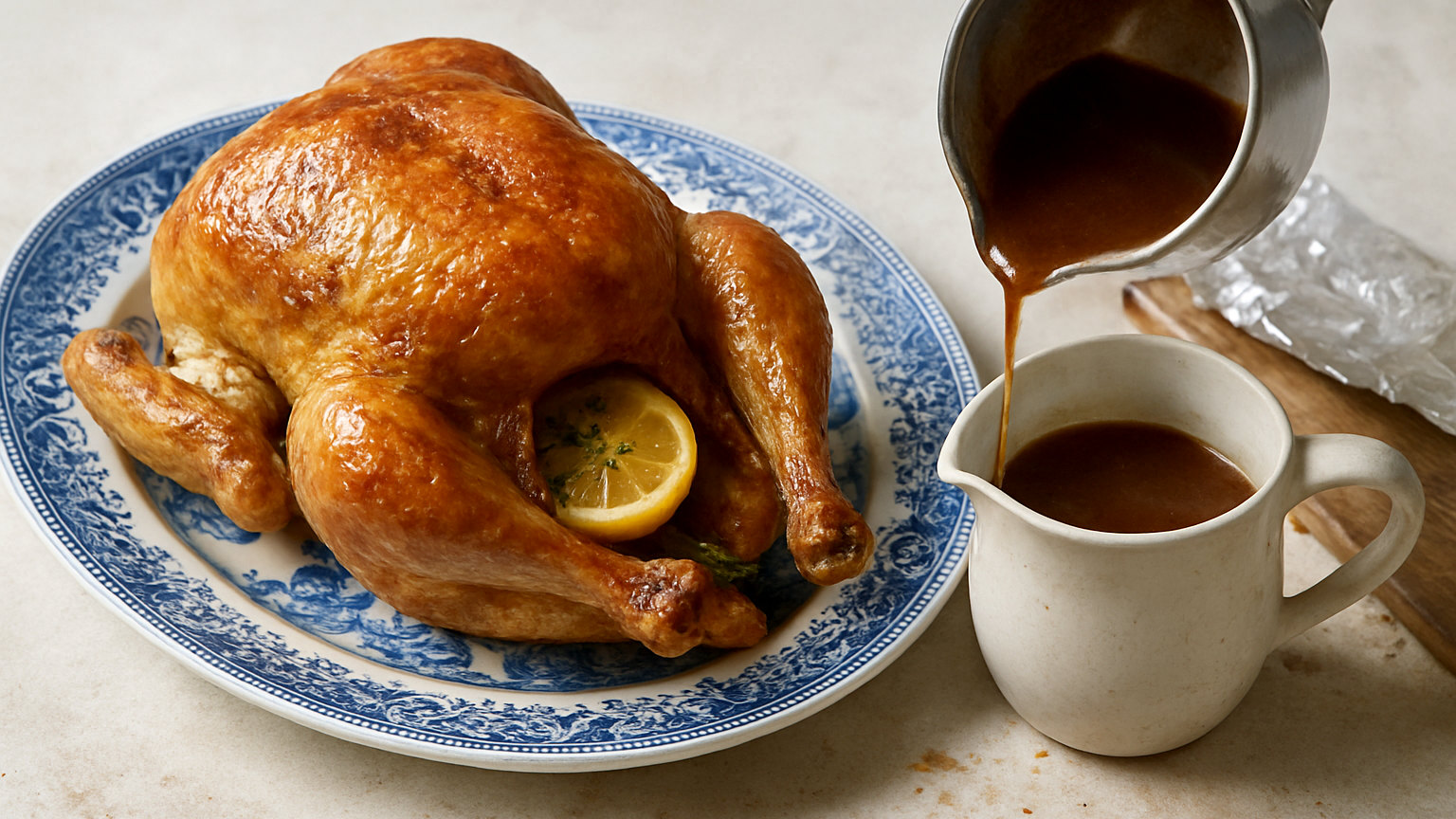
Dry roast chicken is almost always the same problem. The breast is lean and reaches 75C well before the thighs do, so cooking the bird until the legs are safe means the breast has gone considerably past where it should have stopped. Everything useful about roasting chicken is an attempt to close that gap, and basting, which is what most people reach for, does nothing at all.
Why does the breast overcook?
Breast meat has very little fat or connective tissue and dries out above about 70C. Thigh meat is darker, tougher and genuinely better at 80C or above.
They are two different meats attached to the same frame, and the breast also sits higher in the oven where the heat is fiercest.
What is the simplest fix?
Start the bird breast side down for the first half of the cooking, then turn it over. The legs get the direct heat while the breast is sheltered underneath.
This costs nothing and requires no equipment. The only drawback is that the breast skin does not brown while it is underneath, which the second half of the cooking resolves.
Does spatchcocking help?
It is the most effective solution. Removing the backbone and flattening the bird puts the legs and breast at similar distances from the heat, so they finish together.
It also halves the cooking time, which reduces the total exposure and therefore the drying.
Is brining worth doing?
Dry brining is, and it is easier than wet brining. Rub a tablespoon of flaky salt over the bird the day before and leave it uncovered in the fridge.
The salt helps the meat hold onto moisture during cooking and seasons it throughout. It also dries the skin, which improves the browning.
Was the oven too hot?
Above about 200C fan for a whole bird, the outside of the breast is well past done before the thigh is anywhere near. 190C fan is the sensible compromise.
Very high heat suits spatchcocked birds and portions, where the cooking time is short enough that it does not matter.
Did it go in straight from the fridge?
A cold bird keeps the outside in the heat for longer while the middle catches up, which widens the band of overdone meat under the skin.
An hour on the worktop for a bird up to 2kg, and ninety minutes for anything larger.
Did it rest for long enough?
Twenty minutes minimum. Carving straight from the oven loses the juices onto the board rather than letting them settle back into the meat.
Cover it loosely with foil. The bird stays hot for far longer than most people expect, and warming the plates matters more than the five minutes you would save.
Does basting help at all?
No. Spooning liquid over the skin does not enter the meat, and it sets the browning back every time you do it.
It also means opening the oven repeatedly, which drops the temperature and lengthens the cooking time, making the problem slightly worse.
Would butter under the skin help?
Yes, and it is worth doing. Butter worked directly onto the breast meat under the skin melts through it during cooking and provides some insulation from the heat above.
It is also the only way to get seasoning onto the breast meat itself, since the skin blocks almost everything applied on top of it.
Would a smaller bird help?
Smaller birds have less distance between the surface and the centre, so the gap between breast and thigh is narrower and the whole thing cooks faster. A 1.4kg chicken is easier to get right than a 2.5kg one.
Two small chickens roasted together take barely longer than one large one and give you more skin and more oysters, which is rarely a bad trade.
Can a dry chicken be rescued?
Not restored, but improved considerably. Carve it, lay the slices in a dish and pour hot gravy over them, then cover for two minutes before serving.
Anything left over is better used in a pie, a curry or a soup, where the sauce does the work. Cool it quickly, refrigerate within two hours and use within two days, following Food Standards Agency guidance.
For something along the same lines, see How to Carve a Roast Chicken, or browse all our Roasts recipes.


