
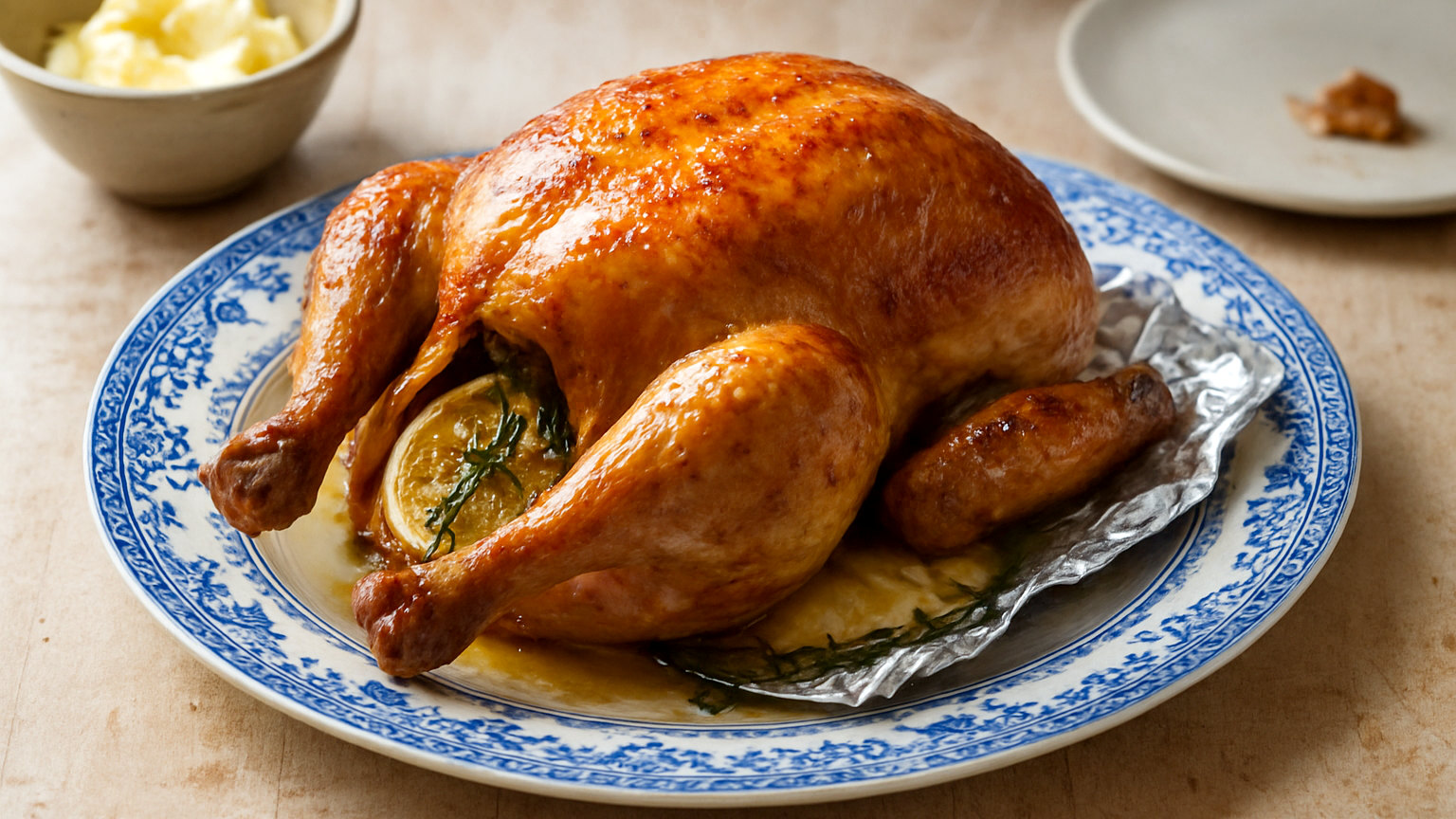
Rubbing flavourings onto chicken skin achieves surprisingly little, because the skin is a barrier and almost nothing travels through it. The way to season the breast is to lift the skin away and work a flavoured butter directly onto the meat underneath. It takes two minutes, requires no equipment, and it is the difference between a chicken that tastes of lemon and one that smells of it.
What do you need for 4 people?
- 1 chicken, about 1.8kg
- 75g softened butter
- Zest of 1 lemon, plus the lemon halved
- 3 cloves of garlic, crushed, plus a whole head halved across
- Leaves from 6 sprigs of thyme
- 2 onions, thickly sliced
- 150ml white wine
- Flaky salt and black pepper
How do you get butter under the skin?
Slide your fingers between the skin and the breast at the neck end, working gently towards the legs until the skin has lifted away in a pocket on both sides.
Go slowly and keep your fingers flat. Pushing a fingertip through tears the skin, and a torn pocket lets the butter escape into the tin instead of staying where it is useful.
How do you cook it?
- Take the chicken out an hour ahead and pat it completely dry.
- Heat the oven to 190C fan, 210C conventional, gas mark 6.
- Mash the butter with the lemon zest, crushed garlic, thyme, salt and pepper.
- Push two thirds of it under the skin and spread it evenly by pressing from the outside.
- Rub the rest over the skin and season heavily with salt.
- Put the lemon halves and the garlic head in the cavity.
- Sit the bird on the onions, pour the wine into the base of the tin, and roast for 1 hour 30 minutes.
- Check the thigh reaches 75C with clear juices, then rest for 20 minutes.
Why does the wine go in the tin?
It stops the onions catching and gives you an instant base for the pan juices. Poured over the bird it would wash off the salt and steam the skin.
Top it up with a splash of hot water if the tin looks close to dry at the hour mark.
What can you use instead of wine?
Chicken stock, dry vermouth or plain water with a squeeze of lemon. Cider works well and pushes the dish towards apple and thyme.
The wine is doing very little except providing acidity and moisture, so there is no need to open a bottle for it.
What can you use instead of thyme?
Tarragon is the classic French partner for chicken and is stronger, so use half the quantity. Rosemary works but dominates, and sage suits autumn cooking.
Parsley and chives can go into the butter as well, though they are better stirred through at the end since they lose their freshness in the oven.
Should the lemon go in the cavity?
It flavours the steam inside the bird and it is worth doing, though the effect is subtle. Pierce the halves several times so the juice can escape.
The real lemon flavour comes from the zest in the butter under the skin, which is in direct contact with the meat.
How do you make the sauce?
Pour off most of the fat, squash the onions into the tin, add 400ml of stock and simmer for eight minutes, scraping the base. Squeeze in the roasted garlic from the cavity and strain.
This is lighter than a floured gravy and suits the lemon better. A knob of cold butter whisked in at the end gives it gloss.
Can it be prepared ahead?
Push the butter under the skin up to a day in advance and keep the bird uncovered in the fridge, which also dries the skin and improves the browning.
The flavoured butter itself keeps a week refrigerated and freezes for three months, so it is worth making double and rolling the rest into a log.
What should you serve with it?
Roast or crushed new potatoes, and something green. In late spring, asparagus or the first peas suit the lemon particularly well.
Cool leftovers quickly, refrigerate within two hours and use within two days, following Food Standards Agency guidance.
See also How to Get Crisp Skin on a Roast Chicken, or browse more Roasts recipes.


