
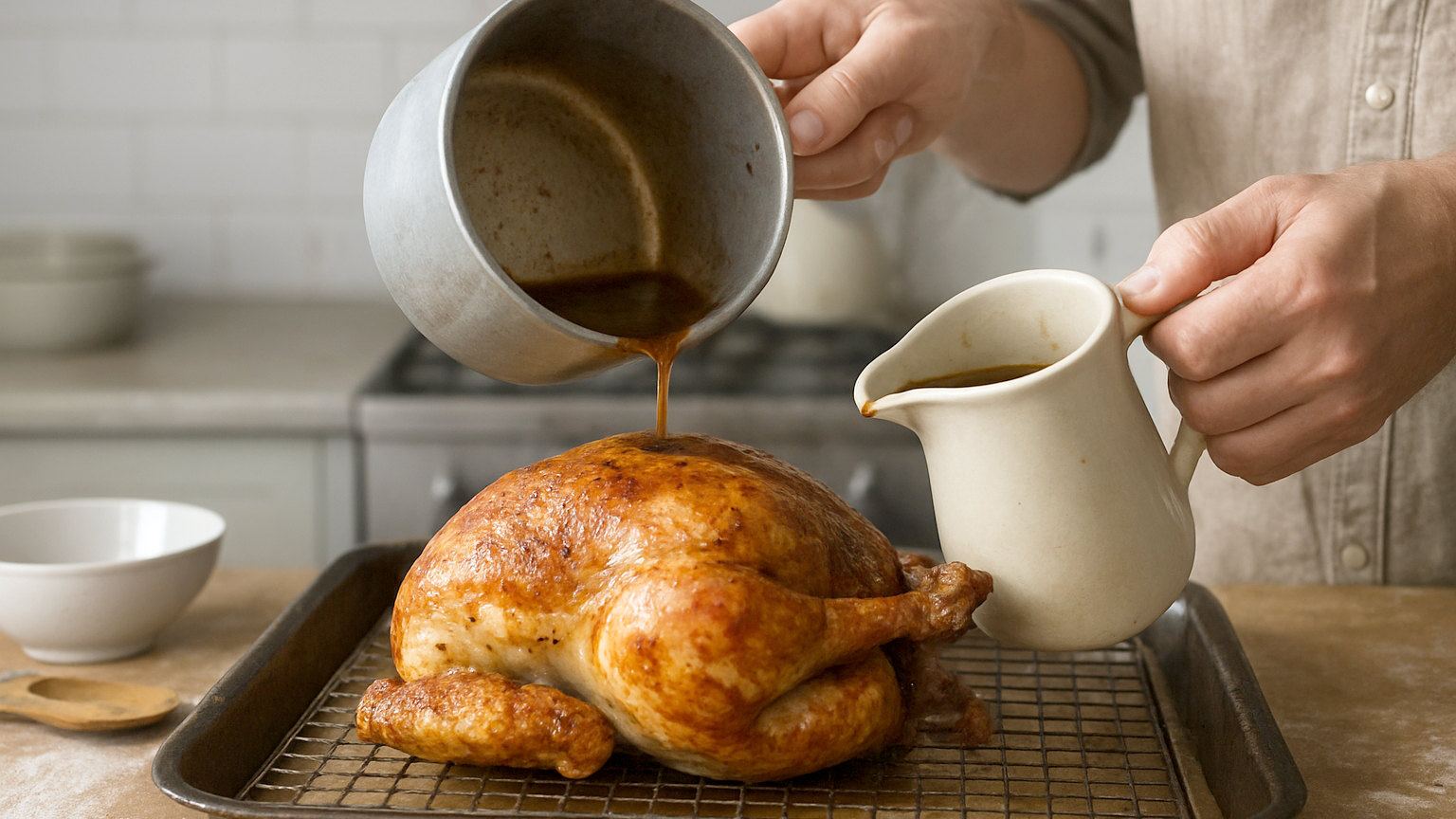
Crisp chicken skin is mostly a moisture problem. Skin cannot brown until the water in it has evaporated, so anything keeping it damp is delaying the point at which it starts to crisp. Salt helps by drawing moisture out in advance, and a hot enough oven finishes the job. Basting, which almost everybody does, works directly against all of this.
Why does the skin need to be dry?
Water on the surface has to be driven off before browning can begin, and while it is evaporating it holds the skin at around 100C, which is well below the temperature at which it crisps.
A wet bird spends the first fifteen minutes steaming itself, and that is fifteen minutes of oven time that produces nothing useful.
How do you dry it properly?
Pat the whole bird with kitchen paper, inside the cavity as well, then leave it uncovered on a rack in the fridge for at least four hours and ideally overnight.
A fridge is a drying environment. An uncovered bird loses surface moisture steadily overnight, and the difference in the finished skin is obvious enough that it is worth planning for.
Should you salt it in advance?
Yes. Rub a tablespoon of flaky salt over the skin the day before, then leave it uncovered in the fridge. The salt draws moisture out, dissolves and is drawn back in, so the meat is seasoned throughout rather than only on the surface.
This is sometimes called dry brining. Do not rinse the bird afterwards, and go easy on any further salt at roasting time.
Butter or oil?
Butter gives better flavour and browns faster because of the milk solids. Oil has a higher smoke point and will not burn if the oven is very hot.
For a standard roast at 190C fan, butter is the better choice. Rub it on softened rather than melted, and work some under the skin over the breast if you can.
Why does basting not help?
Because you are spooning liquid onto skin that is trying to dry out. Every baste sets the browning back a few minutes, and the moisture does not enter the meat in any useful way.
The idea that basting keeps a bird moist is one of the more persistent kitchen myths. The breast stays moist because it was not overcooked, not because it was watered.
Does the oven temperature matter?
A great deal. Below about 180C fan the skin will cook without ever properly crisping. At 190C to 200C fan it browns steadily over the course of the roast.
If the bird is cooked through but pale, turn the oven up to 220C fan for the final ten minutes and watch it, since it can go from pale to burnt quickly.
Should the bird sit on a rack?
It helps, because air can circulate underneath and the skin on the base is not sitting in liquid. A bed of thickly sliced onion does the same job and improves the gravy.
Either way, the bird should not be resting directly in a pool of its own juices for two hours.
Does covering with foil ruin it?
During cooking, yes, so only use foil if the skin is browning far too fast and the thigh is still well short of 75C. Lay it loosely over the breast only.
During resting, cover loosely rather than sealing. Trapped steam softens the skin within ten minutes.
Does the bird itself make a difference?
A free range or slower grown chicken generally has firmer skin and holds less water, so it browns more readily. Cheaper intensively reared birds often release a great deal of liquid into the tin, which works against crisping.
If your chicken is sitting in a pool of water twenty minutes in, pour it off rather than leaving the bird to steam in it.
Can soft skin be rescued?
Partly. Carve the bird, lay the pieces skin side up on a tray and give them 5 minutes at 230C fan or under a hot grill.
It will not match skin that crisped properly in the first place, but it is a considerable improvement on pale and rubbery.
Worth reading next: Roast Chicken with Lemon, Garlic and Thyme. There is more in our Roasts recipes.


