
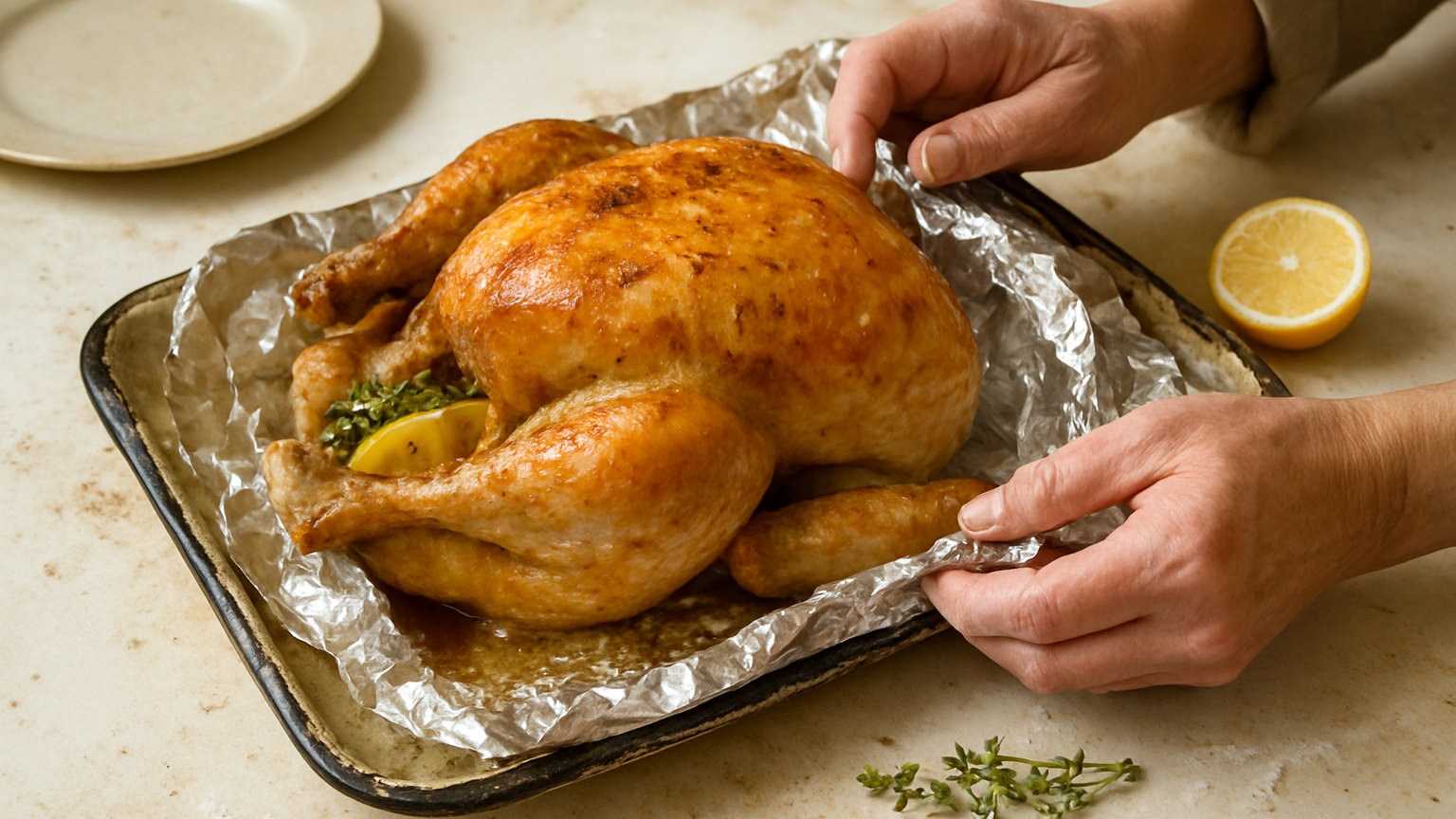
Roast chicken has one structural problem. The breast is lean and reaches the temperature it needs well before the legs, which are darker, tougher and want considerably longer. Every technique worth knowing is an attempt to close that gap. The simplest is to start the bird upside down, which shelters the breast for the first half of the cooking and costs nothing.
What do you need for 4 people?
- 1 chicken, about 1.8kg
- 50g softened butter
- 1 lemon, halved
- 1 whole head of garlic, halved across
- A few sprigs of thyme
- 2 onions, thickly sliced
- 2 carrots, cut into chunks
- Flaky salt and black pepper
How do you roast it?
- Take the chicken out of the fridge an hour ahead and pat it completely dry, inside and out.
- Heat the oven to 190C fan, 210C conventional, gas mark 6.
- Rub the butter all over the skin and season very generously with salt.
- Put the lemon, garlic and thyme in the cavity.
- Sit the bird breast side down on the onions and carrots in a roasting tin.
- Roast for 30 minutes, then turn it breast side up and baste.
- Continue for a further 45 to 55 minutes for a 1.8kg bird.
- Check the thickest part of the thigh reaches 75C and the juices run clear.
- Rest for 20 minutes, loosely covered, before carving.
Dry the skin thoroughly before the butter goes on. Damp skin steams for the first fifteen minutes instead of browning, and no amount of oven time afterwards recovers the crispness you have lost.
Why start it breast down?
The breast sits closest to the top of the oven where the heat is fiercest, so it dries out first. Turning the bird over for the first half puts the legs in the hot position, where they belong.
The skin on the breast does not brown while it is underneath, which is why you turn it back for the second half. That is long enough for it to colour properly.
How do you know when it is cooked?
The thickest part of the thigh should reach 75C, the juices should run clear rather than pink, and the meat should no longer be pink at the bone, in line with Food Standards Agency guidance.
Probe the thigh rather than the breast, since the thigh is the last part to come up to temperature. Avoid touching the bone, which reads several degrees higher than the meat.
Should you wash the chicken first?
No. Washing raw chicken splashes campylobacter around the sink and worktop, and the Food Standards Agency advises against it specifically.
Pat it dry with kitchen paper and throw the paper away immediately. Wash your hands and anything the raw bird has touched.
Why does it sit on vegetables?
They lift the bird out of its own juices so the underside roasts rather than stews, and they caramelise into the base of the tin to give the gravy colour and sweetness.
They are not there to be eaten. Squash them into the gravy and strain, or discard them once they have done the job.
How long should it rest?
Twenty minutes for a 1.8kg bird and up to thirty for anything over 2.5kg. Cover it loosely with foil rather than sealing it, which would soften the skin.
That is also the window in which the roast potatoes get their final blast at 220C fan, which is the only way a single oven manages both.
Should you stuff the cavity?
Only if you are prepared to weigh the bird afterwards and cook it longer, since stuffing insulates the middle and slows everything down. The stuffing itself must reach 75C.
Cooking stuffing separately in a dish is easier and gives you crisp edges, which is the best part of it anyway. A halved lemon and a head of garlic in the cavity flavour the bird without any of the complication.
What should you serve with it?
Roast potatoes, bread sauce, gravy from the tin and a green vegetable. Stuffing and bacon are traditional additions and neither is compulsory.
Cool leftovers quickly, refrigerate within two hours and use within two days. Keep the carcass for stock, which is the best reason to roast a whole bird rather than buying pieces.
Next, try How Long to Roast a Chicken Per Kilo, or see the rest of our Roasts recipes.


