
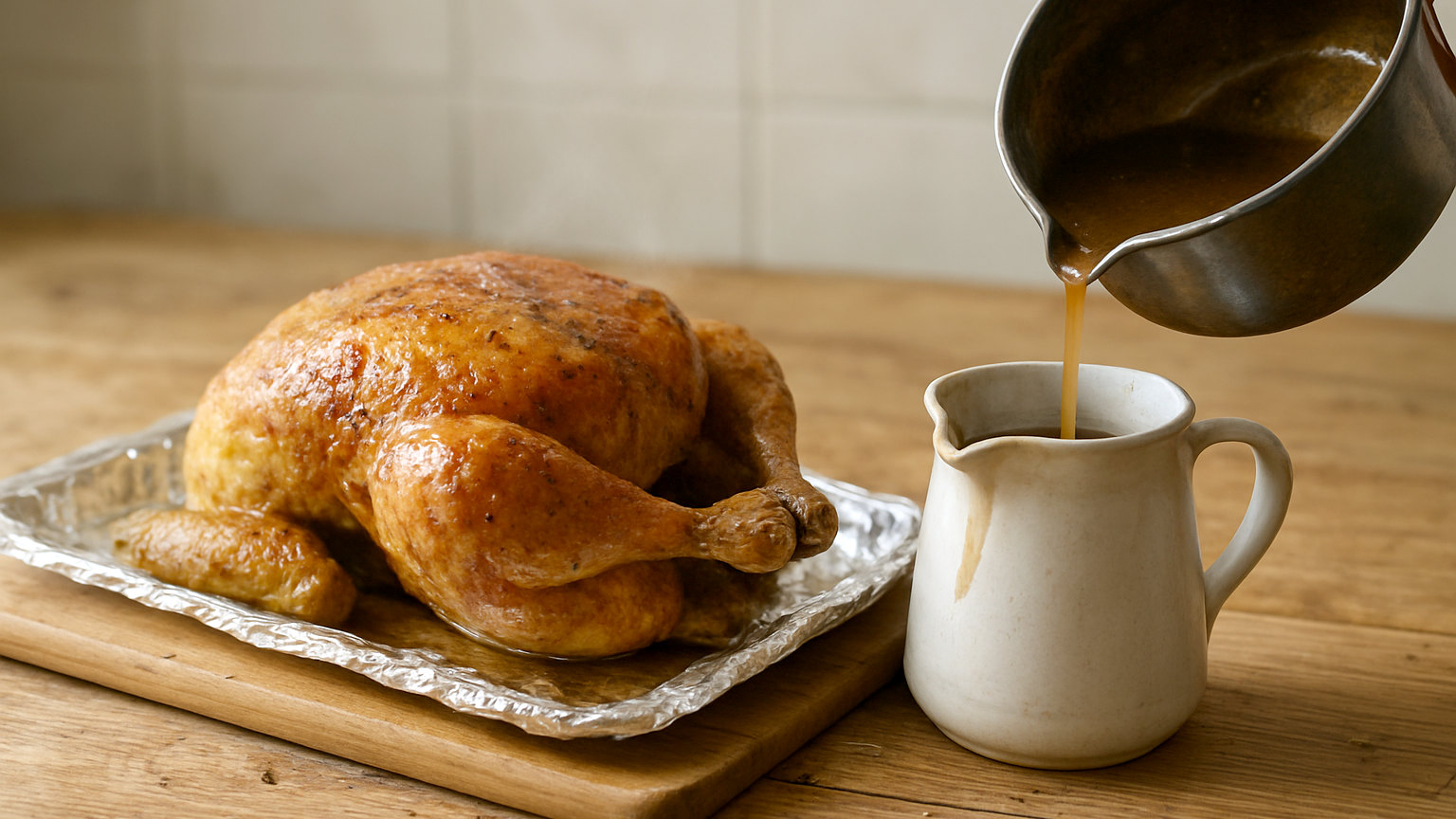
The standard formula for roast chicken is 20 minutes per 500g plus an extra 20 minutes, at 190C fan. It is a good rule and it works for most birds most of the time. What it cannot account for is a chicken that went into the oven straight from the fridge, a stuffed cavity, or an oven that runs hotter or cooler than its dial claims.
What are the timings by weight?
At 190C fan, 210C conventional, gas mark 6:
- 1.2kg chicken: about 1 hour 8 minutes
- 1.5kg chicken: about 1 hour 20 minutes
- 1.8kg chicken: about 1 hour 32 minutes
- 2.2kg chicken: about 1 hour 48 minutes
- 2.5kg chicken: about 2 hours
Start checking fifteen minutes before the chart says, since an oven running slightly hot will get there sooner and the penalty for overshooting is a dry breast.
What temperature must it reach?
75C in the thickest part of the thigh, with juices running clear and no pinkness at the bone, according to Food Standards Agency guidance. Chicken is not a meat where doneness is a matter of preference.
Probe the thigh, not the breast. The thigh is the last part to come up to temperature, so a breast reading of 75C tells you very little about whether the bird is safe to eat.
Does stuffing change the timing?
Yes, considerably. Weigh the bird after stuffing and calculate from the total, then add a further 15 to 20 minutes, since the stuffing insulates the cavity and slows everything down.
The stuffing itself must reach 75C. Many cooks avoid the problem entirely by cooking stuffing separately in a dish, which also gives crisp edges.
What about a spatchcocked bird?
Removing the backbone and flattening the chicken cuts the time roughly in half. A 1.8kg spatchcocked bird takes about 45 minutes at 200C fan.
It also cooks far more evenly, because the legs and breast end up at similar distances from the heat, which is the whole problem with a whole bird.
Does a cold bird take longer?
About fifteen minutes longer for a large chicken, and it cooks less evenly, since the outside stays in the heat while the middle catches up.
An hour on the worktop is enough for a bird up to 2kg. Ninety minutes for anything larger.
How long should it rest?
Twenty minutes for a standard bird and thirty for a large one. The temperature keeps climbing by around 3C during that period, so a chicken that reads 73C when it comes out will be safe by the time it is carved.
Cover it loosely. Sealing it with foil traps steam and softens the skin you have spent an hour and a half crisping.
Do chicken crowns and portions differ?
A crown, which is the breast on the bone with the legs removed, cooks in about 25 minutes per kilo plus 20 minutes, since there is less mass and no legs to wait for.
Thighs and drumsticks take 35 to 45 minutes at 200C fan and are very difficult to overcook, which makes them a forgiving option.
What if it is not done when the time is up?
Put it back in. If the skin is already dark, cover the breast loosely with foil and continue until the thigh reaches 75C.
An undercooked chicken is not something to compromise on, and a slightly overcooked one served with plenty of gravy is a far better outcome.
Does the oven type change things?
Fan ovens circulate air and cook faster, which is why the temperatures here are given as 190C fan and 210C conventional. If your recipe gives only one figure, assume it is conventional and drop 20C for a fan oven.
Ovens also drift out of calibration over the years. An oven thermometer costs very little and settles the question permanently.
How do you fit the rest of the meal around it?
Use the resting period. Take the chicken out, turn the oven to 220C fan and give the roast potatoes their final 20 minutes while the bird sits under foil.
Parboil and rough them up before the chicken comes out so they can go straight into hot fat, and make the gravy from the tin while everything else browns.
For something along the same lines, see How to Roast a Chicken Properly, or browse all our Roasts recipes.


