
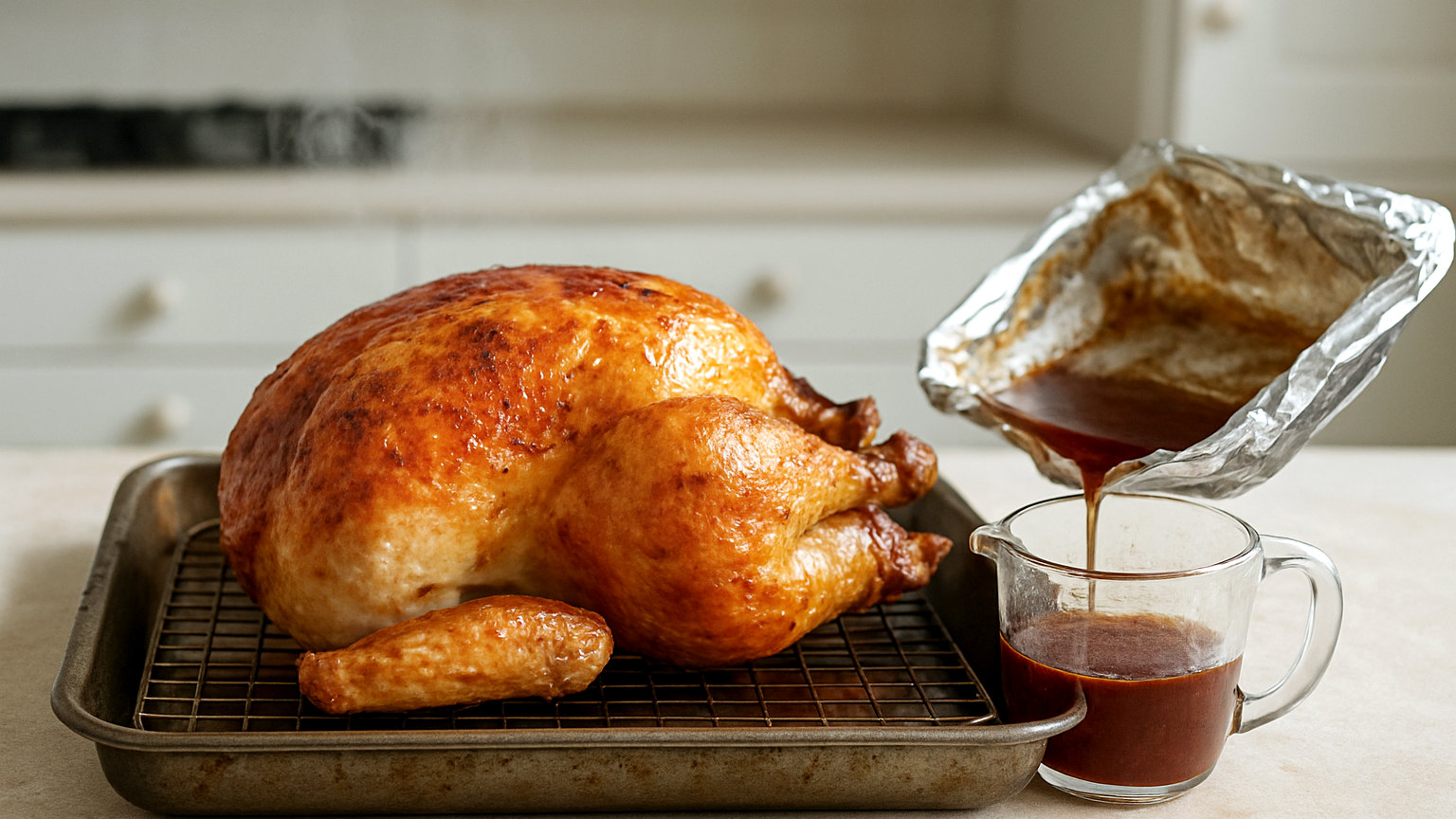
Chicken gravy is lighter than beef gravy, and attempts to force it dark with gravy browning generally make it taste of nothing in particular. What it needs instead is properly browned vegetables from under the bird, the sticky residue in the base of the tin, and good stock. It takes ten minutes during the resting period and it is the difference between a decent roast and a very good one.
What is in the tin?
Clear chicken fat on top, darker juices underneath, and browned residue stuck to the base and sides. That residue is where most of the flavour lives.
If you roasted the bird on onions and carrots, they will have caramelised and are worth squashing into the gravy before straining.
How do you make it?
- Lift out the chicken and set the tin over a low hob flame.
- Tilt the tin and spoon off all but two tablespoons of the fat.
- Squash the roasted vegetables into the base with a wooden spoon.
- Scatter over 2 tablespoons of plain flour and stir it in, cooking for a full minute until it smells nutty.
- Add 100ml of white wine and let it bubble down, scraping the tin clean.
- Pour in 600ml of hot chicken stock a little at a time, stirring until smooth.
- Simmer for 8 minutes until it coats the back of a spoon.
- Strain into a warm jug and stir in the resting juices at the last moment.
Cook the flour out before any liquid goes in. That minute is the difference between gravy and something that tastes faintly of raw flour, and simmering afterwards does not remove it.
How much fat should you pour off?
Nearly all of it. You want roughly equal weights of fat and flour, so two tablespoons of each.
Keep what you pour off. Chicken fat makes very good roast potatoes and keeps for a month in the fridge.
Which stock should you use?
Homemade chicken stock from a previous carcass, which is the strongest argument for keeping them. A good liquid stock is next best, and a cube is fine if you go easy on further salt.
Water from the vegetable pan adds body and a little starch and is worth using for part of the quantity. Cabbage water is the exception, since it takes over.
How do you give it more depth?
Let the vegetables under the bird go properly brown, and cook the flour until it takes colour. A teaspoon of Dijon mustard, a splash of soy sauce or a spoonful of redcurrant jelly all add depth.
Roasting the neck and giblets alongside the bird makes a noticeable difference and costs nothing, since most butchers include them.
What can you use instead of wine?
Dry vermouth, cider, or extra stock with a teaspoon of white wine vinegar. The wine is providing acidity rather than anything more complicated.
A squeeze of lemon at the end does much the same job if the chicken was roasted with lemon in the cavity.
What if the tin is nearly dry?
Fry a sliced onion and a chopped carrot in the tin until properly brown, add a tablespoon of tomato puree and cook it out, then proceed as normal and strain at the end.
Very lean supermarket birds sometimes release water rather than fat, in which case boil it down hard before adding the flour.
How do you thicken or thin it?
Simmer it longer rather than adding more flour, which brings back the pasty taste. A teaspoon of cornflour slaked in cold water thickens it in two minutes if time is short.
If it is too thick, add hot stock a little at a time rather than water, then taste again for seasoning.
Can it be made ahead?
Make a base from browned onions, flour and stock up to three days ahead, then whisk it into the roasting tin at the last minute so it picks up the juices.
Allow 150ml per person and make more. Leftover gravy keeps three days, freezes for three months and reheats once only until piping hot, following Food Standards Agency guidance.
If that was useful, Which Chicken Should You Buy for Roasting? covers related ground, and there is plenty more in Roasts recipes.


