
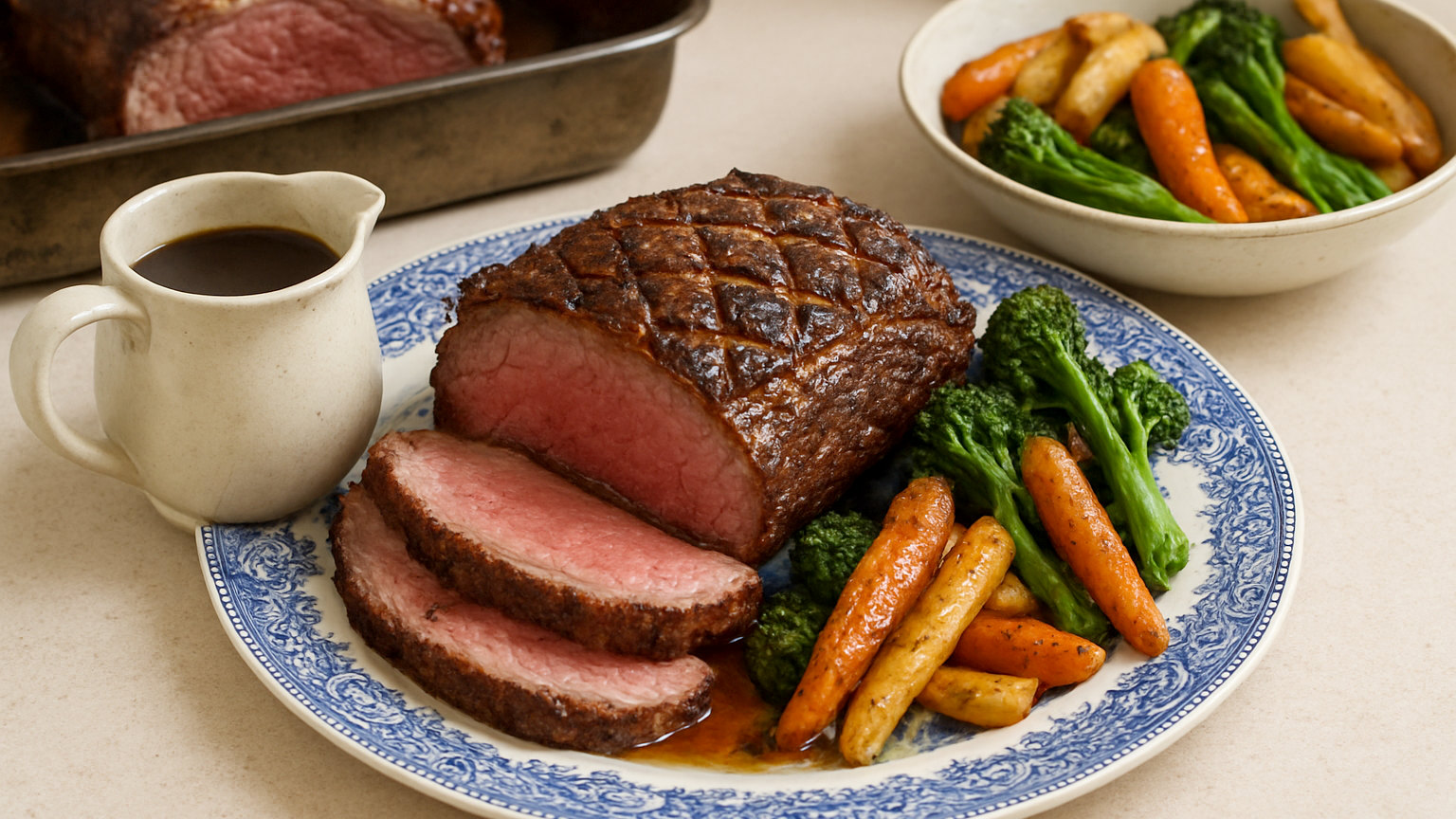
Roast beef is rich, salty and quite one note on its own, which is why the vegetables around it matter more than they do with chicken. The plate wants three things: something sweet and caramelised, something green with a bit of bite, and something sharp to cut through. Get one from each group and the meal balances itself without much thought.
Which are the traditional choices?
Roast potatoes cooked in the beef dripping, roast parsnips, carrots and a green vegetable. Yorkshire puddings sit somewhere between a side and a requirement, depending on which part of the country you are from.
Beyond that, cauliflower cheese has become a fixture on a great many Sunday tables and is a genuine improvement rather than an intrusion.
What is in season when?
British carrots and parsnips are at their best from October through to February, and parsnips are sweeter after the first frost. Purple sprouting broccoli runs from February to April and is excellent with beef.
Savoy cabbage and kale carry the winter months, runner beans peak in August and September, and the first English asparagus arrives in late April and is worth serving simply with butter.
How do you cook the parsnips?
Quarter them lengthways, remove the woody core from any large ones, and roast them in the same fat as the potatoes for 35 to 40 minutes.
Add honey only in the last ten minutes. Sugar burns long before a parsnip is cooked, so anything sweet goes on at the end rather than the beginning.
What green vegetable works best?
Savoy cabbage shredded and cooked in a covered pan with butter and a splash of water for six minutes. It keeps texture, absorbs gravy well and does not go grey.
Tenderstem broccoli, green beans and buttered leeks are all good. Peas are fine but add nothing the meal needs, and frozen peas are the only ones worth buying outside July.
What can you use instead of roast potatoes?
Dauphinoise is the obvious swap and has the advantage of cooking at a lower temperature alongside the beef rather than competing for a hot oven. Mash suits slow cooked brisket better than roast potatoes do.
Hasselback potatoes or a tray of new potatoes crushed and roasted also work, and both are more forgiving of oven crowding than a full tray of roasties.
What can you use instead of parsnips?
Carrots roasted in the same fat, halved swede tossed with honey, or wedges of celeriac all sit in the same place on the plate and cook to a similar timetable.
Squash and sweet potato both work but soften faster, so give them 25 minutes rather than 40 and keep them in a separate corner of the tin.
Out of season, a tray of roasted onions and whole garlic cloves does the sweetening job perfectly well and costs almost nothing.
What provides the sharpness?
Horseradish is the classic. Beyond that, braised red cabbage with vinegar and apple, pickled beetroot, or a small watercress salad dressed with lemon all cut the richness.
This is the element most often missing from a Sunday plate, and adding it makes more difference than another root vegetable would.
How do you fit it all in one oven?
Use the resting period. Once the beef comes out, turn the oven up to 220C fan and give the potatoes and parsnips their final 25 minutes while the meat sits under foil.
Everything green goes on the hob in the last eight minutes. Cauliflower cheese can be assembled hours ahead and only needs 20 minutes to heat through and brown, so it can share a shelf.
How much should you allow per person?
Roughly 150g of potatoes, 100g of root vegetables and 100g of greens per head, then add a bit because Sunday lunch is not the meal to be exact about. Two Yorkshire puddings each is the accepted minimum in most households.
Leftover roast vegetables make an excellent bubble and squeak the next day, so cooking more than you need is rarely wasted.
For something along the same lines, see Pot Roast Silverside with Root Vegetables, or browse all our Roasts recipes.


