
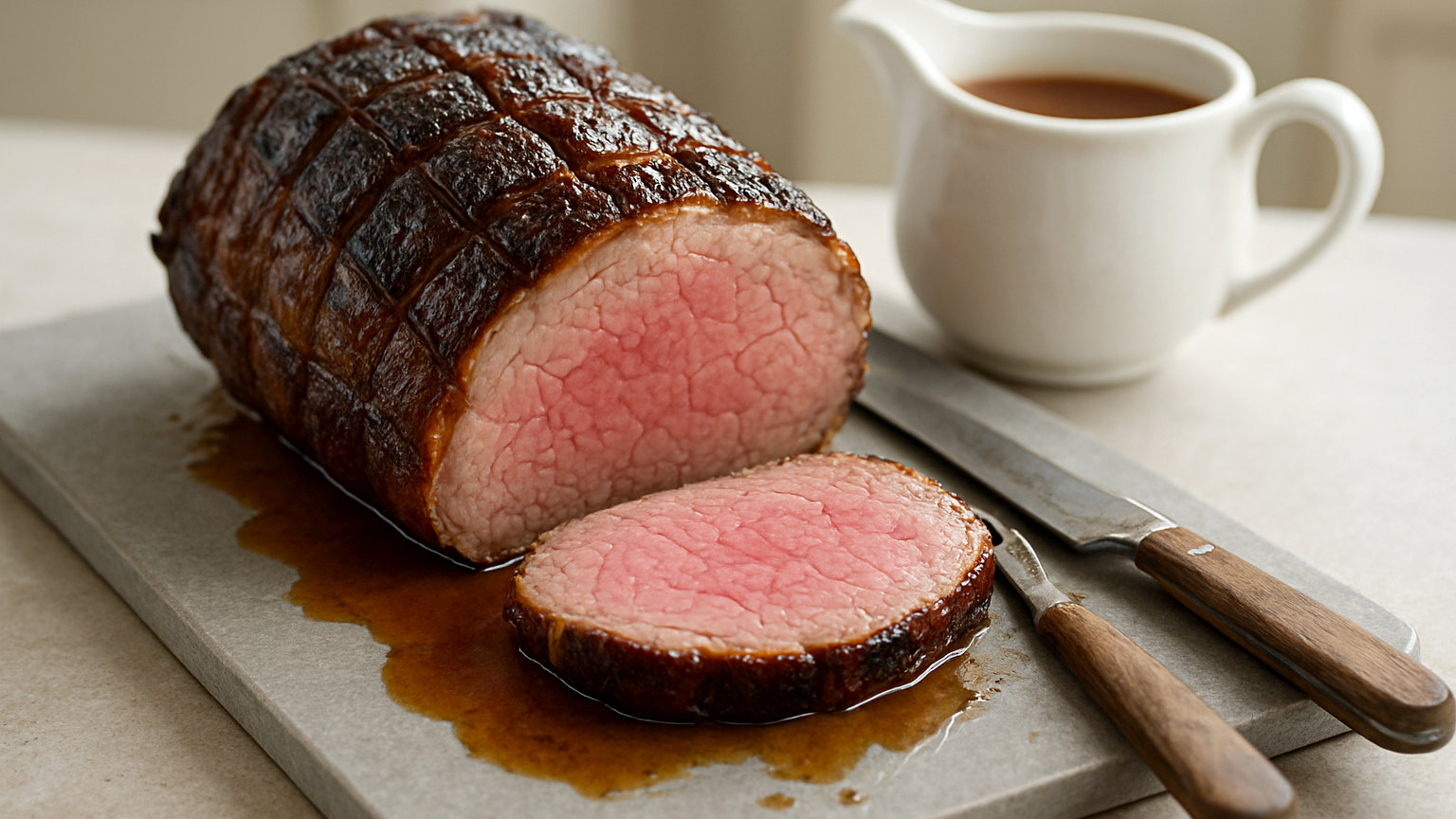
Silverside comes from the same part of the animal as topside but is tougher and coarser grained, which is why it costs less and why dry roasting so often disappoints. Sealed into a heavy casserole with stock, root vegetables and three hours of low heat, it becomes something else entirely. The meat stays sliceable, the vegetables cook in the beef juices, and the gravy makes itself.
Ingredients, serves 6
- 1.6kg beef silverside, rolled and tied
- 2 tablespoons beef dripping
- 2 onions, quartered
- 4 carrots, cut into thick lengths
- 3 parsnips, quartered lengthways
- 1 small swede, cut into large chunks
- 2 sticks celery, sliced
- 2 tablespoons plain flour
- 200ml red wine
- 500ml beef stock
- 2 bay leaves, thyme, and 1 tablespoon Worcestershire sauce
Method
- Heat the oven to 150C fan, 170C conventional, gas mark 3.
- Season the beef well and brown it hard on every side in the dripping. This takes about 10 minutes and is worth doing properly.
- Lift the joint out and soften the onions and celery in the pot for 5 minutes.
- Stir in the flour and cook for a minute, then add the wine and let it bubble down by half.
- Return the beef, pour in the stock and add the herbs and Worcestershire sauce. The liquid should reach halfway up the joint.
- Cover tightly and cook for 2 hours.
- Add the carrots, parsnips and swede, tucking them around the meat, and cook for a further hour.
- Rest the joint on a board for 20 minutes while you skim the fat from the sauce and reduce it if needed.
- Carve thinly across the grain and serve with the vegetables and plenty of the liquid.
Do not cover the joint with liquid. Halfway up is right. Fully submerged, it boils rather than braises, and the top of the joint never develops the darker roasted flavour that makes this worth doing.
Why does silverside need this treatment?
It has more connective tissue and coarser fibres than topside, and very little internal fat. Dry heat tightens those fibres with nothing to soften them, so the meat goes stringy.
Moist heat at a low temperature converts the connective tissue to gelatine instead, which coats the fibres and keeps the slices tender.
When should the vegetables go in?
An hour before the end. Root vegetables added at the start collapse into the sauce over three hours, which thickens it pleasantly but leaves you nothing to serve.
Cut them large. Chunks the size of a small egg hold their shape and absorb the beef flavour without disintegrating.
Can you use a slow cooker?
Yes. Brown the meat and soften the onions in a pan first, then transfer everything to the slow cooker with only 300ml of stock, since almost no liquid evaporates. Cook on low for 8 hours, adding the roots for the final 3.
How should it be carved?
Across the grain and thinly, as with any lean beef. Let it rest first, since a hot braised joint is soft and tears under the knife.
What do you serve with it?
The vegetables are already in the pot, so all it needs is mashed or roast potatoes and something green. Horseradish or English mustard cuts through the richness, and a spoonful of redcurrant jelly stirred into the sauce lifts it if the beef was very lean.
Dumplings are worth considering instead of potatoes. Drop them onto the surface for the final thirty minutes with the lid on and they steam into the sauce.
What exactly is silverside?
It is the outer muscle of the hind leg, sitting alongside topside. The two are often confused because they are cut from the same primal, but silverside works harder, so the fibres are coarser and there is more connective tissue running through it.
It is also the cut traditionally salted to make salt beef, which tells you a good deal about how it responds to long, slow, moist cooking rather than dry heat.
Does it keep?
It improves overnight. Cool it quickly, refrigerate within two hours and reheat once only until piping hot throughout, following Food Standards Agency guidance. It freezes in its liquid for three months.
If that was useful, What Vegetables Go With Roast Beef? covers related ground, and there is plenty more in Roasts recipes.


