
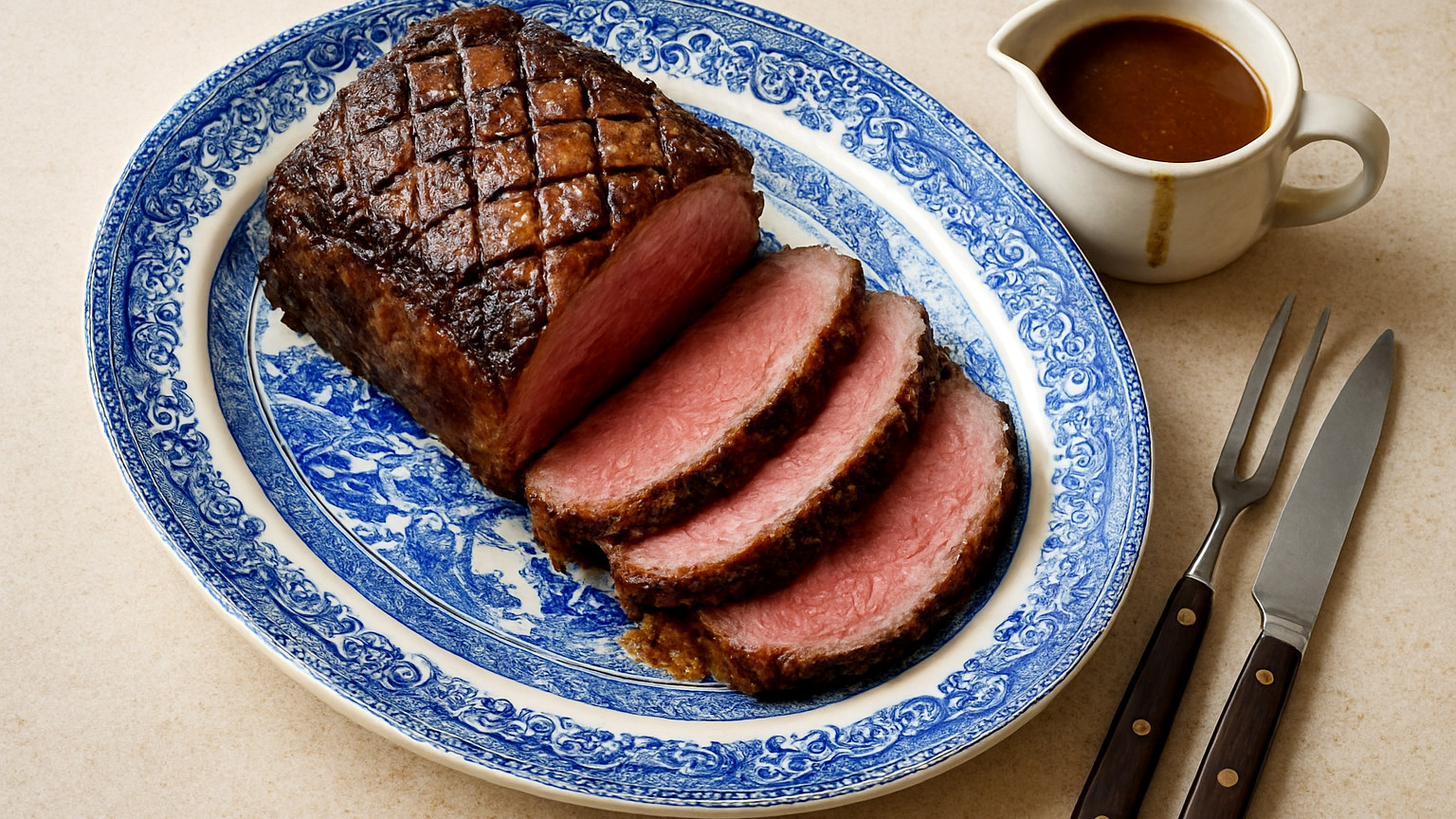
Beef takes sharper accompaniments than any other roast, which is why horseradish sits next to it and mint sauce does not. The purpose of the sauce is to cut through fat and salt rather than to add more richness, so the good options are almost all either hot, acidic or both. Gravy is a separate matter and does a different job.
Why horseradish?
The heat in horseradish is volatile and hits the nose rather than the tongue, so it clears the palate between mouthfuls of rich beef without lingering. Nothing else quite replicates that.
Fresh root grated into creme fraiche with a squeeze of lemon and a pinch of salt is far better than anything in a jar, and takes two minutes. Grate it at arm's length, since the fumes are genuinely fierce.
How do you make creamed horseradish?
Grate 3 tablespoons of fresh horseradish root, stir into 150ml of creme fraiche or lightly whipped double cream, add a teaspoon of white wine vinegar, half a teaspoon of caster sugar and salt to taste.
Make it on the day. Grated horseradish loses its heat within a few hours of being exposed to air, which is why a jar opened last Christmas tastes of very little.
What can you use instead of horseradish?
English mustard is the closest in effect and is the traditional alternative. Wasabi paste stirred into cream is a reasonable stand in, since it works on the same part of the palate.
Failing both, a mustard and creme fraiche sauce with chopped tarragon does the job, or simply a spoonful of pickled beetroot on the side.
Is a red wine sauce worth making?
For a rib of beef or a special occasion, yes. Reduce 300ml of red wine with a chopped shallot and a sprig of thyme until nearly dry, add 400ml of good beef stock, reduce by half, then whisk in 30g of cold butter off the heat.
It is richer than gravy and best served in small quantities alongside rather than poured over everything.
What about peppercorn sauce?
It suits a thick piece of sirloin or a small joint far better than a large Sunday roast, where it tends to overwhelm the vegetables.
Crush a tablespoon of green peppercorns, soften a shallot in butter, add a splash of brandy, 200ml of stock and 100ml of double cream, and simmer for five minutes.
Which sauce suits which cut?
Horseradish suits everything, but it is best with rib and topside, where the beef is the whole point. A red wine sauce flatters a lean fillet that needs richness added.
Slow cooked brisket and silverside are already sitting in a sauce of their own, so they want something sharp on the side rather than another gravy.
What if the cupboard is bare?
Mustard and creme fraiche whisked together with a squeeze of lemon takes thirty seconds. A spoonful of redcurrant jelly loosened with a splash of the resting juices is another.
Failing that, a sharp pickle from the fridge door does more for a plate of roast beef than an elaborate sauce made badly.
Should you serve gravy as well?
Always. Gravy moistens the meal and the sauce sharpens it, so they are not alternatives. Put the horseradish on the table in a small bowl and let people help themselves.
Allow 150ml of gravy per person and a heaped teaspoon of horseradish, and expect the gravy to run out first.
What goes with cold beef the next day?
Piccalilli, English mustard, pickled onions and chutney all suit cold roast beef better than they suit it hot. A sharp tomato chutney or a spoonful of salsa verde works very well in a sandwich.
How far ahead can these be made?
Creamed horseradish is best within a few hours. Red wine and peppercorn sauces can be made to the point before the butter or cream goes in, kept for three days in the fridge, and finished in two minutes.
Anything containing cream should be cooled quickly, refrigerated within two hours and used within three days, following Food Standards Agency guidance.
Worth reading next: Roast Fillet of Beef with Peppercorn Sauce. There is more in our Roasts recipes.


