
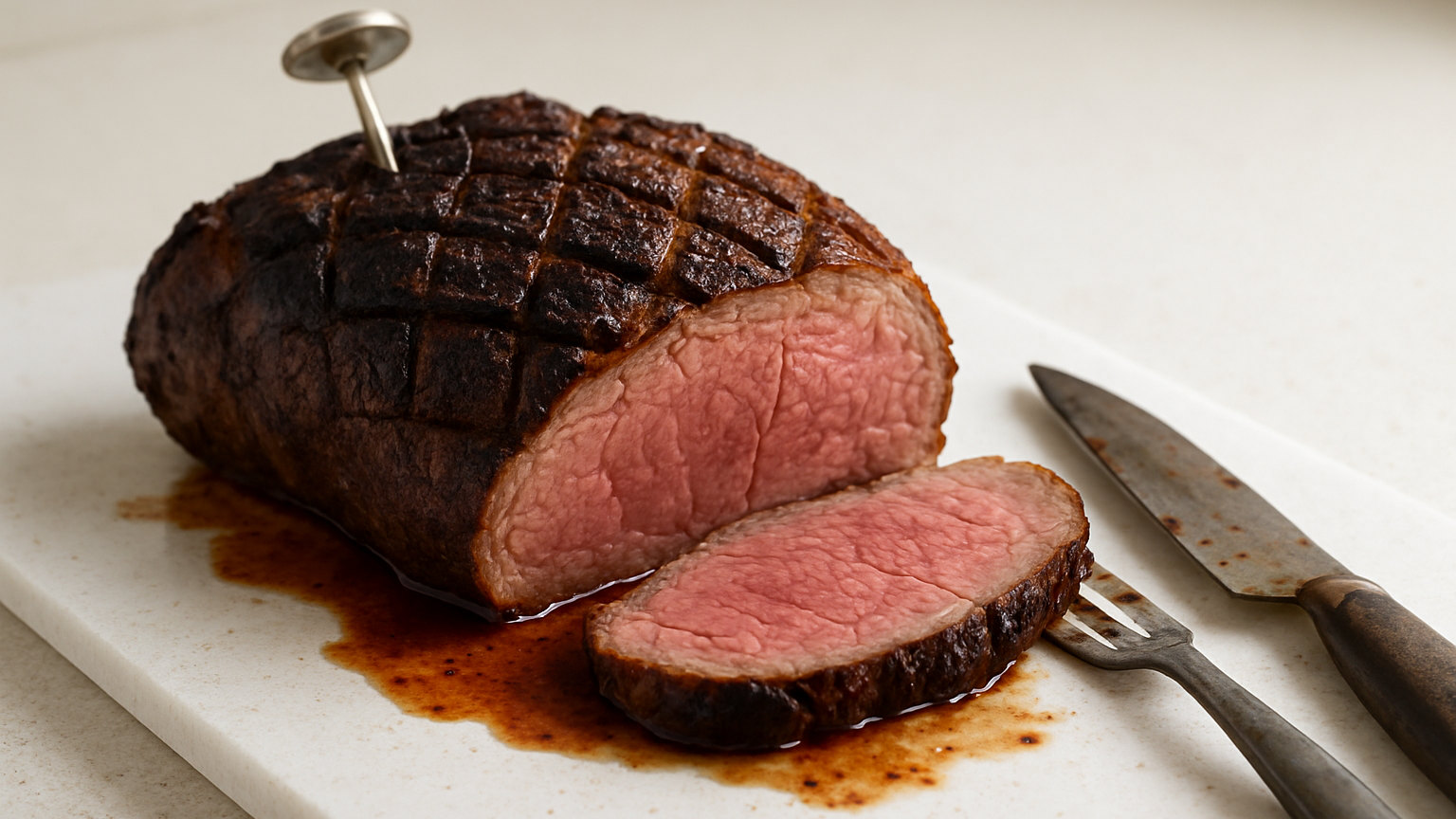
Fillet of beef is the most tender cut and the least forgiving, because it is so lean that a few minutes too long takes it from pink to dry with nothing in between. It also cooks in about half an hour, which makes it the best choice when the oven is needed for other things. A peppercorn sauce made in the searing pan while the meat rests finishes it in ten minutes.
Ingredients, serves 6
- 1kg centre cut beef fillet, trimmed and tied
- 2 tablespoons oil and a knob of butter
- 4 garlic cloves, crushed but unpeeled
- A few sprigs of thyme
- 2 shallots, finely chopped
- 2 tablespoons green peppercorns in brine, drained
- 1 tablespoon cracked black peppercorns
- 75ml brandy
- 250ml beef stock
- 150ml double cream
- 1 teaspoon Dijon mustard
Method
- Take the fillet out of the fridge 45 minutes ahead and dry it well. Season heavily.
- Heat the oven to 200C fan, 220C conventional, gas mark 7.
- Sear the fillet in a hot ovenproof pan for about 6 minutes in total, turning to brown every side.
- Add the butter, garlic and thyme, baste for a minute, then transfer the pan to the oven.
- Roast for 20 to 25 minutes, checking from 18 minutes. Remove at 50C in the centre for medium rare.
- Lift the fillet onto a warm board and rest for 15 minutes, loosely covered.
- Pour off the excess fat, soften the shallots in the same pan, then add the brandy and let it reduce almost completely.
- Add the stock and reduce by half, then stir in the cream, mustard and both peppercorns and simmer for 4 minutes.
- Stir in any juices from the resting board and season. Carve the fillet into thick slices.
Start checking the temperature at 18 minutes. A fillet moves from 50C to 60C in about six minutes, so the difference between medium rare and medium well is smaller than the time it takes to lay the table.
Which piece should you buy?
The centre cut, an even cylinder of roughly the same thickness throughout. The thin tail end cooks far faster and will be well done before the middle is ready.
Ask for it trimmed of sinew and tied at intervals, which holds the shape and keeps the cooking even.
Why sear it first?
A fillet spends too little time in the oven to brown on its own. Searing builds the crust and the flavour in six minutes, and it leaves the fond in the pan that the sauce is built on.
Get the pan properly hot and dry the meat first, or it steams rather than browns.
Should it be barded with fat?
Wrapping the fillet in thin strips of beef fat or streaky bacon protects it and adds richness, and it is worth doing if you are nervous. Remove the bacon for the last five minutes so the surface can colour.
How thick should the slices be?
Around 2cm. Fillet is tender enough that thick slices present no problem, and thin ones cool quickly and lose their pinkness on the plate.
Is fillet worth the money?
It is the most tender cut and the least flavourful, which is the trade being made. Rib and sirloin taste considerably more of beef; fillet offers texture and a lean, neat slice.
That is why it is nearly always served with a sauce. If you want the beef itself to be the flavour, spend the same money on a smaller piece of well aged rib instead.
Can the sauce be made ahead?
Make it up to the point before the cream goes in, up to two days ahead. Reheat, add the cream and peppercorns, and finish with the resting juices.
What should you serve with it?
Dauphinoise or fondant potatoes, spinach or green beans, and nothing that competes with the sauce. Roast potatoes work but need the oven at a higher temperature, so cook them first and hold them warm.
Cool any leftovers quickly and refrigerate within two hours. Cold fillet sliced thinly is excellent and is best not reheated at all.
For something along the same lines, see Which Sauce Goes With Roast Beef?, or browse all our Roasts recipes.


