
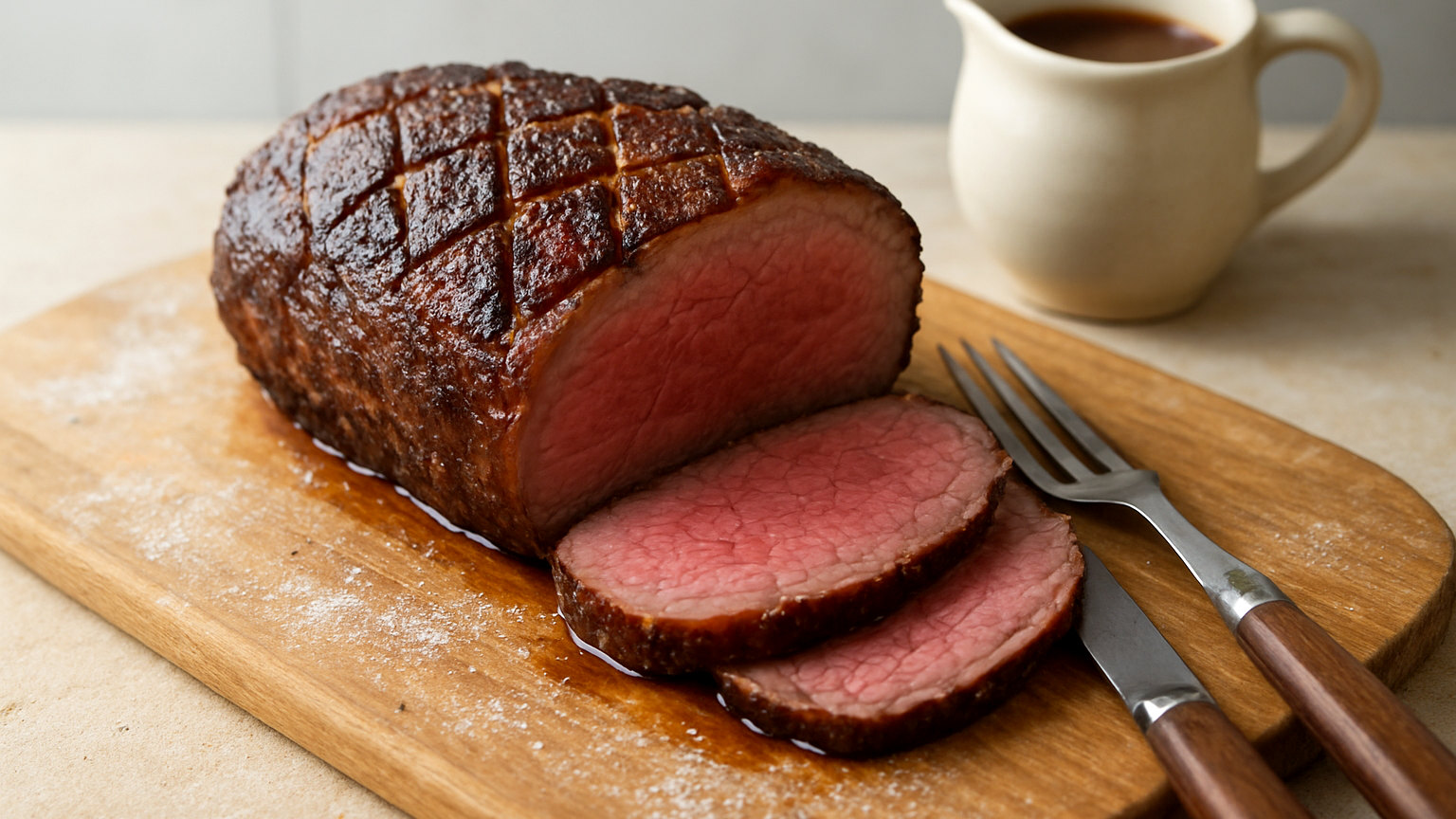
Topside is the joint most British households roast and the one most often disappointing. It is a very lean muscle with almost no fat running through it, so there is nothing inside to keep it moist once it is overcooked. Handled properly it is tender, easy to carve and considerably cheaper than rib. Handled like a rib joint it turns grey and stringy.
Ingredients, serves 6
- 1.5kg topside of beef with the fat cap left on
- 2 tablespoons beef dripping
- 1 tablespoon English mustard powder
- 3 large onions, thickly sliced
- 2 carrots, cut into thick lengths
- A few sprigs of thyme
- 2 tablespoons plain flour
- 150ml red wine or dark ale
- 600ml beef stock
- Flaky salt and coarse black pepper
Method
- Take the beef out of the fridge an hour ahead and pat it completely dry.
- Heat the oven to 220C fan, 240C conventional, gas mark 9.
- Score the fat cap in a diamond pattern, rub it with dripping, then season heavily with salt, pepper and the mustard powder.
- Spread the onions and carrots over the base of a roasting tin and sit the joint on top, fat side up, with the thyme underneath.
- Roast for 20 minutes at the high heat.
- Turn the oven down to 180C fan and cook for 18 minutes per 500g for medium rare, about 54 minutes for this joint.
- Remove when the centre reads 51C and rest for 25 minutes, loosely covered.
- Pour off all but two tablespoons of fat, set the tin over a low flame, stir in the flour and cook for a minute.
- Add the wine, let it bubble away, then whisk in the stock and simmer for 10 minutes. Push the softened onions through a sieve into the gravy for body.
Do not take topside past medium. At 60C it is still good; by 70C the fibres have contracted and squeezed out the water that made it tender, and nothing brings that back.
Why does the joint sit on onions?
They lift the beef clear of its own juices so the underside roasts rather than stews, and they caramelise into the base of the tin, giving the gravy colour, sweetness and body without any need for thickening beyond the flour.
Should the fat cap stay on?
Always. Topside is usually sold with a thin layer of fat tied on top, and it bastes the meat as it renders. Scoring lets the salt get in and helps it crisp.
If your joint has been trimmed bare, ask the butcher for a piece of beef fat to tie on, or lay two rashers of streaky bacon over the top for the first half of the cooking.
How should topside be carved?
Thinly, and across the grain. Find the direction the fibres run, turn the joint so your knife crosses them at right angles, and cut slices no thicker than a pound coin.
Thick slices of topside chew stubbornly even when the joint is cooked perfectly, because you are asking someone to bite through full length muscle fibres.
How long should topside rest?
Twenty five minutes for a joint this size, loosely covered with foil and a tea towel. Lean beef benefits from resting more than any other cut, because the juice it reabsorbs is the only thing keeping it moist.
It will not go cold. A 1.5kg joint holds heat for the best part of an hour, and warm plates and hot gravy matter far more to the temperature at the table.
What if you prefer beef well done?
Pot roast it instead. Brown the joint, sit it in a casserole with the onions, half a bottle of red wine and 300ml of stock, cover tightly and give it three hours at 150C fan. It falls apart rather than slicing neatly, but it stays moist.
How do you use the leftovers?
Cold topside carved thinly makes the best beef sandwich there is, with horseradish and a little mustard. Cool it quickly, refrigerate within two hours and use within three days, in line with Food Standards Agency guidance.
Avoid reheating thin slices in the oven, where they overcook almost instantly. Warm them for thirty seconds in hot gravy instead.
Next, try Roast Sirloin of Beef with Red Wine Gravy, or see the rest of our Roasts recipes.


