
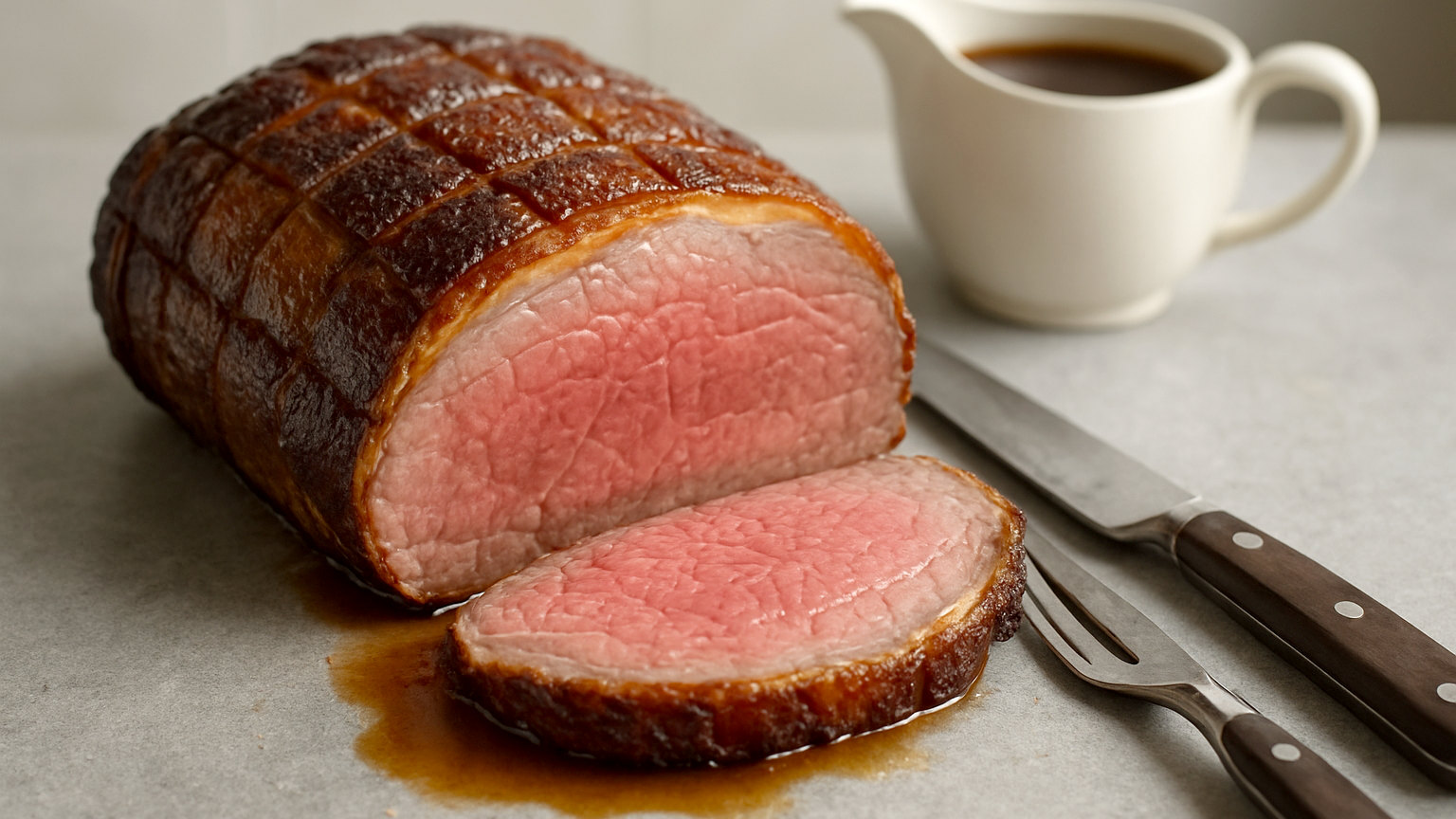
A rolled sirloin joint is the sensible middle choice for a Sunday roast. It costs less than fore rib, has a proper fat cap and enough marbling to stay tender, and carves into neat round slices with no bone and almost no waste. It is also easier to fit in a domestic oven than a large rib, which matters more than people admit.
Ingredients, serves 6
- 1.8kg rolled sirloin of beef
- 2 tablespoons beef dripping or oil
- 4 garlic cloves, unpeeled and crushed
- A few sprigs of rosemary and thyme
- 2 onions, halved
- 2 tablespoons plain flour
- 250ml red wine
- 600ml beef stock
- 1 teaspoon redcurrant jelly
- Flaky salt and coarse black pepper
Method
- Bring the joint to room temperature over an hour and dry the surface well.
- Heat the oven to 220C fan, 240C conventional, gas mark 9.
- Score the fat lightly, rub with dripping and season hard with salt and pepper.
- Sit the joint fat side up on the onions and garlic in a roasting tin, herbs tucked around.
- Roast for 20 minutes, then reduce to 180C fan.
- Cook for a further 17 minutes per 500g for medium rare, roughly 60 minutes for this joint.
- Remove at 51C in the centre and rest for 30 minutes, loosely covered.
- Pour off the fat, leaving two tablespoons, stir in the flour and cook it out over a low heat.
- Add the wine and reduce by half, then whisk in the stock, add the redcurrant jelly and simmer for 10 minutes. Strain into a warm jug.
Let the wine reduce properly before the stock goes in. Gravy made with under reduced wine tastes sharp and thin, and simmering it later with the stock never quite fixes the harshness.
Which sirloin should you buy?
Look for a joint with a fat cap at least half a centimetre thick and visible marbling through the eye of the meat. A short thick joint cooks more evenly than a long slim one of the same weight.
Ask the butcher to tie it at regular intervals so it holds a round shape, which gives even slices and predictable timings.
How do you know when it is done?
By temperature rather than by clock. Push a digital probe into the thickest part and pull the joint at 51C for medium rare, 56C for medium or 62C for medium well.
Carryover heat adds 4C or 5C during resting, so a joint removed at 51C settles at around 55C, which is where sirloin is at its best.
Why does the fat cap matter so much?
It bastes the meat continuously as it renders and it protects the top surface from drying. Scoring it in a shallow diamond pattern helps it render evenly and lets the salt penetrate.
Do not cut down into the meat when scoring, since that opens channels for the juices to escape.
How much beef should you buy per person?
Allow 250g of boneless sirloin per person for a generous plate, or 200g if the trimmings are substantial. This 1.8kg joint serves six comfortably and leaves enough for sandwiches.
Buying slightly more than you need costs little and roasts better, since larger joints have a wider margin between underdone and overdone.
What should you serve alongside?
Roast potatoes in the beef dripping, Yorkshire puddings, carrots and greens. Horseradish sauce is traditional, and a spoonful of the red wine gravy over everything is the point of making it properly. A sharp green vegetable such as purple sprouting broccoli or savoy cabbage balances the richness of the fat cap better than anything creamy does.
Can any of it be done ahead?
The gravy base can be made a day early from browned onions, flour, wine and stock, then whisked into the roasting tin at the last minute to pick up the meat juices. That removes most of the pressure from the final half hour.
Leftover beef keeps three days in the fridge if cooled quickly and refrigerated within two hours, following Food Standards Agency advice, and the gravy freezes for three months.
For something along the same lines, see Roast Beef for Two: A Small Sirloin Joint, or browse all our Roasts recipes.


