
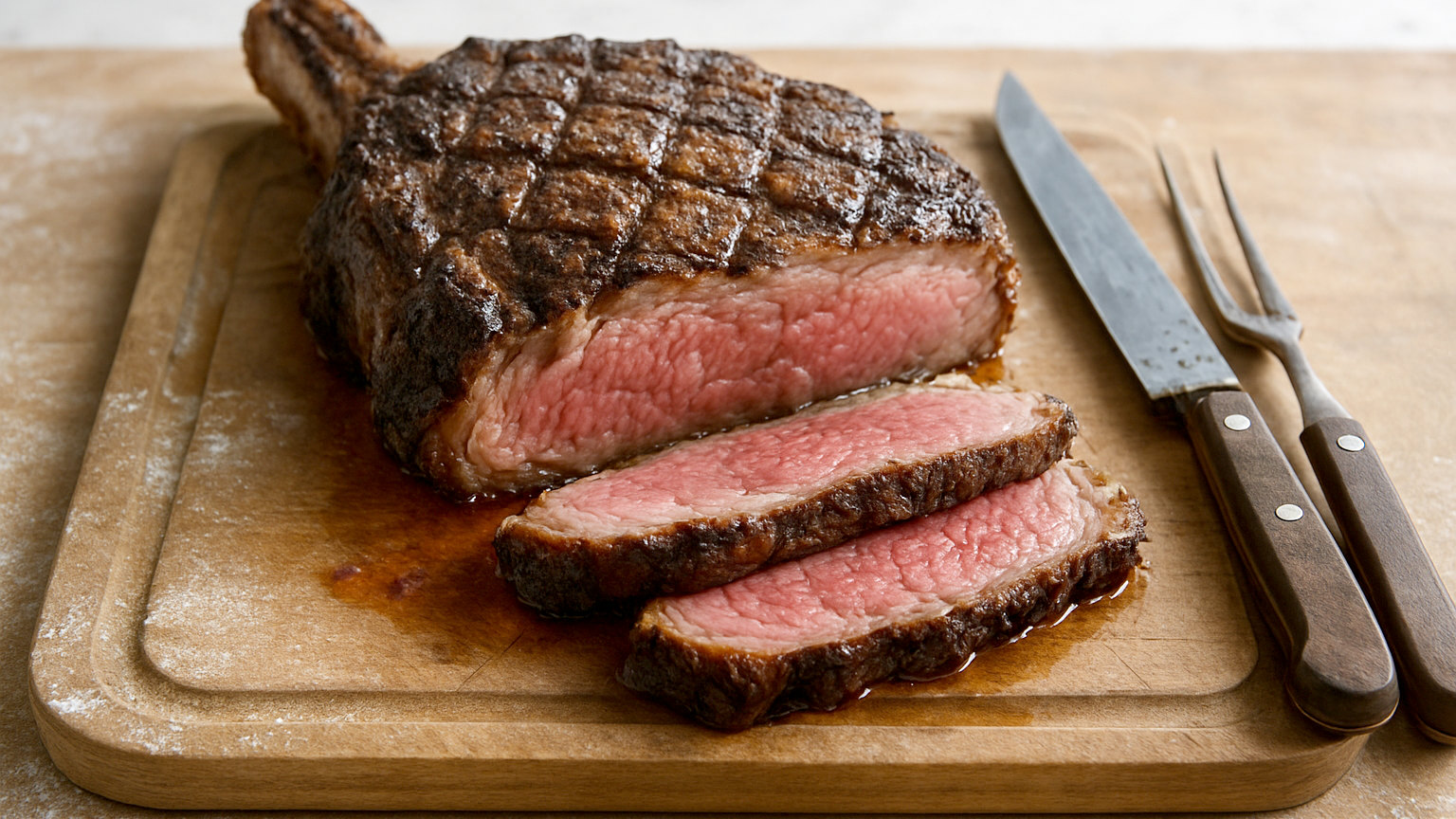
A rib of beef is the joint every other roasting cut is measured against. The fat runs through the meat rather than sitting only on the surface, the bones conduct heat towards the centre and add flavour as they roast, and the whole thing is far more forgiving than a lean joint. It is expensive, which makes people nervous, but it is one of the easier roasts to get right.
Ingredients, serves 6
- 2 bone fore rib of beef, about 2.5kg, chined
- 2 tablespoons beef dripping
- 2 tablespoons flaky sea salt
- 1 tablespoon coarsely cracked black pepper
- A few sprigs of thyme
- 2 tablespoons plain flour, for the gravy
- 150ml red wine
- 600ml beef stock
Method
- Take the joint out of the fridge two hours before cooking and pat the surface completely dry.
- Heat the oven to 240C fan, 260C conventional, gas mark 9.
- Rub the fat with dripping and season very heavily with the salt and pepper, pressing it into the scored fat.
- Sit the joint fat side up in a heavy tin, bones down, with the thyme tucked underneath. Use no rack and no vegetables.
- Roast for 25 minutes at full heat to build the crust.
- Turn the oven down to 160C fan, 180C conventional, gas mark 4, and cook for a further 15 minutes per 500g for medium rare.
- Remove when the centre reads 52C, well away from any bone.
- Rest on a board for 40 minutes, loosely covered with foil and a tea towel.
- Meanwhile pour off all but two tablespoons of fat, stir the flour into the tin over a low heat for a minute, add the wine and reduce, then whisk in the stock and simmer for 10 minutes.
Keep the thermometer away from the bone. Bone carries heat faster than meat and reads several degrees higher, which will tell you the joint is ready while the centre is still cold.
How many ribs do you need?
Butchers sell fore rib by the bone, and one rib feeds two people generously. A two bone joint of around 2.5kg serves six at a Sunday table, and a three bone joint of about 3.5kg serves eight with leftovers.
Ask for it chined, meaning the backbone sawn through and tied back on. It roasts as one piece and lifts away cleanly, which makes carving straightforward.
Which internal temperature should you aim for?
Take the joint out at 52C for medium rare, 57C for medium and 62C for medium well. The centre keeps climbing by 4C or 5C during resting, so these figures already allow for the carryover.
Why is the oven turned down partway?
The opening blast browns the fat and creates the crust. A lower temperature afterwards cooks the middle gently, so the band of grey overdone meat under the surface stays thin.
A joint this size roasted entirely at high heat ends up well done for the first inch and rare in the middle, which pleases nobody.
How do you carve it?
Cut the strings and lift off the chined backbone. Run a long sharp knife down the inside curve of the rib bones to release the whole eye of meat in one piece, then lay that flat and carve across the grain.
Separate the bones afterwards and put them on a plate, because there is good meat between them and somebody will want one.
What should you serve with it?
Yorkshire puddings, roast potatoes cooked in the dripping poured off this tin, horseradish sauce and a green vegetable. Keep the plate simple, since a rib of beef does not need crowding.
What do you do with the bones?
Simmer them with an onion, a carrot and a bay leaf for three hours to make stock better than anything sold in a carton. It freezes for three months and improves the next gravy considerably.
Cool leftover beef quickly, refrigerate within two hours and use within three days, following Food Standards Agency guidance.
See also Roast Topside of Beef with Onion Gravy, or browse more Roasts recipes.


