
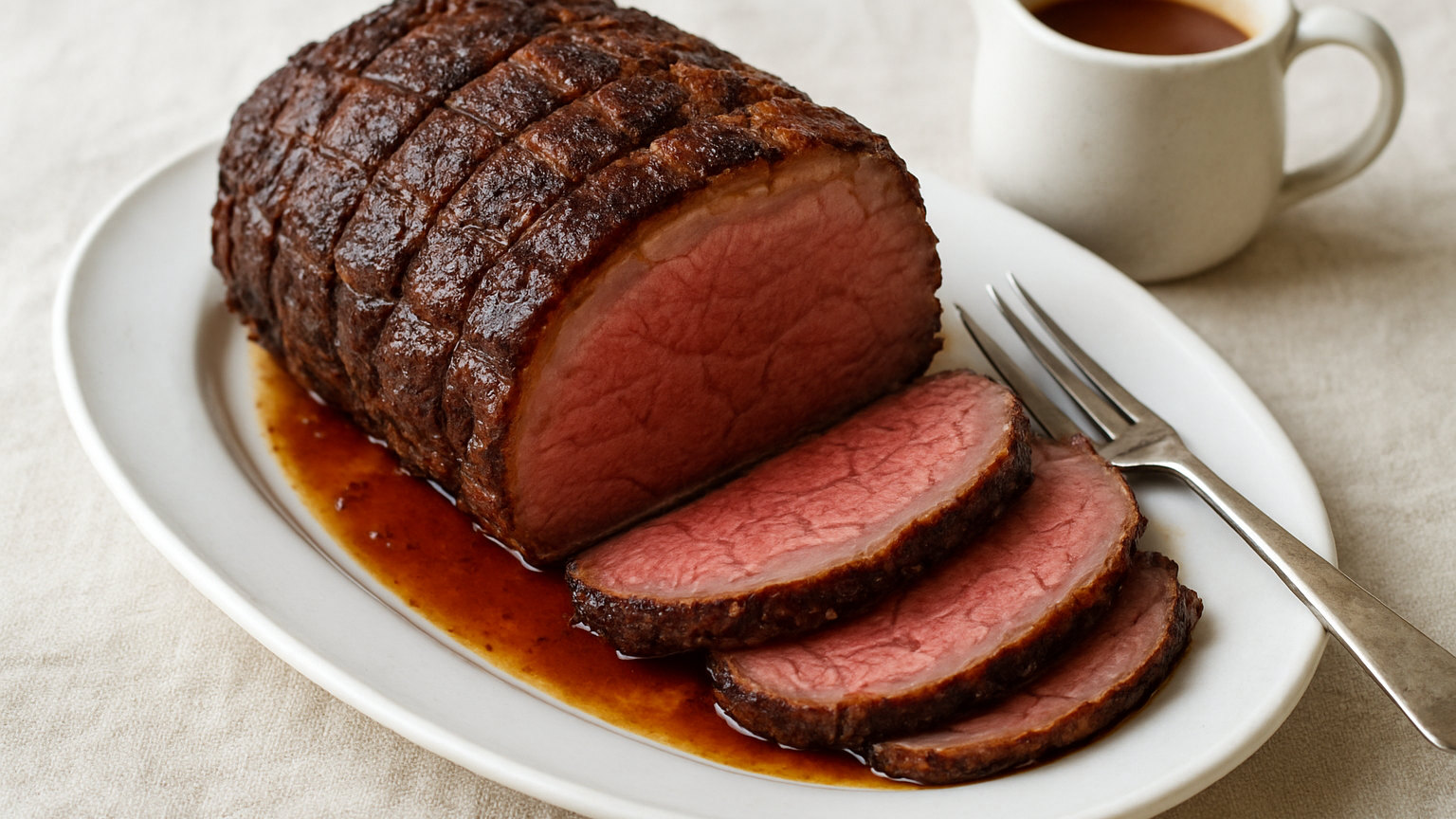
Leftover roast beef has a reputation for being dull, and that comes almost entirely from people reheating it badly. Beef already cooked to medium rare will be well done within a minute of meeting a hot pan. Two approaches work: keep it cold and slice it thinly, or give it liquid and enough time to soften again. Everything else makes it worse.
How long does it keep?
Cool the beef quickly, get it into the fridge within two hours of leaving the oven, and use it within three days. Keep it in one piece rather than sliced and wrap it tightly, since a whole piece dries out far more slowly than a plate of slices.
This follows Food Standards Agency guidance, and it is worth being careful with a large joint that has already spent an hour out of the fridge resting and being carved.
What makes the best sandwich?
Cold beef carved as thinly as you can manage, piled generously on soft white bread with butter, horseradish and a little English mustard. Watercress or rocket adds a pepperiness that suits beef particularly well.
Slice it straight from the fridge. Cold meat is firm and cuts far more cleanly than beef at room temperature, which is how you get slices thin enough to make the sandwich tender rather than chewy.
Which hot dishes work?
Anything where the beef sits in liquid rather than in direct heat. A beef and ale stew with the meat added in the last twenty minutes, a curry, or beef in onion gravy over mash all work well.
Build the sauce first and treat the beef as something to warm through at the end rather than as the thing being cooked.
Is beef hash worth making?
It is the best hot use of leftover beef and needs nothing you will not already have. Fry a chopped onion until soft, add diced cooked potatoes and let them crisp properly, then stir in diced beef and any leftover gravy right at the end.
Press it down and leave it alone for four minutes so a crust forms underneath, then serve with a fried egg on top.
What can you use instead of leftover gravy?
Hot beef stock does the same job. A stock cube dissolved in boiling water with a teaspoon of Worcestershire sauce and a knob of butter whisked in is a perfectly reasonable stand in.
A spoonful of caramelised onions loosened with water, or the liquid from a jar of pickled walnuts, both add depth if the cupboard is otherwise bare.
How do you avoid making it tough?
Keep the heat low, the time short and the meat wet. Beef dropped into a simmering sauce for two minutes stays tender; the same beef fried dry for two minutes does not.
Slicing thinly helps here as well, since a thin slice warms through almost instantly and therefore spends less time in the heat.
Can it be frozen?
Yes, for up to three months, though the texture suffers and it suits cooked dishes better than sandwiches afterwards. Freeze it in portions with a little gravy poured over, which stops the surface drying out.
Defrost fully in the fridge overnight and reheat once only, until piping hot throughout.
How many meals will a joint give you?
A 2kg joint that fed six on Sunday will usually leave enough for four generous sandwiches or a hash for two, which is worth planning for when you buy.
Buying 300g more than you need adds a few pounds to the shop and turns one dinner into three. It is the cheapest thing you can do to a weekly meal plan.
What should you serve alongside it?
Something sharp, because reheated beef needs lifting. Pickled red cabbage, piccalilli, a spoonful of chutney or a watercress salad dressed with lemon all do it.
Mashed potato suits leftover beef far better than a second round of roast potatoes, which will have lost their crispness by the next day. Do not throw the bones away either, since three hours of simmering with an onion and a bay leaf gives you stock that improves the following roast.
Next, try Roast Fillet of Beef with Peppercorn Sauce, or see the rest of our Roasts recipes.


