
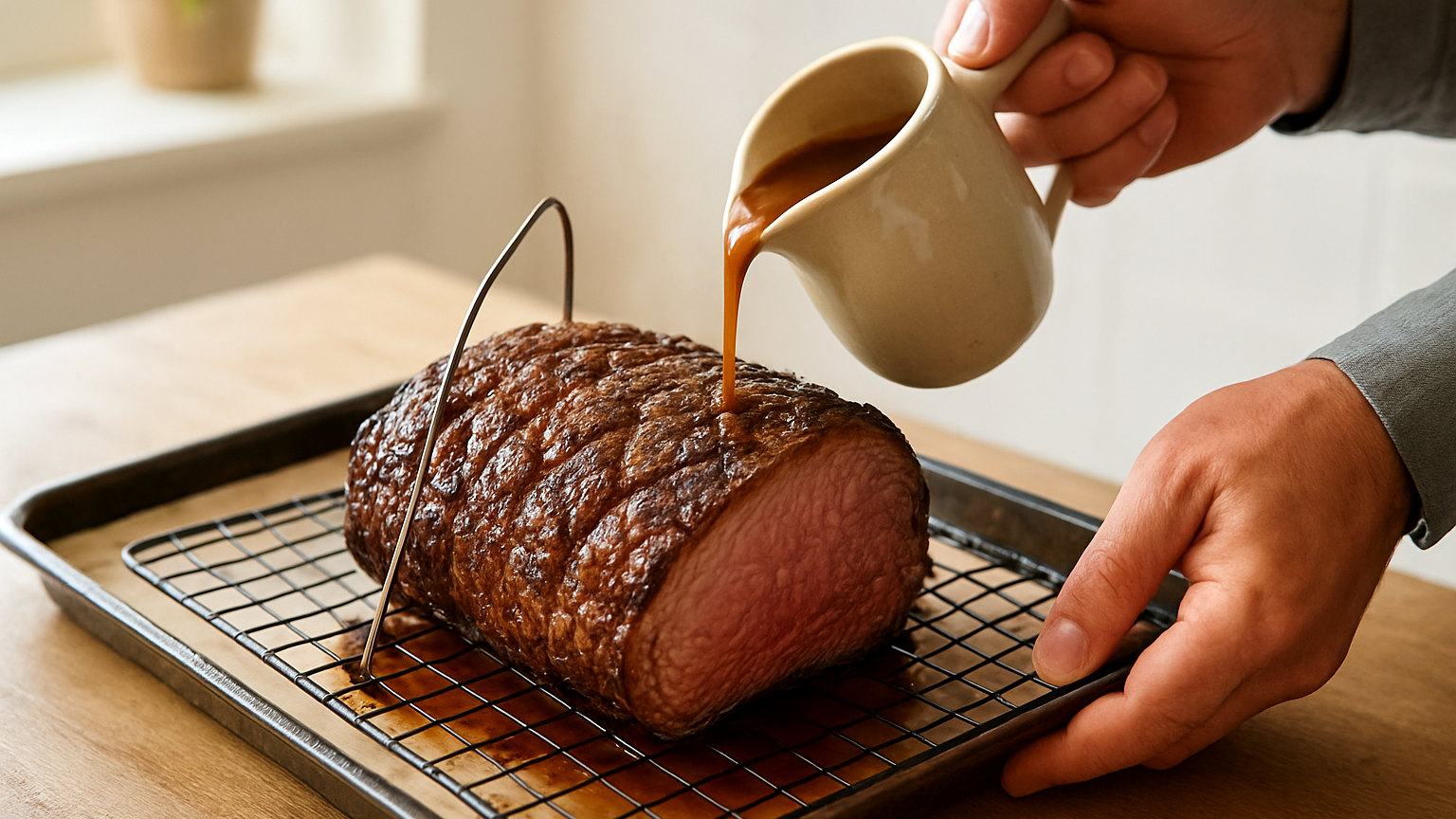
Reheating roast beef is the point at which most leftovers are lost. The meat has already been cooked once, so any further heat takes it further along the scale, and beef that came out of the oven pink will be well done within about ninety seconds of hitting a hot pan. There are ways round it, but they all involve less heat than instinct suggests.
What is the best method?
Warming the slices in hot gravy, off the heat. Bring the gravy to just below a simmer, take the pan off the hob, drop in thinly carved beef and leave it for sixty to ninety seconds, turning once.
The gravy does the heating, not the pan. Because it never boils, the beef comes up to serving temperature without the fibres tightening, and the slices stay pink in the middle.
Can you reheat it in the oven?
Yes, for a larger piece. Wrap it tightly in foil with two tablespoons of stock or gravy inside, and put it into an oven at 150C fan for 15 to 20 minutes depending on thickness.
Check with a thermometer and stop at 70C. That satisfies food safety guidance without pushing the meat further than necessary, and the foil parcel traps steam so the surface does not dry.
What about a microwave?
It works better than its reputation suggests, provided the power is turned down. Use 40 to 50 per cent power, cover the plate, add a spoonful of gravy and heat in 30 second bursts, turning the slices between each.
Full power drives moisture out of the edges before the middle is warm, which is where the rubbery texture comes from.
What can you use if there is no gravy left?
Hot beef stock is the obvious substitute and does the same job. A stock cube dissolved in boiling water with a teaspoon of Worcestershire sauce and a knob of butter whisked in makes a passable stand in.
Onion gravy from a packet is not a disgrace either, particularly if you fry a real onion into it first. Melted butter with a splash of water works for a small amount of beef.
When should you not reheat it at all?
When the beef was cooked rare or medium rare and carved thinly. That meat is at its best cold, in a sandwich with horseradish, and heating it can only make it more done than it was.
Well done beef and slow cooked brisket are the ones that genuinely improve with reheating, because they have collagen that softens further rather than lean fibres that toughen.
How do you reheat a whole leftover joint?
Generally you should not. A joint reheated whole spends long enough in the oven to cook through again, which is a waste of good beef.
If you must, sit it in a covered dish with 200ml of stock at 140C fan for 30 minutes, and treat the result as pot roast rather than as a second Sunday dinner.
Which cuts reheat best?
Slow cooked brisket, shin and short ribs reheat better than they eat first time round, because the gelatine they are full of softens further and holds moisture in place.
Lean joints such as topside and fillet are the opposite. If you have both in the fridge, reheat the cheap cut and eat the expensive one cold.
What are the food safety rules?
Cool leftovers within two hours, refrigerate, and use within three days. Reheat once only and make sure the beef is piping hot throughout, meaning 70C held for two minutes, in line with Food Standards Agency guidance.
Beef that has already been frozen and defrosted should not be refrozen once cooked and reheated. Defrost in the fridge overnight rather than on the worktop.
What should you serve with reheated beef?
Something with moisture and something with crunch. Mashed potato and a generous amount of gravy suit it far better than a second round of roast potatoes, which will have lost their crispness anyway.
Pickled red cabbage, a spoonful of horseradish or a sharp watercress salad all lift beef that has been cooked twice and give the plate something fresh alongside it.
See also Mustard and Herb Crusted Roast Beef, or browse more Roasts recipes.


