
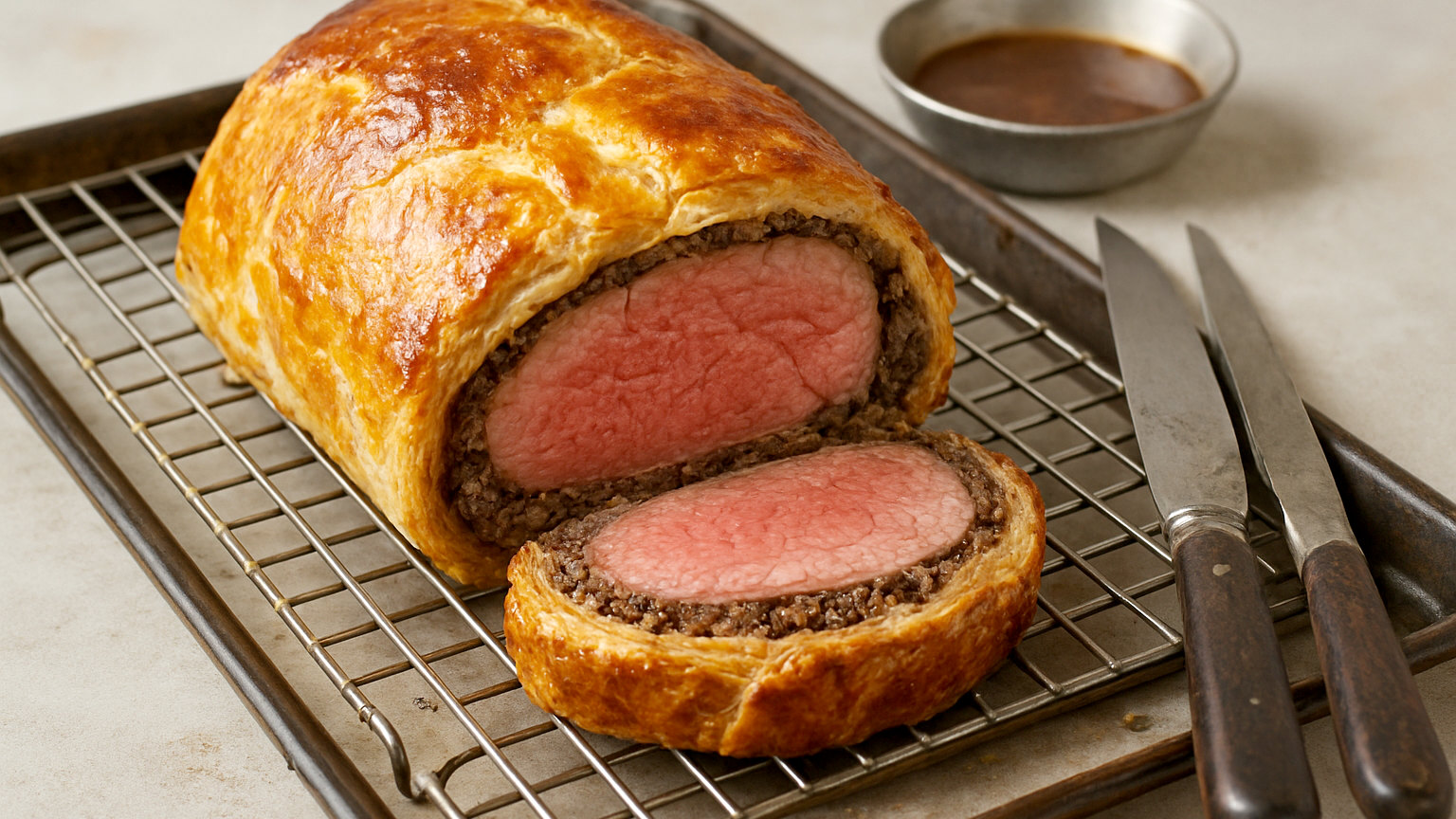
Beef Wellington has a reputation for being difficult, and it is really just a sequence of steps that cannot be rushed. Every failure comes from moisture: wet mushrooms, warm beef, or pastry wrapped around something that has not been chilled. Do each stage properly, chill between them, and it is no harder than a pie.
Ingredients, serves 6
- 1kg centre cut beef fillet, trimmed and tied
- 2 tablespoons oil
- 2 tablespoons English mustard
- 500g chestnut mushrooms
- 2 shallots, finely chopped
- 50g butter
- 2 sprigs thyme, leaves only
- 100ml Madeira or dry sherry
- 8 slices Parma ham or 8 thin pancakes
- 500g all butter puff pastry
- 2 egg yolks, beaten with a splash of milk
Method
- Season the fillet heavily and sear it hard in very hot oil for 2 minutes on each side until deeply browned. Cool, then brush all over with mustard and chill for an hour.
- Blitz the mushrooms to a coarse paste. Cook them with the shallots, butter and thyme in a wide pan over a medium heat for 20 to 25 minutes, until completely dry.
- Add the Madeira and cook until it has gone. Spread the duxelles on a tray and chill.
- Lay overlapping cling film on the worktop, arrange the ham in a rectangle, spread the cold duxelles over it, and sit the fillet on top.
- Use the cling film to roll it into a tight cylinder, twist the ends, and chill for 30 minutes.
- Roll the pastry to about 4mm. Unwrap the beef onto it, brush the pastry edges with egg, and wrap, trimming the excess and sealing the seam underneath.
- Chill for another 30 minutes, then glaze with egg, score the top lightly and sprinkle with salt.
- Bake at 200C fan, 220C conventional, gas mark 7, for 35 to 40 minutes, until the centre reads 52C.
- Rest for 15 minutes before slicing thickly.
The duxelles must be genuinely dry. Mushrooms are mostly water, and any left in the mixture turns to steam inside the pastry and soaks the base. Cook them until the pan is dry and the mixture holds its shape.
Why is there a layer of ham or pancake?
It forms a barrier between the wet duxelles and the raw pastry. Parma ham is the usual choice and adds savoury depth; thin pancakes are the traditional alternative and are better if you want the beef flavour unaltered.
Which cut do you need?
Centre cut fillet, sometimes sold as chateaubriand, because it is an even cylinder that cooks predictably. The tapering tail end will overcook before the middle is ready.
Ask the butcher to trim and tie it. A 1kg piece serves six generously.
Why so much chilling?
Cold beef gives you a margin before the centre overcooks while the pastry browns. Cold pastry holds its shape and puffs properly instead of slumping.
Skipping the chilling stages is the second most common cause of failure after wet mushrooms.
How do you know when it is done?
By probe only. Push a thermometer through the end of the pastry into the centre of the beef and pull it at 52C for medium rare. Carryover takes it to about 56C during resting.
Can it be assembled in advance?
Wrap it in pastry up to a day ahead and keep it covered in the fridge. Glaze and bake straight from cold, adding about 5 minutes to the time.
It does not freeze well once assembled, since the pastry base absorbs moisture during defrosting.
Why does the base go soggy?
Almost always because something wet touched the raw pastry. The duxelles was not dry enough, the ham layer had gaps, or the assembled Wellington sat at room temperature and sweated before it went into the oven.
Baking on a preheated tray helps as well, since direct heat from below sets the bottom layer of pastry quickly rather than letting it steam.
What should you serve with it?
A red wine sauce, buttered greens and either dauphinoise or a few roast potatoes. Nothing wet on the plate near the pastry.
Next, try Slow Roast Beef Brisket, or see the rest of our Roasts recipes.


