
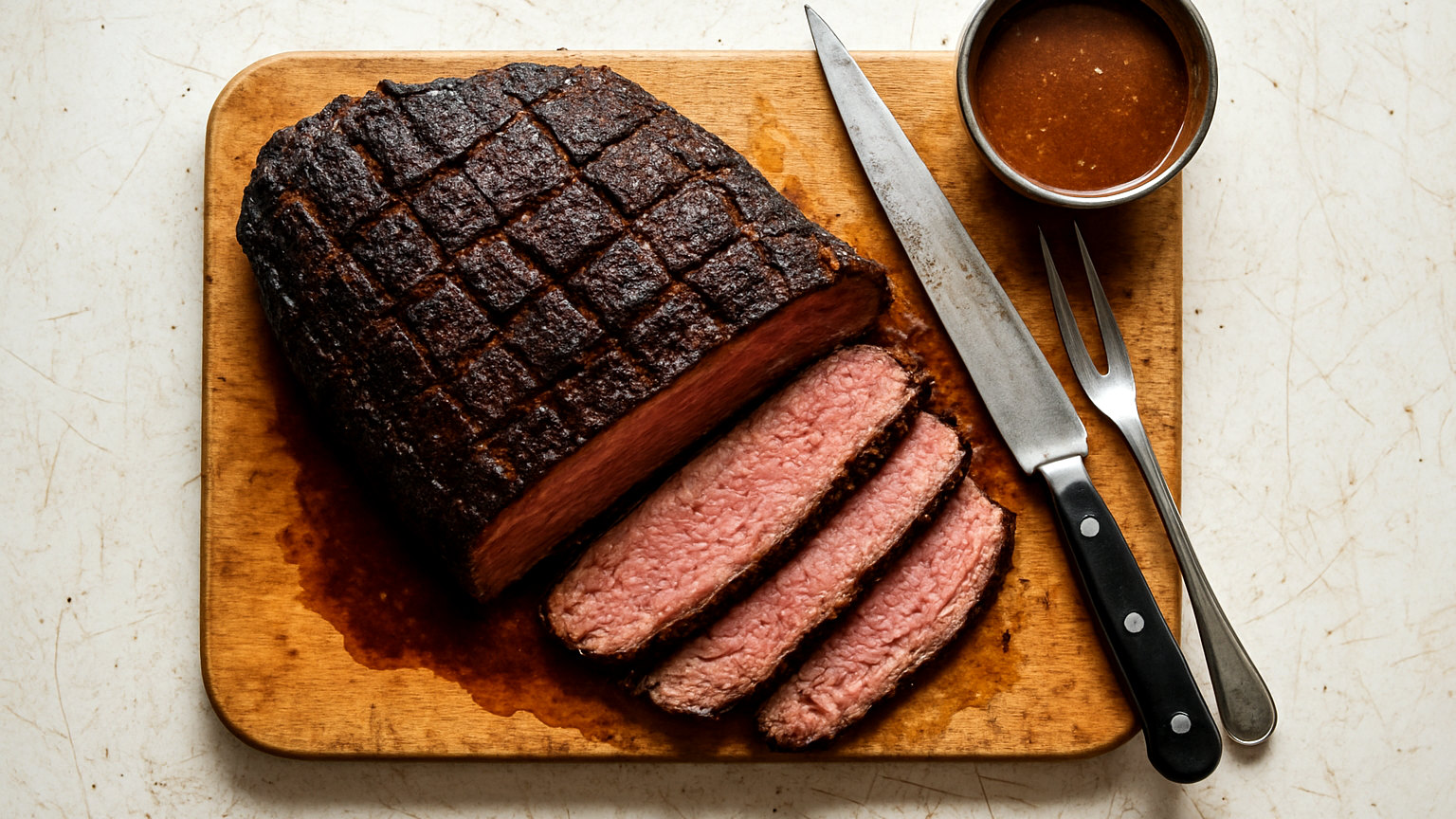
Brisket is threaded with connective tissue that will not soften at normal roasting speeds, which is why a fast hot oven turns it into something close to leather. Give it five hours at a low temperature with a little liquid and that same tissue melts into gelatine, and the joint pulls apart under a fork. It is the cheapest thing on the butcher counter and one of the best Sunday dinners you can make.
Ingredients, serves 6
- 2kg beef brisket, rolled and tied
- 2 tablespoons beef dripping
- 3 onions, thickly sliced
- 3 carrots, cut into chunks
- 2 sticks celery, sliced
- 4 garlic cloves, crushed
- 2 tablespoons tomato puree
- 300ml beef stock
- 200ml dark ale or stout
- 2 bay leaves and a few sprigs of thyme
- 1 tablespoon Worcestershire sauce
Method
- Heat the oven to 140C fan, 160C conventional, gas mark 3.
- Season the brisket heavily and brown it hard on all sides in the dripping, in a large casserole. Take your time over this.
- Lift the meat out and soften the onions, carrots, celery and garlic in the same pot for 10 minutes.
- Stir in the tomato puree and cook it out for a minute.
- Pour in the ale, scrape the base clean and let it bubble for two minutes.
- Return the brisket, add the stock, herbs and Worcestershire sauce. The liquid should come a third of the way up, no higher.
- Cover tightly with a lid or a double layer of foil and cook for 4 and a half to 5 hours.
- Uncover for the last 30 minutes to darken the surface.
- Rest for 30 minutes before carving or pulling apart.
Keep it covered for almost the whole cook. Brisket needs a moist environment to break down. Left uncovered it dries out on the surface long before the inside has softened.
How do you know when it is ready?
Not by temperature in the usual sense, but by feel. A skewer or knife should slide into the thickest part with no resistance at all, as though going into butter.
If there is any drag, it needs longer. Brisket cannot be overcooked in the way a lean joint can, so another forty minutes is always safer than serving it early.
Which brisket should you buy?
Rolled and tied brisket is the usual supermarket format and works well. A flat piece with a decent fat layer on one side is better still if your butcher has one, since the fat renders through the meat as it cooks.
Allow 300g per person, because brisket loses more weight during a long cook than a fast roasted joint does. Trim nothing before cooking, since the fat is what keeps the meat moist across five hours, and any excess can be skimmed off the sauce at the end.
Should it be carved or pulled?
Either. Carved across the grain into thick slices it makes a proper roast dinner. Pulled apart with two forks and stirred back through the cooking liquid it makes something closer to a stew, and goes further.
What do you do with the liquid?
Skim off the fat, then either strain it for a clear gravy or blend the vegetables into it for something thicker. It will be rich enough to need no flour at all.
What should you serve with brisket?
Mashed potato is the natural partner, because there is a great deal of liquid and something is needed to soak it up. Roast potatoes work if you would rather keep it as a conventional Sunday dinner.
Braised red cabbage, buttered greens or roasted carrots all sit well against the richness. Horseradish sauce and English mustard both cut through it, and a spoonful of pickled walnuts is a traditional touch worth trying.
Can it be made ahead?
It is arguably better the next day. Cool it quickly, refrigerate within two hours and reheat once only at 150C fan for 40 minutes, covered, until piping hot throughout, following Food Standards Agency guidance.
The whole dish freezes for three months in its liquid, which keeps the meat from drying out during defrosting.
Worth reading next: Slow Roast Beef Short Ribs in Ale. There is more in our Roasts recipes.


