
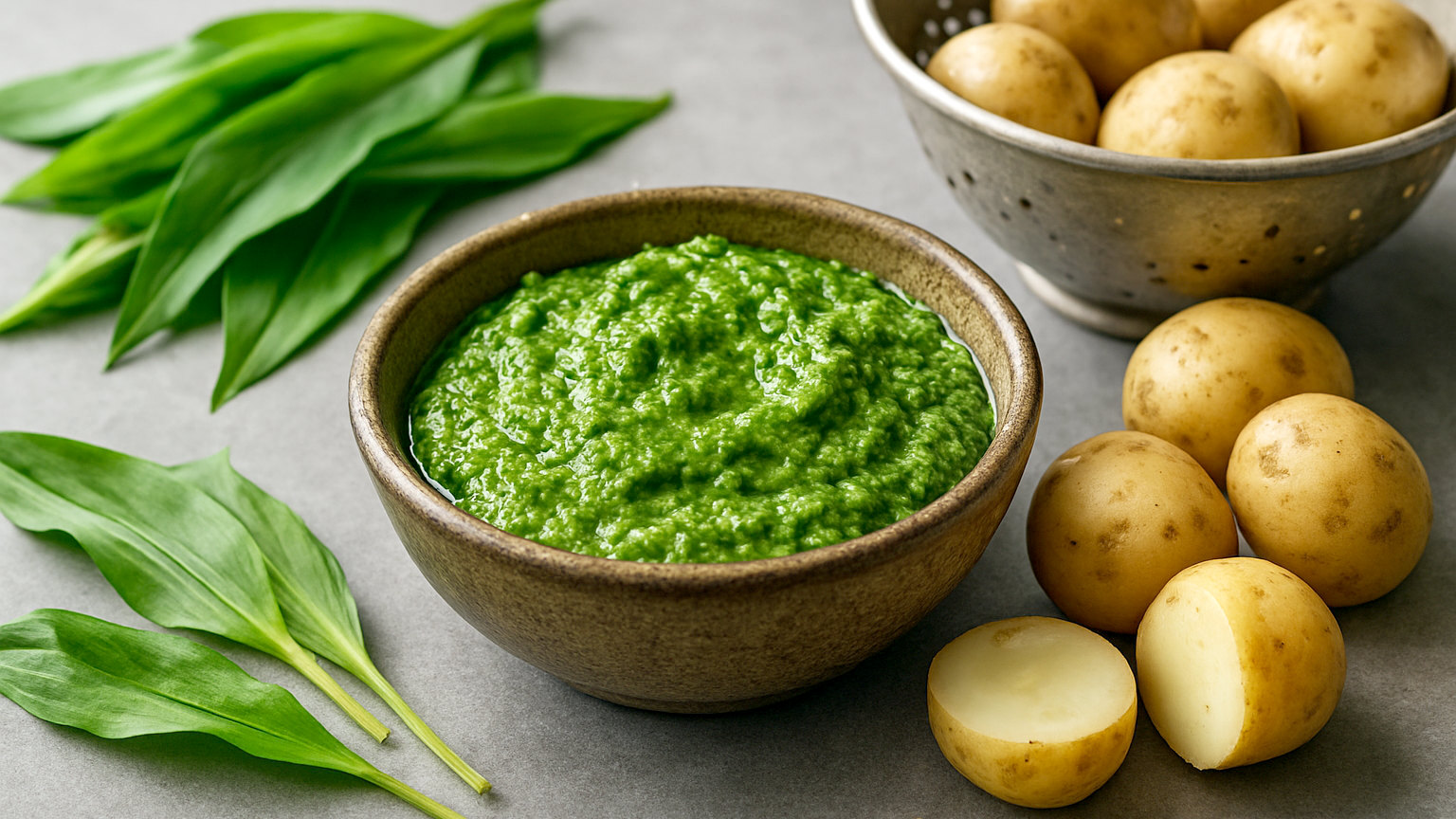
Wild garlic, or ramsons, carpets damp woodland across Britain from March to May and smells unmistakably of garlic when the leaves are crushed. It is one of the easiest and most rewarding wild foods available, and it is also the one where careful identification matters most, because it grows in the same places as several toxic plants.
How do you identify it?
Crush a leaf between your fingers. If it does not smell strongly of garlic, do not pick it. That single test is the most reliable one available.
The leaves are broad, pointed, bright green and soft, growing individually from the ground rather than from a stem. White star shaped flowers appear from April.
Should you wash it carefully?
Yes, in several changes of cold water. It grows at ground level in woodland and is worth washing thoroughly.
Dry it completely before making pesto, since water stops the oil emulsifying.
What can it be confused with?
Lily of the valley, lords and ladies and autumn crocus all grow in similar places and all are poisonous.
None of them smells of garlic. If you are not completely certain, leave it.
What do you need for pesto?
- 100g wild garlic leaves, washed and dried
- 50g parmesan or a hard cheese, grated
- 50g toasted pine nuts, walnuts or hazelnuts
- About 150ml olive oil
- Juice of half a lemon
- Salt and black pepper
How do you make it?
- Wash the leaves thoroughly and dry them completely.
- Toast the nuts in a dry pan for 3 minutes and cool.
- Blitz the leaves, nuts and cheese to a coarse paste.
- Add the oil gradually with the motor running.
- Stir in the lemon juice and season.
- Pack into a jar and cover the surface with a film of oil.
When should you pick it?
March to early May, when the leaves are young and tender. After flowering they become coarse and bitter.
Pick a few leaves from many plants rather than stripping one patch.
Where does it grow?
Damp deciduous woodland, especially near streams and on shaded banks, often in vast carpets that can be smelled before they are seen.
It prefers ancient woodland and is a good indicator of it.
Is foraging it legal?
Picking leaves for personal use is generally permitted on land with public access, though uprooting any wild plant without permission is not.
Check local rules and never pick in nature reserves without permission.
Should the leaves be cooked?
They can be eaten raw or cooked, and heat dulls the garlic flavour considerably. Add them at the very end of cooking.
Raw in pesto keeps the most flavour.
Where should you avoid picking?
Beside busy roads, at dog height along paths, and anywhere that might have been sprayed.
Wash everything thoroughly regardless.
Does it freeze as pesto?
Very well, in ice cube trays, for three months. Leave the cheese out until you defrost it if you want the best texture.
What else can you do with it?
Wilted into mashed potato, stirred through soup at the end, in a soda bread, or blitzed into butter for steak.
The flowers and seed pods are also edible.
Is it the same as three cornered leek?
No, though both are edible and smell of onion. Three cornered leek has a triangular stem and drooping white bell flowers.
Can it be preserved?
Pesto keeps a week refrigerated under oil. The leaves freeze blanched, or blitzed into ice cube trays with oil.
How much should you pick?
Only what you will use, which for pesto is about 100g, or two good handfuls. It wilts fast and does not keep raw.
Never take whole plants or clear a patch.
Do the flowers taste of garlic?
Yes, more delicately than the leaves, and they scatter well over salads and soups.
The green seed pods are stronger and can be pickled.
How strong is it?
Milder than a garlic clove and more like a cross between garlic and chives.
Refrigerate the pesto and use within a week, in line with Food Standards Agency guidance.
Worth reading next: What Is in Season in Spring?. There is more in our Seasonal recipes.