
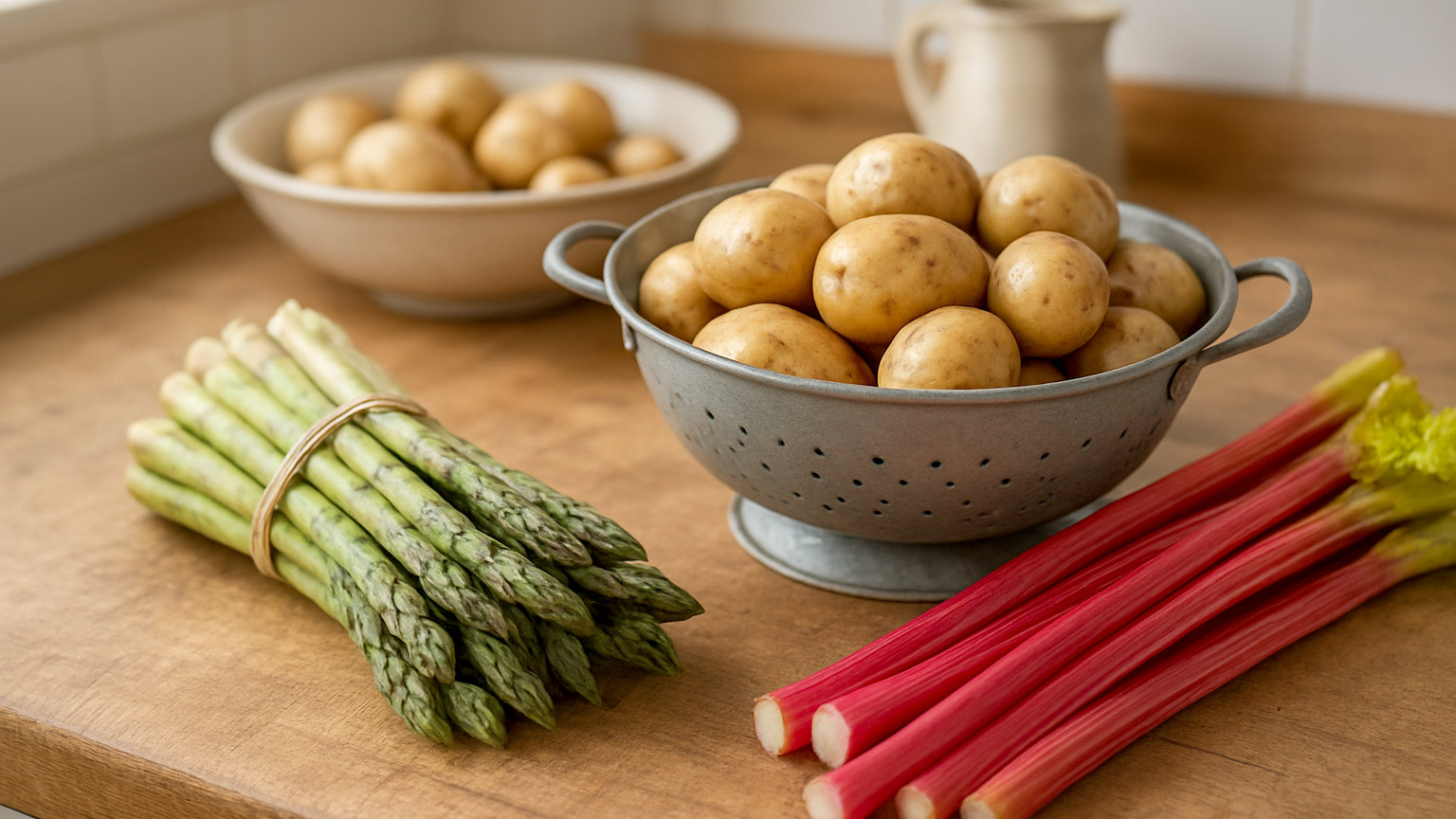
Spring is the most uneven season for British produce. March is the tail end of what the trade calls the hungry gap, when winter stores have run out and almost nothing new has arrived. By late May the situation has reversed entirely and there is more coming in than most households can keep up with.
What is the hungry gap?
The period from roughly March to early May when winter crops are finished and spring crops are not ready. It is the leanest time of the British growing year.
Historically it was a genuinely difficult period. Now it is largely filled by imports, but anyone buying British will notice it.
What is in season in March?
- Purple sprouting broccoli
- Forced rhubarb, at the end of its season
- Spring greens, leeks and kale
- Cauliflower and swede
- Wild garlic, from the middle of the month
- Mussels and oysters, at the end of theirs
What is in season in April?
- Jersey Royals from the middle of the month
- Wild garlic at its best
- Spring onions and radishes
- Watercress and sorrel
- Field rhubarb
- New season lamb
What is in season in May?
- English asparagus from around St George's Day
- Elderflower from the end of the month
- Early peas and broad beans
- New potatoes and salad leaves
- Sea trout and crab
- Gooseberries at the very end
What fish is at its best?
Sea trout, crab, cockles and langoustine all improve through spring. Mussel and oyster seasons are ending.
Mackerel arrives inshore from about May.
What about eggs?
Hens lay far more as the days lengthen, which is why eggs are traditionally associated with spring and with Easter.
Duck eggs are at their best in spring too.
Is there a hungry gap for fish?
Not really, though it is a transition. The winter shellfish seasons end and the summer oily fish have not arrived until May.
What meat is seasonal?
New season British lamb appears from about April, having been born in late winter. Genuine spring lamb before then is usually imported or indoor reared.
When does spring produce really start?
Late April is the turning point, when Jersey Royals, wild garlic and the first asparagus arrive within a fortnight of each other.
How do you cook in the hungry gap?
Lean on stored roots, dried pulses, preserved goods and the sprouting brassicas, and use the first wild greens as they appear.
It is the season for using up rather than laying down.
What are the first salads?
Radishes, rocket, sorrel and cut and come again leaves all arrive from April, and they are the first crops that need no cooking at all.
Watercress from the chalk streams is at its best in spring.
What can you forage?
Wild garlic, nettle tops, sorrel and later elderflower. All are abundant and easy to identify with care.
Why does asparagus have such a short season?
The plants need the rest of the year to build reserves in the crown, so cutting stops around the summer solstice.
That gives roughly eight weeks from late April.
What fruit is available?
Very little until the very end. Forced rhubarb finishes in March, field rhubarb runs from April, and gooseberries and the first strawberries arrive at the end of May.
Spring is a vegetable season rather than a fruit one.
Why buy seasonally at all?
Produce picked in season and close to home is generally cheaper, fresher and better flavoured, since it has not been stored or shipped.
Asparagus and new potatoes both lose sweetness within days of cutting, so the difference is easy to taste.
What is worth cooking in spring?
Asparagus with butter, wild garlic pesto, nettle soup, purple sprouting with anchovy, and new potatoes with mint.
Almost all of it is simple, since the ingredients do the work.
What should you plant or preserve?
Elderflower cordial in late May and rhubarb compote in April both capture the season.
Refrigerate homemade cordials and use within the recommended time, in line with Food Standards Agency guidance.
Next, try Sea Trout and Spring Salmon, or see the rest of our Seasonal recipes.