
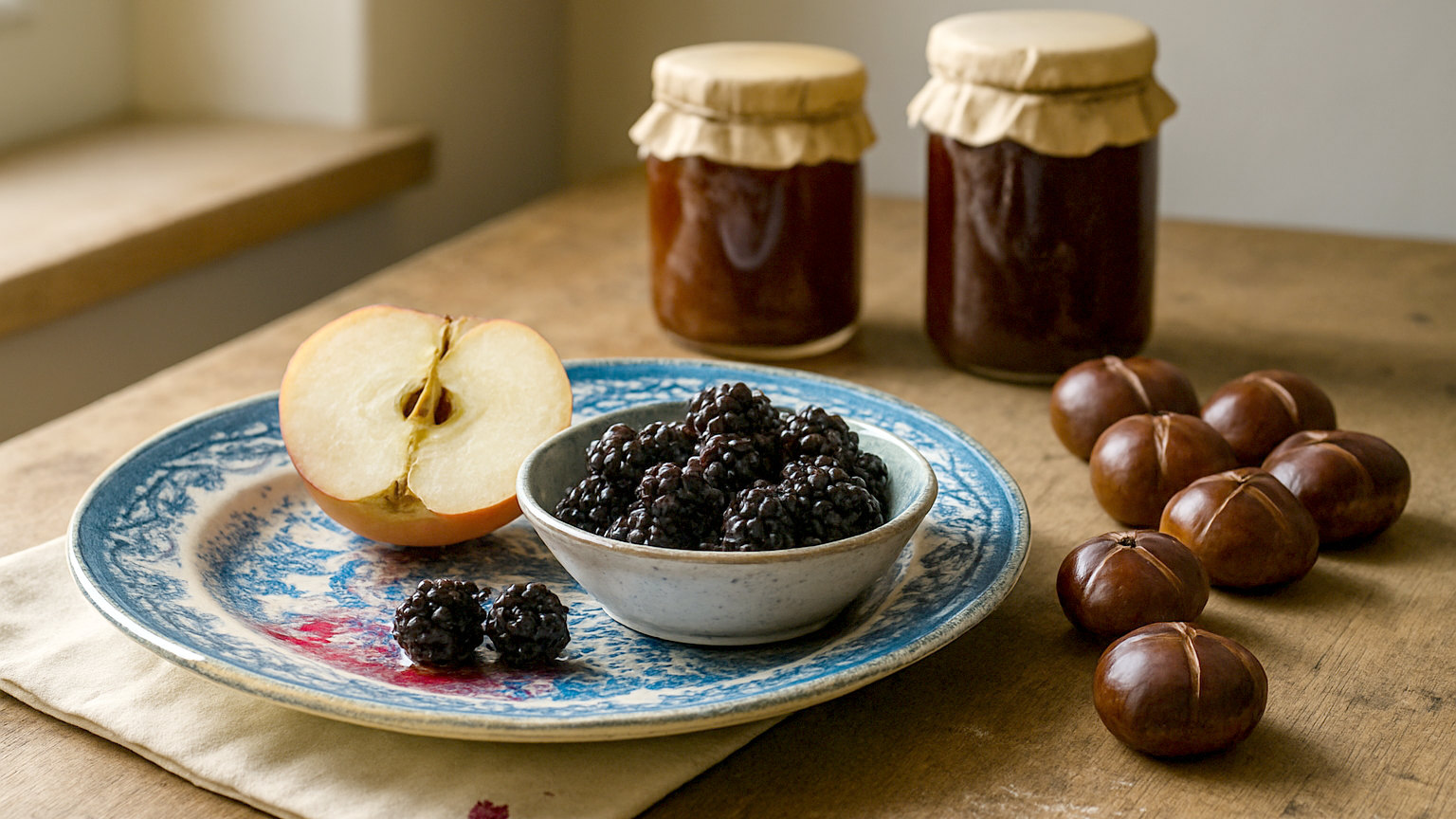
Autumn is the most abundant season in the British food year. Orchard fruit, roots, brassicas, nuts, hedgerow fruit and game all arrive together, and unlike summer much of it stores well. It is the season the whole preserving tradition exists for, and the season when British cooking has the most to work with.
What is in season in September?
- Blackberries and elderberries
- Early apples and pears
- Plums, damsons and greengages
- Sweetcorn, runner beans and courgettes
- Tomatoes, at the end of their run
- Partridge from the first, and grouse continuing
- Mussels, back in season
What is in season in October?
- Apples and pears at their peak
- Pumpkins and squash
- Wild mushrooms
- Sloes, after the first frost
- Beetroot, celeriac and parsnips
- Pheasant from the first
- Quince and medlars
What is in season in November?
- Brussels sprouts and kale
- Swede, turnip and celeriac
- Late apples and stored pears
- Chestnuts and walnuts
- Venison at its best
- Oysters and scallops
When does the game season open?
Grouse from 12 August, partridge from 1 September, pheasant from 1 October. Venison seasons vary by species and sex and run through much of the year.
Game is at its best a few weeks into each season rather than on the opening day.
What is the last of the summer crop?
Runner beans, sweetcorn and courgettes all run into September, overlapping with the first apples and plums.
Why is autumn the preserving season?
Everything ripens at once and much of it will not keep fresh. Jam, chutney, pickles, bottling and freezing all developed to carry that abundance into winter.
Green tomato chutney exists purely because the last tomatoes never ripen.
When do the clocks change things?
The end of October, after which most people cook and eat in the dark, which is part of why autumn food turns towards braises and baked puddings.
What can you forage?
Blackberries, elderberries, sloes, rosehips, hazelnuts, sweet chestnuts and, with real care, wild mushrooms.
Never eat any wild mushroom without expert identification.
What squash varieties are grown here?
Crown Prince, butternut, onion squash and pumpkins for carving. Crown Prince has the best flavour and stores for months.
Carving pumpkins are watery and are grown for size rather than eating.
Is game worth buying?
Pheasant in particular is inexpensive in season and often cheaper than free range chicken.
It is lean, so it needs care not to dry out.
What stores well?
Apples, pears, onions, squash, potatoes and root vegetables all keep for months in the right conditions.
Cool, dark, dry and well ventilated is what they want.
Why do root vegetables improve after frost?
Cold triggers the plant to convert starch into sugar as antifreeze, which is why parsnips, swede and sprouts taste sweeter after the first frost.
It is a genuine chemical change rather than folklore.
What is the hunger gap equivalent?
There is none. Autumn is the opposite problem, with more produce than can be used, which is why the whole preserving calendar sits here.
What fish is good?
Mussels and oysters come back into season from September, and scallops are at their best through autumn.
What nuts are in season?
Hazelnuts and cobnuts from September, sweet chestnuts and walnuts from October. Kentish cobnuts are eaten fresh rather than dried.
Sweet chestnuts are the ones to roast. Horse chestnuts, or conkers, are not edible.
What happens to the salad crops?
Tomatoes, cucumbers and lettuce all finish through September, and anything sold after that is grown under glass or imported.
The last unripe tomatoes go into chutney.
What are the autumn occasions?
Harvest festival in September, Michaelmas on the twenty ninth, Apple Day on 21 October, Halloween and then Bonfire Night.
Each has food attached to it.
What is worth cooking?
Slow braises return, along with roasts, soups and baked puddings. It is the point in the year when the oven starts earning its keep again.
Cool anything preserved quickly and store it correctly, in line with Food Standards Agency guidance.
Next, try Blackberrying and the Hedgerow, or see the rest of our Seasonal recipes.