
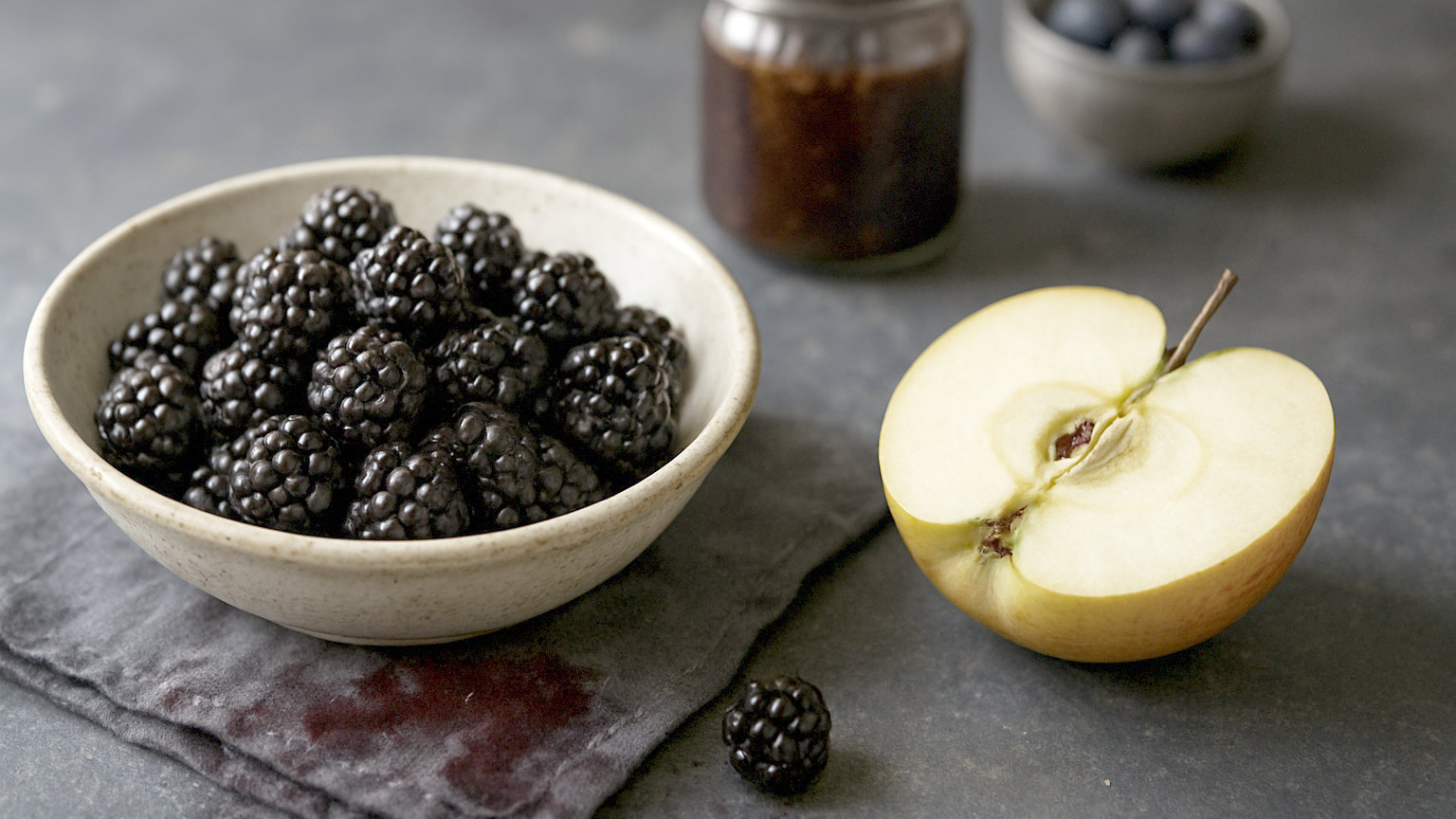
Blackberries are the most accessible wild food in Britain, growing in almost every hedge, wood edge and patch of waste ground from August into October. Picking them costs nothing but scratches, and a couple of hours produces enough for a crumble, a jam and a bag for the freezer.
When should you pick?
From mid August through September, with the best fruit in early September.
Tradition holds you should stop after Michaelmas on 29 September, when the devil is said to have spat on them. There is a practical basis: by October they are watery and prone to mould.
How do you tell a ripe one?
A ripe blackberry comes away with no resistance at all. If you have to tug it, leave it for a few days.
Look for deep matt black rather than shiny. Shiny berries are usually still sharp.
Where should you avoid?
Beside busy roads, at dog height along paths, and field edges that may have been sprayed.
Pick from waist height upwards where you can, and wash everything.
How much can you take?
Only what you will use, and leave plenty for wildlife. Birds and mammals depend heavily on hedgerow fruit going into winter.
Is it legal?
Picking wild fruit, foliage, fungi and nuts for personal use is generally permitted on land with public access under the Theft Act.
Uprooting plants or picking for sale is not, and nature reserves have their own rules.
Is there a best time of day?
Dry weather matters more than the hour. Fruit picked wet goes mouldy within a day and does not freeze well.
What should you take with you?
A rigid container rather than a bag, long sleeves, and something to hook down high branches.
Berries crush under their own weight, so keep the container shallow.
Are there any lookalikes to worry about?
Blackberries are hard to mistake, though dogwood and other black berries grow in hedges and are not edible.
A blackberry grows in a cluster of small segments on a thorny arching stem. Nothing else in a British hedge looks quite like it.
What else is in the hedgerow?
- Elderberries in September, which must be cooked
- Sloes in October, best after a frost
- Rosehips from September, high in vitamin C
- Hazelnuts and sweet chestnuts
- Crab apples, high in pectin
- Damsons on the edges of old orchards
Are elderberries safe raw?
No. Raw elderberries, and all green parts of the plant, contain compounds that cause nausea and stomach upset.
They must be cooked thoroughly, which destroys them. Never eat them raw.
Should you take children?
It is one of the better outings for them, though the thorns are sharp and the lower fruit is at dog height.
Long sleeves and a rule about picking above the waist covers most of it.
What can you make?
Blackberry and apple anything, bramble jelly, cordial, gin, and a bag in the freezer for winter.
Blackberries are low in pectin, so jam needs apple or added pectin to set.
Do they need to be cooked?
Blackberries are perfectly good raw, unlike elderberries. Wash them first, particularly if picked low down.
How should they be frozen?
Spread on a tray and frozen solid before bagging, so they stay separate.
They keep a year and go straight into a crumble from frozen.
How long does it take to pick enough?
About twenty minutes for enough for a crumble and an hour for a jam batch, in a good year and a good hedge.
Pick from several bushes rather than stripping one.
Are all blackberries the same?
There are hundreds of microspecies of bramble in Britain, which is why fruit from two hedges a mile apart can taste noticeably different.
Some are sweet and some barely worth picking.
How do you wash them?
A brief rinse in cold water just before use. Soaking makes them collapse.
A short soak in salted water draws out any small insects if that concerns you.
For something along the same lines, see What Is in Season in Autumn?, or browse all our Seasonal recipes.