
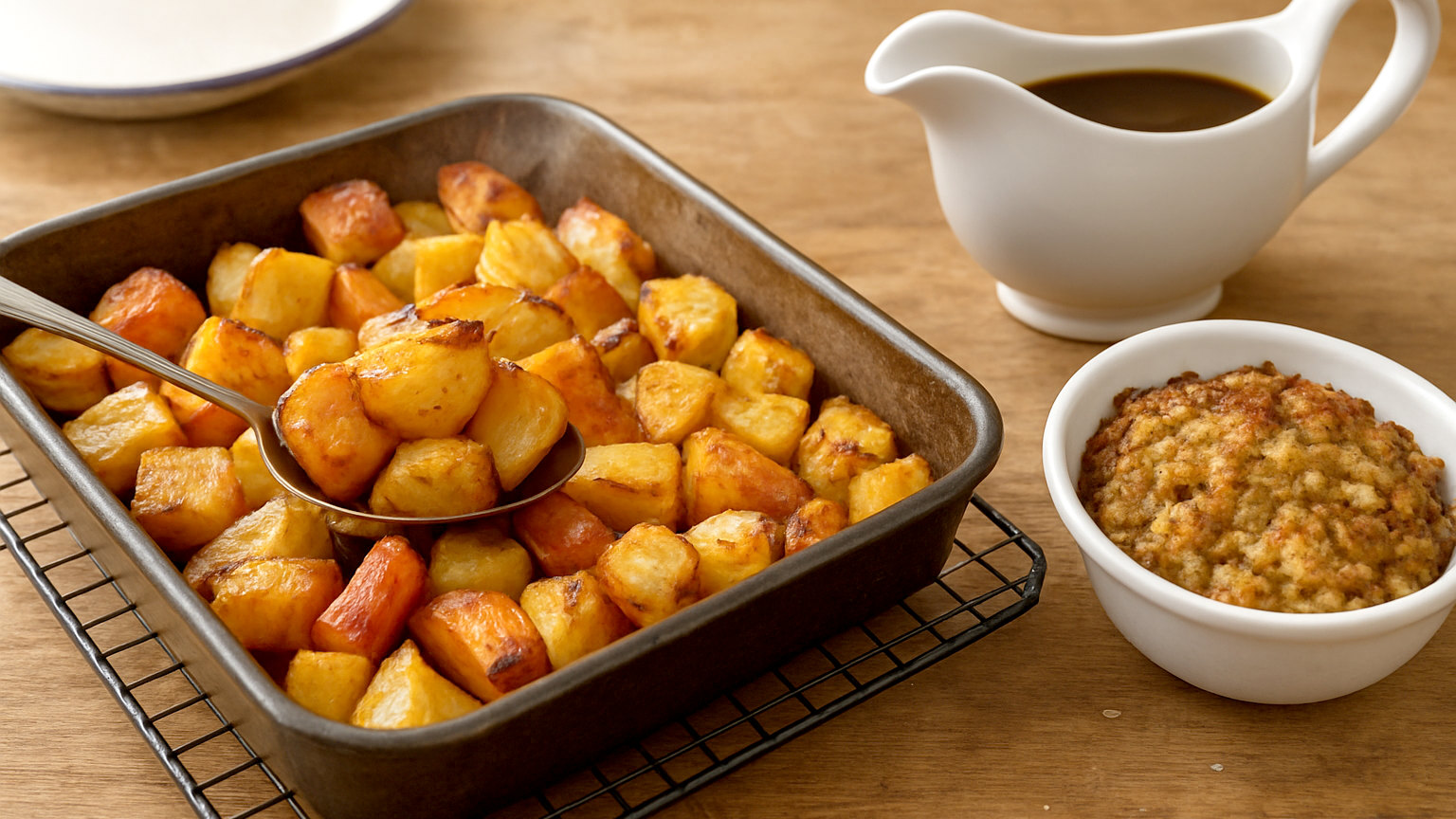
A single tray of roasted roots is the most efficient vegetable dish on a Sunday, since it uses one tin, one shelf and no attention. The only real technique is in the cutting. Different roots cook at very different rates, so the way to get them to finish together is to cut the slow ones smaller rather than to add them at different times.
What do you need for 6 people?
- 3 carrots, halved lengthways then cut into 6cm lengths
- 3 parsnips, quartered lengthways, cores removed
- Half a swede, cut into 3cm chunks
- Half a celeriac, cut into 3cm chunks
- 2 red onions, cut into wedges
- 4 tablespoons goose fat, dripping or rapeseed oil
- 6 sprigs of thyme and 1 tablespoon honey
- Flaky salt and black pepper
How do you make them?
- Heat the oven to 200C fan, 220C conventional, gas mark 7.
- Heat the fat in a large roasting tin for 5 minutes.
- Add the swede and celeriac first and roast for 10 minutes.
- Add the carrots, parsnips and onions, turn everything to coat and season.
- Roast for 30 minutes, turning once.
- Drizzle over the honey, add the thyme and turn again.
- Roast for a final 10 minutes until browned at the edges.
Cut the slow roots smaller. Swede and celeriac are dense and need longer than carrots and parsnips, so cutting them into smaller pieces lets everything share one tin and one timing.
Which roots cook fastest?
Parsnips are quickest, then carrots and onions, then celeriac, with swede the slowest of the common roots. Beetroot is slower still and stains everything, so roast it separately.
Potatoes do not belong in this tray, since they want a different treatment and a longer time.
Do they need parboiling?
Not if they are cut to size. Swede benefits from five minutes in boiling water if you have cut it large, but the size adjustment is simpler.
Should they be peeled?
Swede and celeriac always, since the skins are tough and bitter. Carrots and parsnips only if they are old, and a good scrub is enough for young ones.
Red onion skins come off, but the papery outer layer of a whole garlic clove is worth leaving on if you add any.
Why does the tin get preheated?
The vegetables meet hot fat and start browning immediately rather than warming up slowly and releasing water into the tin.
A crowded tin has the same problem. Use two tins rather than piling everything into one.
What can you use instead?
Squash and sweet potato both work, though they soften faster, so cut them larger and add them halfway. Jerusalem artichokes and turnips both suit this method.
Wedges of apple or pear added for the last 15 minutes suit roots served with pork.
How should they be seasoned?
Salt, pepper and thyme is the plain version. Cumin and coriander seed, smoked paprika, or rosemary and garlic all work.
Anything sweet or ground goes on in the last ten minutes, since it burns over a full forty.
Can they be prepared ahead?
Peel and cut everything a day ahead and keep it in cold water in the fridge. Drain and dry thoroughly before roasting.
They can also be roasted to the 30 minute mark and finished later with the honey.
Can they be cooked in an air fryer?
Yes, at 190C for 25 minutes, though the basket limits you to about half this quantity. Work in a single layer and shake twice.
It is a useful way to free oven space, particularly if the potatoes and the joint are already competing for shelves.
What do they go with?
Any roast, and they suit beef and lamb particularly. Because they are sweet, balance them with something sharp such as red cabbage or a horseradish sauce.
How much should you allow?
About 200g of mixed roots per person before trimming. Cool leftovers quickly, refrigerate within two hours and use within two days, following Food Standards Agency guidance.
Next, try What to Do With Leftover Roast Vegetables, or see the rest of our Roasts recipes.


