
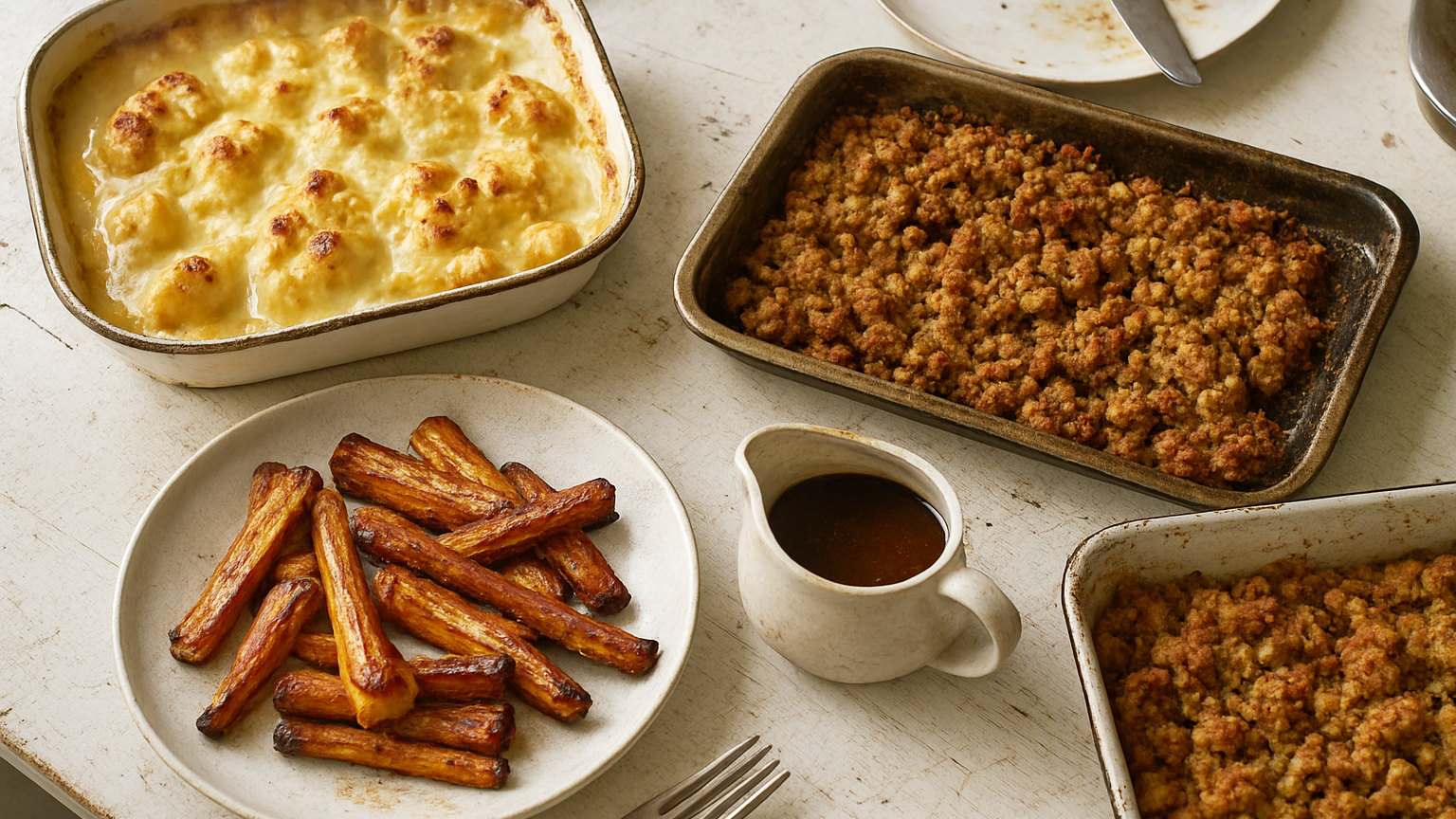
Cauliflower cheese has become a fixture on the British Sunday table, and it fails in one predictable way. The cauliflower holds a great deal of water, and if that water ends up in the dish the sauce thins into a pale puddle. Everything in this method is about getting the cauliflower dry and the sauce thick enough to survive contact with it.
What do you need for 6 people?
- 1 large cauliflower, about 1kg, broken into florets
- 50g butter
- 50g plain flour
- 600ml whole milk
- 200g mature cheddar, grated
- 1 teaspoon English mustard
- A good grating of nutmeg
- 25g parmesan or extra cheddar for the top
- Salt and white pepper
How do you make it?
- Boil the florets in salted water for 5 to 6 minutes until just tender, then drain thoroughly.
- Leave them in the colander for 5 minutes, then tip onto a clean tea towel to dry further.
- Melt the butter, stir in the flour and cook for 2 minutes without colouring.
- Add the milk gradually, whisking, and simmer for 5 minutes until thick.
- Take off the heat and stir in the cheddar, mustard and nutmeg. Season well.
- Arrange the cauliflower in a dish and pour the sauce over.
- Scatter the parmesan on top and bake at 190C fan for 25 minutes until browned and bubbling.
Dry the cauliflower on a tea towel. Draining alone leaves water trapped between the florets, and that water thins the sauce in the oven no matter how thick it was in the pan.
Should the cauliflower be boiled or steamed?
Steaming holds less water and is the better choice if you have the equipment, taking about 7 minutes.
Roasting the florets at 200C fan for 20 minutes is better still and gives a nuttier flavour, though it makes a different and less traditional dish.
How thick should the sauce be?
Thicker than you would want to eat on its own, closer to a thick custard than a pouring sauce. It will loosen in the oven.
Equal weights of butter and flour at 50g each to 600ml of milk gives roughly the right consistency.
Which cheese works best?
A mature or extra mature cheddar, since mild cheddar disappears entirely under the milk. Add parmesan or gruyere for depth.
Take the pan off the heat before the cheese goes in, since boiling cheese sauce splits and turns grainy.
Can it be made ahead?
Yes, and it is one of the most useful things to prepare early. Assemble it completely up to two days ahead and refrigerate.
Bake from cold for 35 minutes rather than 25. It also freezes assembled but unbaked for a month.
Can it be made without flour?
Yes. Reduce 400ml of double cream with a crushed garlic clove for five minutes, take it off the heat and stir in the cheese, which gives a richer sauce and is naturally gluten free.
A gluten free flour blend also works in the standard method with no other change.
How does it fit in the oven?
It is tolerant of temperature, so it will cook at anything from 170C to 200C fan and can share a shelf with almost anything.
That flexibility is why it works on a busy Sunday when the roast potatoes are demanding a specific heat.
What can you add to it?
Fried bacon or pancetta, softened leeks, a spoonful of wholegrain mustard, or breadcrumbs mixed into the topping for crunch.
Broccoli mixed in with the cauliflower makes it go further and adds colour.
Why has the sauce gone thin or grainy?
Thin means water from the cauliflower, which is why drying it matters. Grainy means the cheese was added over heat and the sauce split.
Both are avoidable and neither can be fixed once the dish is in the oven, so the care goes in at the start.
How much should you allow?
A large cauliflower serves six as one of several vegetables. It is rich, so portions are smaller than they look.
Cool leftovers quickly, refrigerate within two hours and use within two days, reheating once only until piping hot, in line with Food Standards Agency guidance.
Next, try Which Vegetables Are in Season for a Sunday Roast?, or see the rest of our Roasts recipes.


