
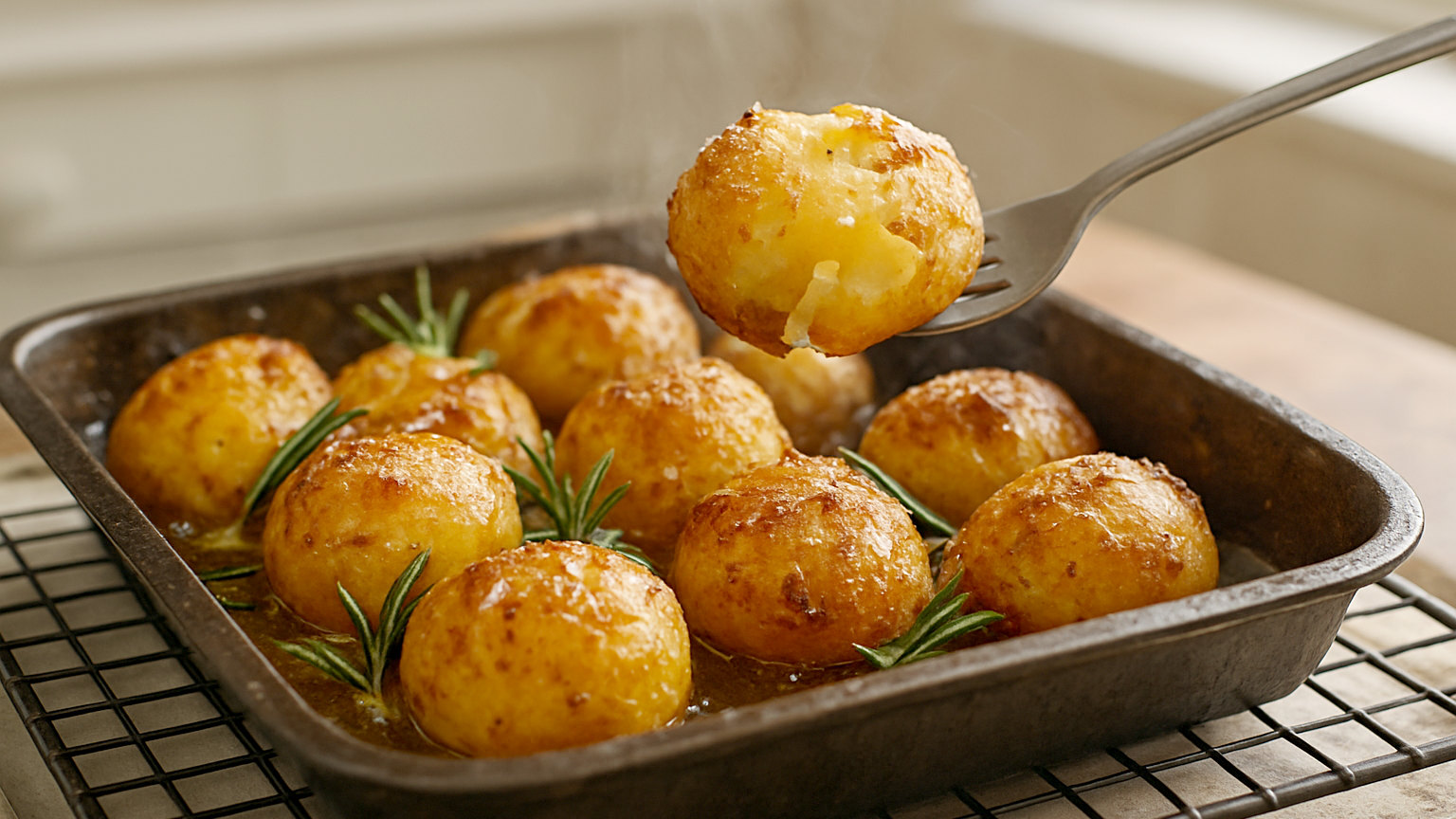
Garlic and rosemary roast potatoes are on every pub menu and they go wrong in the same way in most home kitchens. Both ingredients are added at the start, and both are burnt black within half an hour, which turns the whole tray bitter. The fix is simply timing, and the dish is otherwise identical to a plain roastie.
What do you need for 6 people?
- 1.5kg Maris Piper or King Edward potatoes
- 5 tablespoons olive oil, dripping or goose fat
- 1 whole head of garlic, cloves separated and left unpeeled
- 6 sprigs of rosemary
- Flaky salt and black pepper
How do you make them?
- Peel and cut the potatoes into even pieces about the size of a small egg.
- Parboil in cold salted water for 8 to 10 minutes from boiling.
- Drain, steam dry for 3 minutes, then shake hard in the dry pan until ragged.
- Heat the fat in a roasting tin at 200C fan until smoking.
- Add the potatoes, turning to coat, and roast for 30 minutes.
- Turn them, then scatter over the unpeeled garlic cloves and the rosemary.
- Roast for a further 20 minutes until deeply golden.
- Season with flaky salt and serve with the softened garlic cloves.
Twenty minutes is the maximum for the aromatics. Any longer at 200C fan and the rosemary blackens and the garlic turns acrid, and there is no way to remove that taste from the tray.
Why leave the garlic unpeeled?
The skin protects the clove from the direct heat of the fat, so the inside steams and turns to a sweet paste rather than burning.
Peeled cloves scorch within ten minutes and taste harsh. Whole unpeeled cloves are squeezed out at the table and spread onto the meat.
Can you use crushed garlic instead?
Only in the last five minutes, and even then it is risky. Crushed garlic has far more surface area and burns almost immediately in hot fat.
A better approach is to infuse the fat: heat it gently with a few crushed cloves, then strain them out before roasting. You get the flavour with none of the burning.
What can you use instead of rosemary?
Thyme is gentler and can go in slightly earlier, at about 25 minutes from the end. Sage suits potatoes served with pork, and oregano works with lamb.
Bay leaves can go in from the start, since they are tough enough to survive the full roasting time without burning.
Does dried rosemary work?
It burns even faster than fresh because the pieces are small and dry, so add it in the final ten minutes only and use about a third of the quantity.
Fresh sprigs left whole are far more forgiving, since only the outer needles are exposed.
Should you add the garlic whole or halved?
Halve the head across the middle and separate the cloves, leaving each in its skin. Whole heads look impressive but the inner cloves never cook through properly in twenty minutes.
Allow two or three cloves per person, since people eat more of them than you expect once they have turned soft and sweet.
What do these go with?
Lamb above all, where the rosemary and garlic echo what is usually in the joint. They also suit chicken and work well with a plain roast beef.
They are a little assertive next to pork, which is generally better served with plain potatoes and apple sauce doing the flavouring.
Should the potatoes be seasoned before or after?
Salt the parboiling water generously, then add flaky salt again as the potatoes come out of the oven. Salting them before they go into the fat draws moisture to the surface and works against browning.
Black pepper is better added at the end too, since it scorches over 50 minutes and turns bitter.
Can they be made ahead?
Parboil and rough up a day ahead and refrigerate on a tray. Add the garlic and rosemary at the usual point during roasting.
Cool leftovers quickly, refrigerate within two hours and use within two days, reheating once only until piping hot, following Food Standards Agency guidance.
See also Air Fryer Roast Potatoes, or browse more Roasts recipes.


