
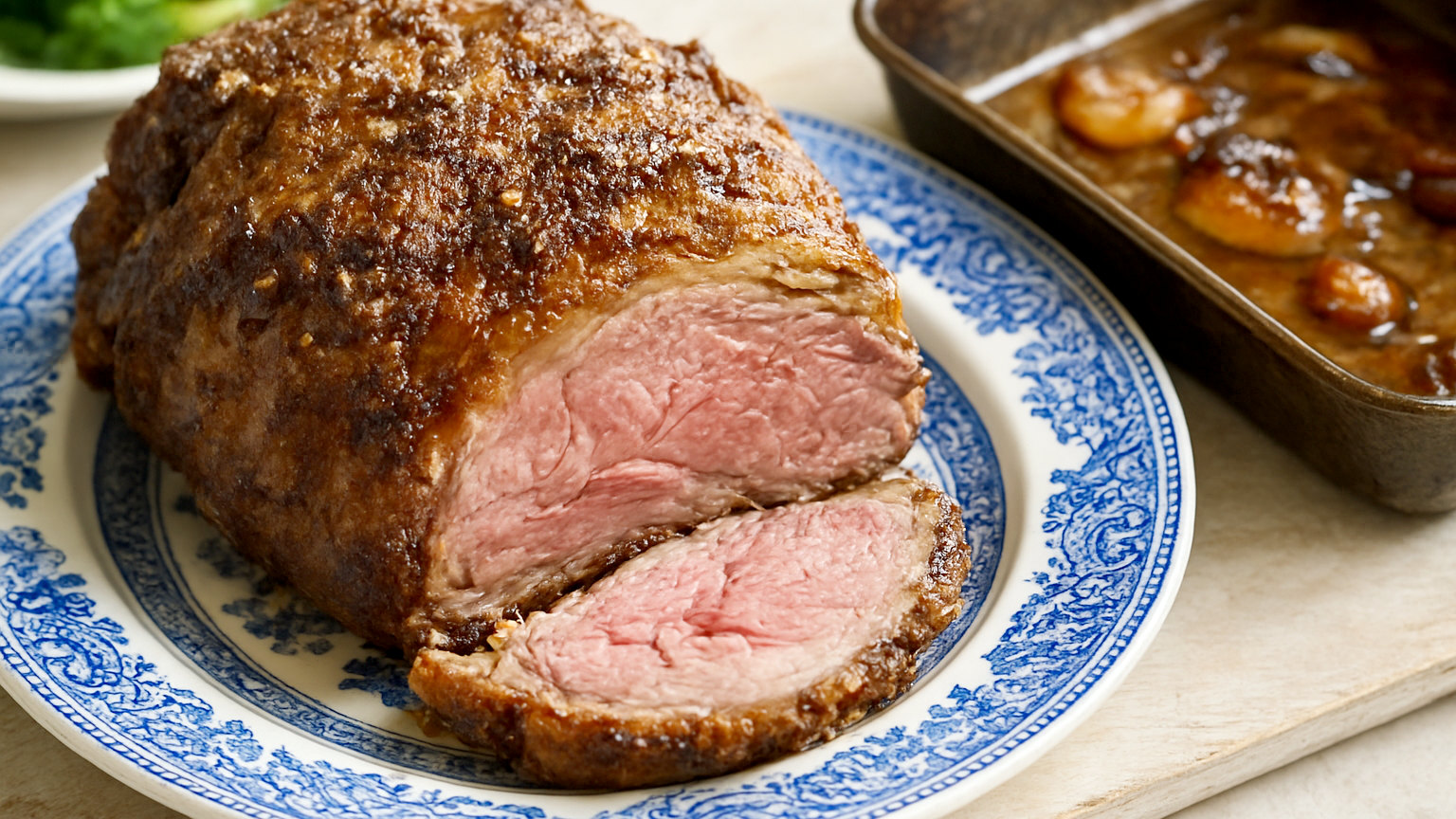
Lamb is richer and slightly sweeter than beef, which changes what belongs next to it. Piling on more roasted roots makes the plate heavy, while something green and faintly bitter cuts through the fat and makes the meat taste of more. The other thing lamb wants is a potato dish that can absorb the juices, since lamb gravy is usually thinner than beef gravy.
What are the traditional choices?
Roast potatoes cooked in the lamb fat, carrots, and peas or beans. Mint sauce and redcurrant jelly cover the sharpness, and gravy made from the tin juices ties it together.
Beyond that, the classic pairing in much of Britain is simply lamb with new potatoes and greens, which suits spring lamb far better than a heavy winter plate.
What is in season when?
Purple sprouting broccoli runs from February to April and is the best partner lamb has. English asparagus arrives in late April and lasts about eight weeks. Jersey Royals appear in April and are gone by July.
Peas and broad beans peak in June and July, runner beans in August and September, and by autumn you are into leeks, kale and savoy cabbage, all of which suit slow roast shoulder.
Which potato dish suits lamb best?
Boulangere potatoes, which are sliced potatoes and onions baked in stock, cooked underneath the joint so they catch the fat as it renders. They are the traditional French answer and they solve the oven space problem at the same time.
Cook them under the lamb rather than beside it. Everything that drips out of the joint ends up in the potatoes, which is the entire point of the dish.
What if you want roast potatoes?
Parboil them for 8 minutes, rough them up hard, and roast them in the lamb fat spooned off the tin. Lamb fat makes better roast potatoes than most people expect.
They need 220C fan, so give them their final 25 minutes while the joint rests rather than trying to share the oven at a lower temperature.
What green vegetable works best?
Purple sprouting broccoli in spring, or spring greens shredded and cooked in butter for six minutes. Both have enough bitterness to balance the lamb.
Peas cooked with lettuce, spring onion and a little stock is an old English dish that suits lamb perfectly and takes ten minutes.
Are beans worth serving?
Flageolet beans warmed with garlic, parsley and a little of the lamb juices are the classic French accompaniment. Butter beans do the same job and are easier to find.
They turn a modest joint into a full meal and are particularly useful with slow roast shoulder, where they soak up the cooking liquid.
What provides the sharpness?
Mint sauce is the obvious answer, but braised red cabbage, a watercress salad or a spoonful of salsa verde all work and several of them work better.
This is the element most often missing from the plate, and adding it makes more difference than another dish of roasted vegetables.
How do you fit it all in one oven?
Boulangere potatoes go in with the lamb from the start at the same temperature. Everything green is cooked on the hob in the last ten minutes.
If you want roast potatoes as well, use the resting period: take the lamb out, turn the oven to 220C fan and give them 25 minutes while the joint sits under foil.
What can you use out of season?
Frozen peas are the honourable exception to most seasonal advice and are better than tired fresh ones for ten months of the year. Tenderstem broccoli fills the gap when purple sprouting has finished.
Leeks are available from September to April and suit lamb well, softened slowly in butter until they collapse. Frozen broad beans, podded from their skins, are a reasonable stand in for fresh in winter.
How much should you allow per person?
About 150g of potatoes, 100g of green vegetables and 100g of anything else. Leftover roast vegetables make a good bubble and squeak, so cooking extra is rarely wasted.
If that was useful, What to Do With Leftover Roast Lamb covers related ground, and there is plenty more in Roasts recipes.


