
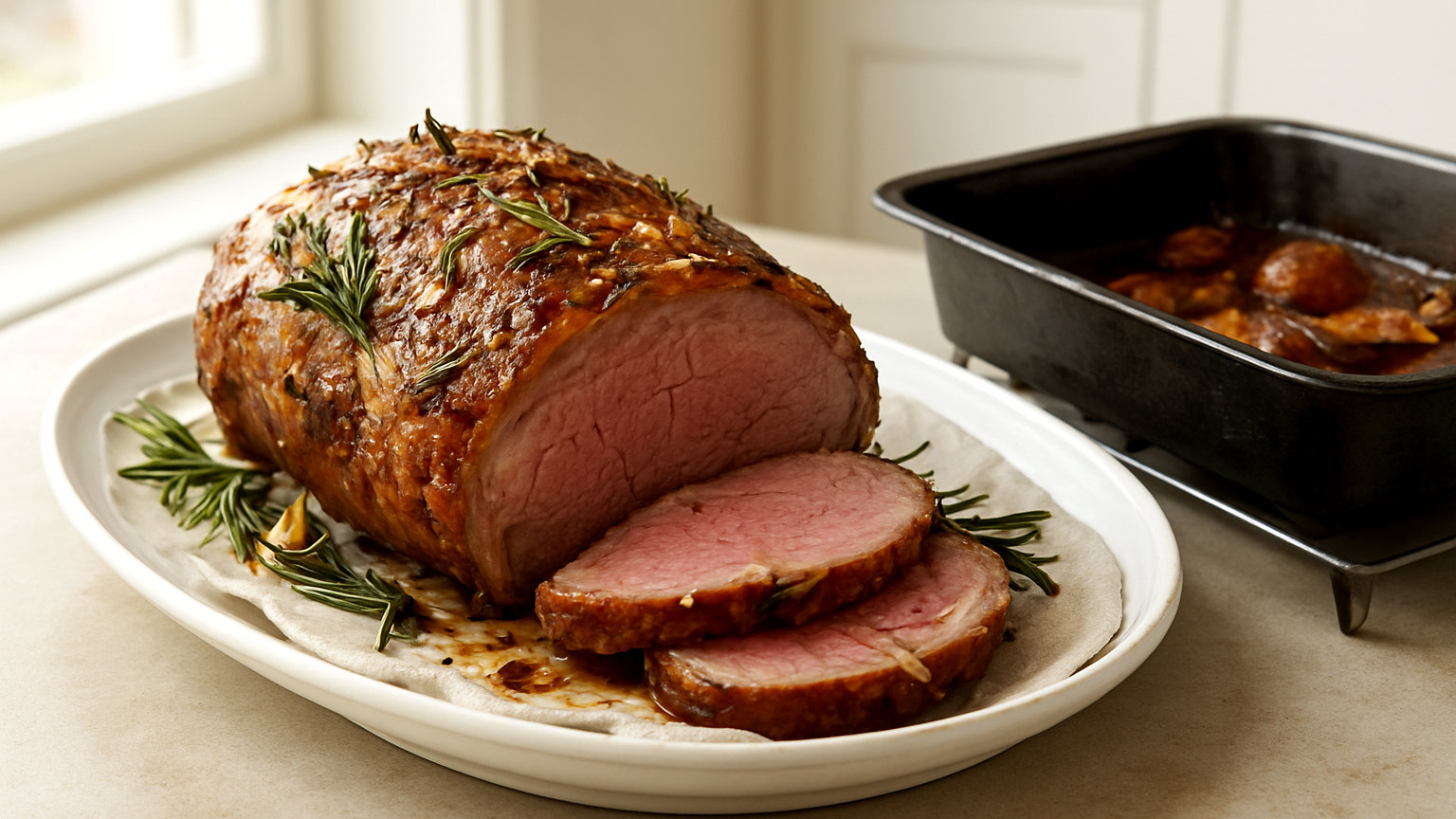
Marinades are widely believed to tenderise meat and carry flavour deep into it. Neither is quite true, and understanding what a marinade actually does saves a good deal of wasted effort. On a whole leg it changes very little. On a butterflied joint with three times the surface area, it changes a great deal, which is why the two are worth treating differently.
How far does a marinade penetrate?
A few millimetres at most, over many hours. Oil, herbs and spices simply do not travel through muscle, so a whole leg marinated for a day tastes of the marinade on the surface and of lamb everywhere else.
Salt is the exception. It dissolves, is drawn into the meat and seasons it throughout, which is why salting is the part worth doing well.
What should you do instead for a whole joint?
Salt it the day before and leave it uncovered on a rack in the fridge. Then stud it with garlic and rosemary pushed into deep cuts, which physically places flavour inside the meat rather than hoping it will migrate.
An uncovered joint in the fridge dries on the surface, and that is a good thing. A dry surface browns faster and more evenly, and the crust is where most of the roasted flavour lives.
When is a marinade genuinely worth it?
On anything flat or small. A butterflied leg, lamb steaks, cubes for kebabs and a rack all have enough surface relative to their volume for a marinade to matter.
Four hours is enough for these, and twenty four is the sensible maximum before the texture of the surface starts to suffer.
Does acid tenderise lamb?
Only the outermost layer, and it can work against you. Lemon juice or vinegar left on the meat for many hours turns the surface pale and slightly mushy rather than tender.
Keep acidic marinades to four hours or less, or use yoghurt, which is gentler because its acidity is buffered.
Which marinades suit lamb?
Garlic, lemon, oregano and olive oil is the Greek standard and hard to improve on. Yoghurt with garam masala, ginger and garlic gives a completely different dish and suits a barbecue.
Anchovy, rosemary and red wine vinegar is the Italian approach, and pomegranate molasses with cumin and mint suits summer eating.
What can you use instead of yoghurt?
Buttermilk does the same job. Coconut milk works for anyone avoiding dairy and suits spiced marinades particularly well.
Olive oil with lemon zest rather than juice gives you the flavour without the acidity, which is useful when the meat has to sit overnight.
Should the marinade be wiped off before roasting?
Scrape off the thick bits, yes. Chopped garlic, herbs and anything sugary will burn at roasting temperatures long before the meat is done and taste bitter.
Leave the oily film that clings to the surface, since that helps with browning rather than hindering it.
Can the marinade be used as a sauce?
Not as it is, because it has been in contact with raw meat. Boil it hard for at least two minutes if you want to use it, or set aside a clean portion before the lamb goes in.
Keep marinating meat covered on the bottom shelf of the fridge so nothing can drip onto other food, in line with Food Standards Agency guidance.
Does a marinade help a slow roast?
Very little, because five hours of cooking will overwhelm anything applied to the surface. Salt and a generous rub of spices just before it goes in achieves the same result.
What does work on a slow roast is putting flavour into the liquid in the tin, since the meat sits in it for hours and takes it up from below.
How long before cooking should it come out?
An hour for a small joint and ninety minutes for a large one, which lets the surface dry and the centre lose its fridge chill. Pat it with kitchen paper before it goes into the oven.
If that was useful, Which Cut of Lamb Is Best for Roasting? covers related ground, and there is plenty more in Roasts recipes.


