
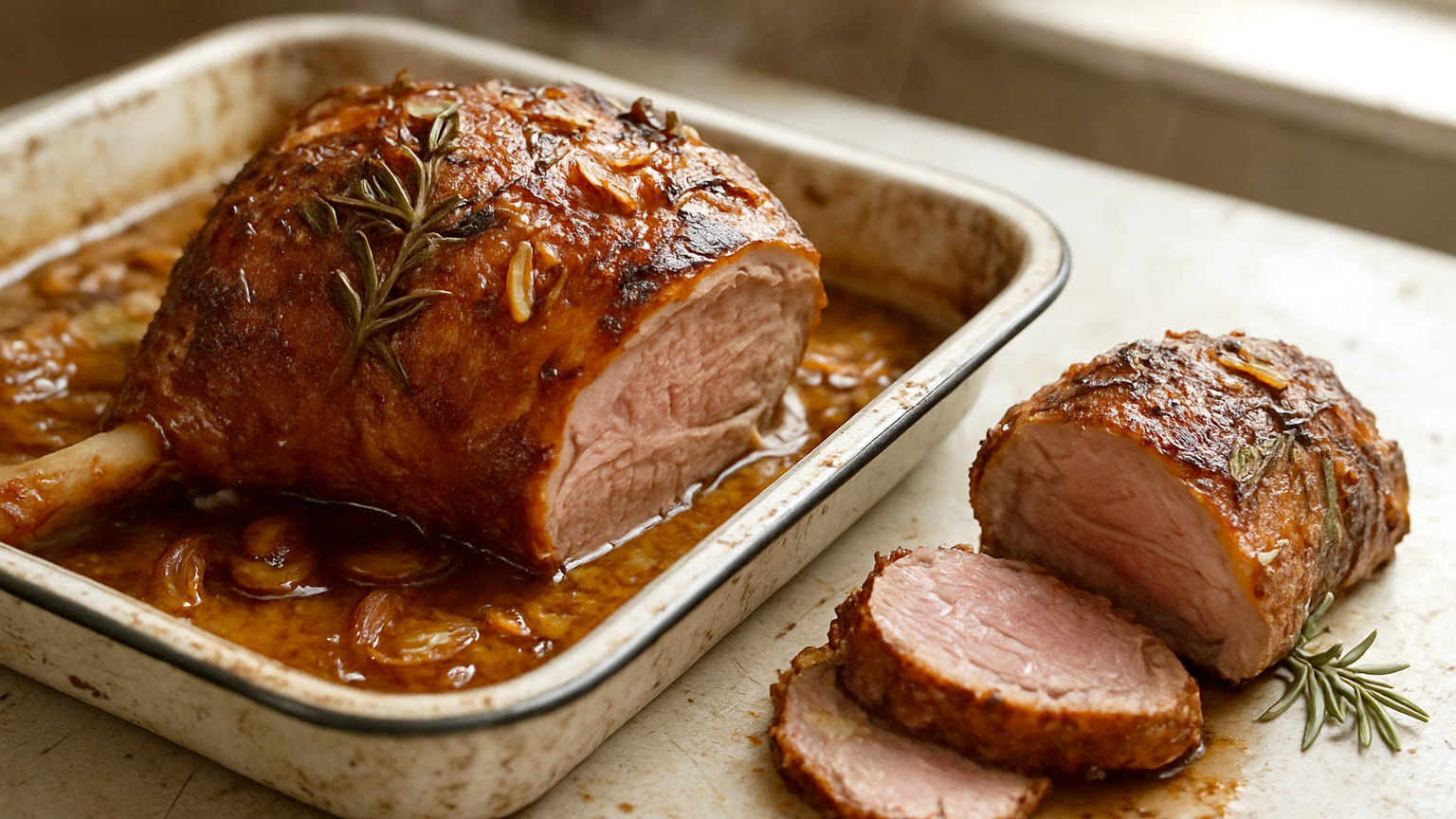
Lamb gravy is slightly harder than beef gravy for one reason: lamb renders a great deal of fat and leaves less of the dark sticky residue that gives gravy its depth. That means pouring off more than you expect and doing a little more work to build colour. Ten minutes during the resting period is all it takes.
What is in the tin after roasting?
A thick layer of clear fat, a small amount of dark juice underneath it, and whatever the onions and carrots under the joint have given up. The fat is worth keeping for roast potatoes and should not go down the sink.
How do you make it?
- Lift out the lamb and set the tin over a low hob flame.
- Tilt the tin and spoon off all but two tablespoons of the fat.
- Squash the roasted onions and carrots into the base with a wooden spoon.
- Scatter over 2 tablespoons of plain flour and stir it in, cooking for a full minute until it smells nutty.
- Add 150ml of white wine and let it bubble down until almost dry, scraping the tin clean.
- Pour in 600ml of hot stock a little at a time, stirring until smooth after each addition.
- Add a tablespoon of redcurrant jelly and simmer for 8 minutes.
- Strain into a warm jug and stir in the resting juices at the last moment.
Pour off more fat than feels right. Lamb is fattier than beef, and gravy made with too much of it separates into a greasy layer that no amount of simmering will fix.
Why does lamb gravy taste thin?
Usually because there was not much browned residue to work with. Roasting the joint on a bed of onions and carrots solves it, since they caramelise and give the gravy both colour and sweetness.
Cooking the flour properly until it takes on colour is the other half of the answer, and it is the step most often rushed.
What stock should you use?
Lamb stock if you have it, chicken stock if you do not. Beef stock is too heavy and dominates the lamb rather than supporting it.
The bone from a leg makes excellent stock. Roast it, then simmer it for three hours with an onion, a carrot and a bay leaf, and freeze what you do not use.
What can you use instead of wine?
Extra stock with a tablespoon of white wine vinegar gives you back the acidity. Dry cider works particularly well with lamb, and vermouth is an excellent substitute if there is a bottle open.
Strong black tea is an old trick that adds tannin without sweetness, and a spoonful of tomato puree cooked out in the fat adds depth.
Should redcurrant jelly go in?
A tablespoon rounds the gravy out and suits lamb better than it would beef. Mint jelly does the same with a different accent.
Add it towards the end and taste before adding more, since it is easy to tip a savoury gravy into something that reads as sweet.
Can it be made ahead?
Make a base from browned onions, flour and stock up to three days ahead, keep it in the fridge, then whisk it into the roasting tin at the last minute so it picks up the juices.
That takes the pressure off the busiest twenty minutes of the day and improves the result, since a gravy base benefits from sitting.
How do you thicken or thin it?
If it is too thin, simmer it for longer rather than adding more flour, which brings back the pasty taste. A teaspoon of cornflour slaked in cold water will thicken it in two minutes if you are short of time.
If it is too thick, add hot stock rather than water, a little at a time, and check the seasoning again afterwards.
How much should you make?
Allow 150ml per person and then make more. Gravy runs out first at every Sunday table, and what is left keeps three days in the fridge and freezes for three months. Reheat it once only until piping hot, following Food Standards Agency guidance.
See also Which Cut of Lamb Is Best for Roasting?, or browse more Roasts recipes.


