
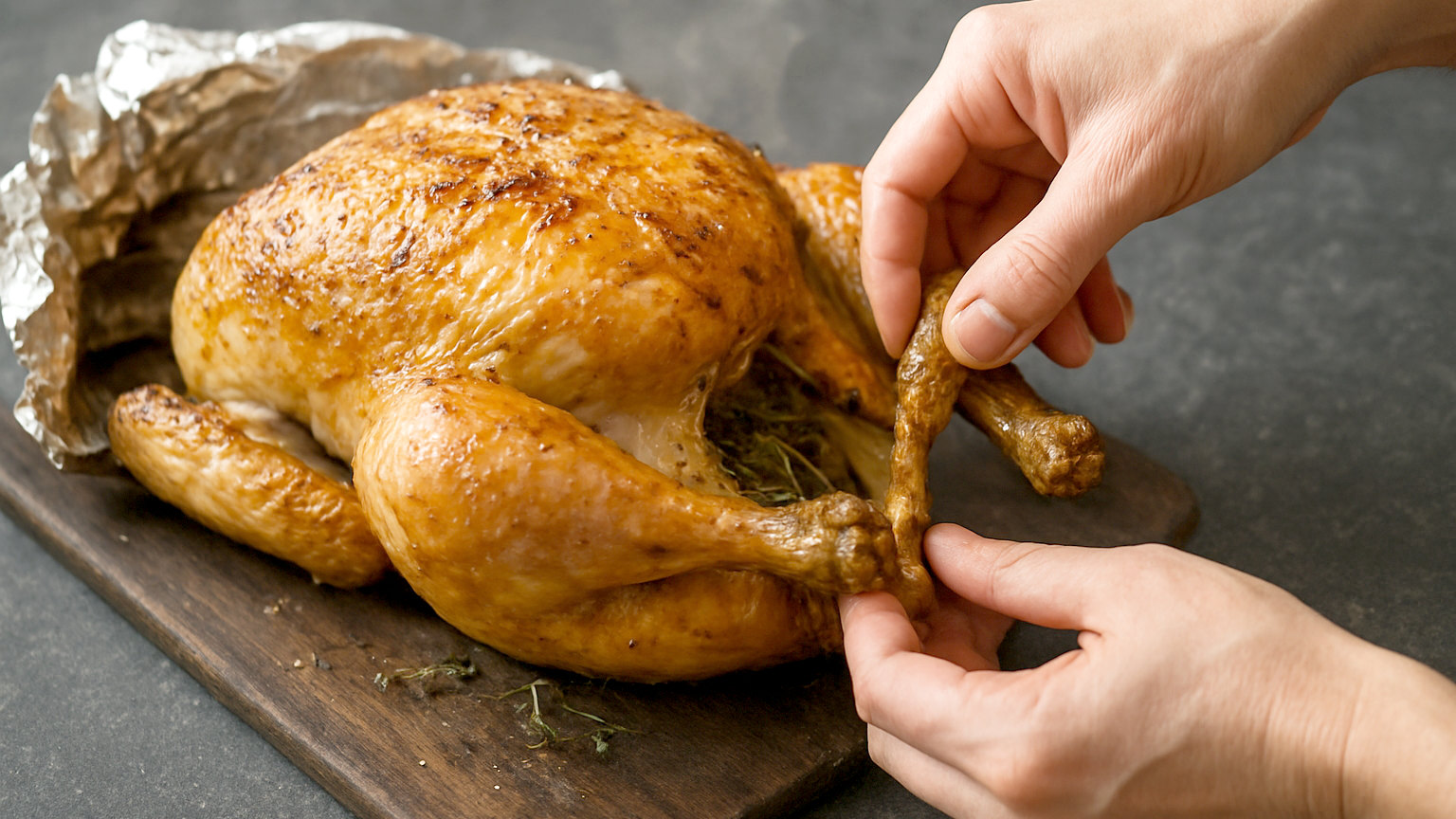
Stock made from a roast chicken carcass costs nothing, takes almost no attention and is better than anything sold in a carton. It also turns the next batch of gravy, risotto or soup into something noticeably better. The only technique involved is keeping the pan below a simmer, because boiling is what turns clear stock cloudy and greasy.
What do you need?
- 1 roast chicken carcass, broken up, plus any skin and bones from the plates
- 1 onion, halved, skin left on
- 2 carrots, roughly chopped
- 2 sticks of celery, roughly chopped
- 1 leek top, if you have one
- 2 bay leaves, a few parsley stalks and 6 peppercorns
- Cold water to cover, about 2 litres
How do you make it?
- Break the carcass up so it packs into the pan and stays submerged.
- Add the vegetables and aromatics and cover with cold water by about 3cm.
- Bring it very slowly up to temperature over 20 minutes.
- Skim off any scum that rises in the first ten minutes.
- Adjust the heat so the surface barely trembles, with the occasional bubble.
- Cook uncovered for 3 hours, topping up with hot water if the bones become exposed.
- Strain through a sieve and discard the solids.
- Cool quickly and refrigerate, then lift off the set fat.
Never let it boil. A rolling boil emulsifies the fat into the liquid and breaks up the solids, which is what makes stock cloudy and slightly greasy rather than clean and clear.
Why start with cold water?
It draws flavour out of the bones gradually as the temperature rises. Starting with boiling water seals the surfaces and gives a weaker result.
It also makes the scum rise in a single layer that can be skimmed off easily in the first few minutes.
Should you add salt?
No. Stock is a base ingredient and it may well be reduced later, which would concentrate any salt you added into something inedible.
Season the finished dish rather than the stock, and taste as you go.
What should you leave out?
Potato, which makes it cloudy. Brassicas such as cabbage and broccoli, which dominate. Anything already heavily seasoned, and any bones that have had sauce on them.
Garlic is fine in small amounts. Onion skins are worth leaving on, since they add a good golden colour.
How long should it simmer?
Three hours is the sweet spot for a chicken carcass. Beyond about five hours the flavour starts to flatten and the stock can turn slightly bitter.
A pressure cooker does the same job in 45 minutes, and a slow cooker on low overnight works well since it cannot boil.
How do you get it more concentrated?
Strain it, then reduce it hard in a wide pan. Reducing by half gives you a strong stock, and reducing much further gives you a jelly that can be frozen in cubes.
Roasting the bones for twenty minutes before they go in the pan deepens both colour and flavour if the carcass has come from a poached bird.
Can you use raw bones as well?
Yes, and a mixture of raw wings and a roast carcass makes the best stock of all. Wings are cheap and full of gelatine, which gives the stock body.
Roast raw bones for twenty minutes first if you want a darker, deeper stock. Left pale, they produce a lighter stock better suited to soups and risotto.
What should you do with the fat on top?
Lift it off once the stock is cold and keep it. Chicken fat is excellent for roast potatoes, for frying onions, and for starting a soup.
It keeps a month in the fridge and three months frozen.
How do you store it?
Cool it quickly by standing the pan in cold water, then refrigerate within two hours. It keeps three days in the fridge and three months in the freezer.
Freeze it in useful quantities, since a litre block is no help when a recipe needs 200ml. Reheat once only and bring it to a full simmer before use, following Food Standards Agency guidance.
Worth reading next: Roast Chicken for Two: Small Birds and Crowns. There is more in our Roasts recipes.


