
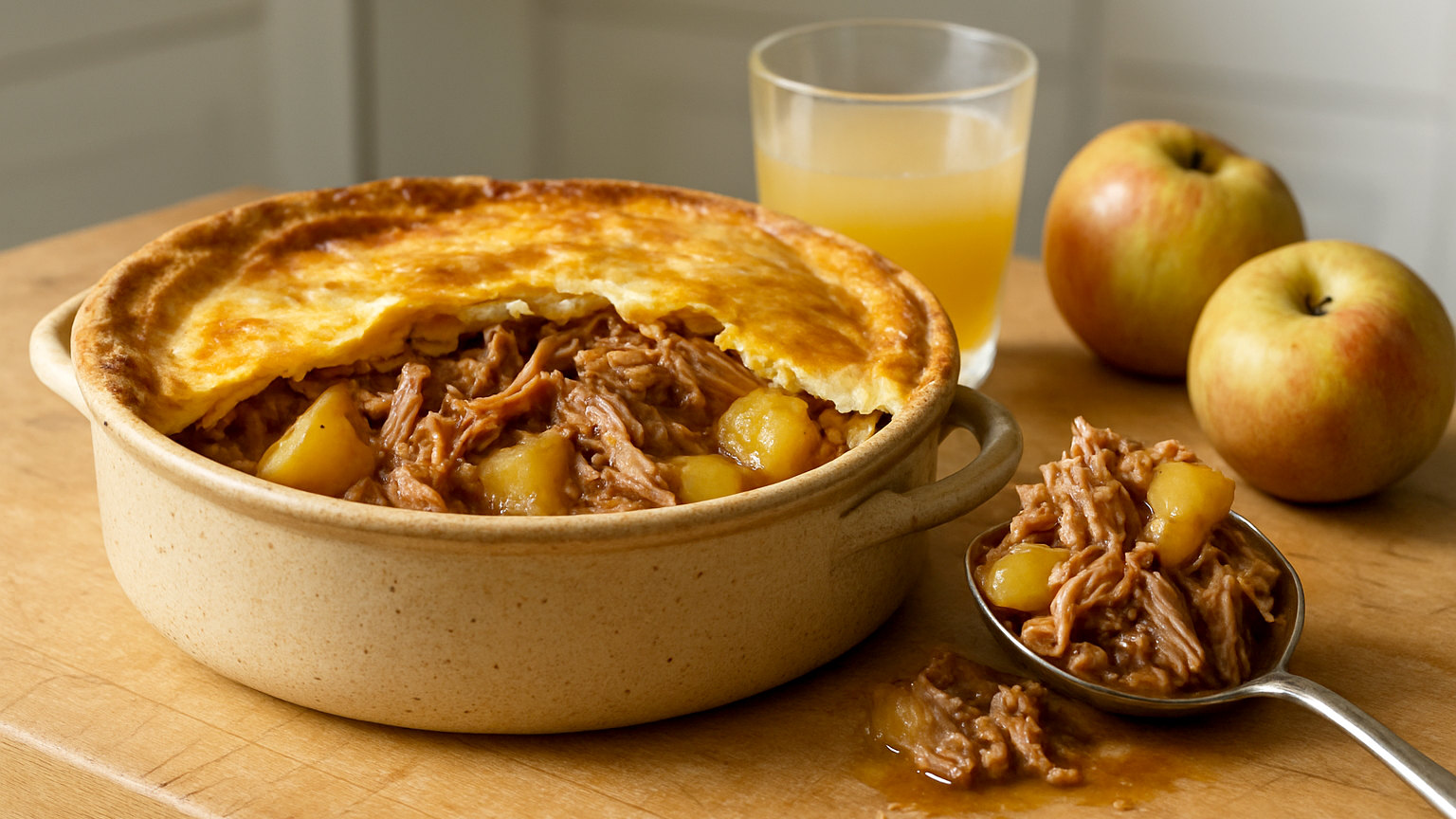
Pork and cider is the defining West Country pairing, and it works because the acidity of a dry cider cuts through fatty pork while the long braise softens the tannin. Apples go in twice: early, to melt into the sauce, and late, so there are recognisable pieces on the plate.
What do you need for 6 people?
- 1.5kg pork shoulder, cut into large chunks
- 2 tablespoons oil and 25g butter
- 2 onions, sliced, and 2 sticks of celery, chopped
- 3 cloves of garlic, sliced
- 500ml dry cider
- 300ml chicken stock
- 2 Bramley apples, peeled and chopped, plus 2 eating apples in wedges
- 2 sprigs of sage and 2 bay leaves
- 150ml double cream and 1 teaspoon wholegrain mustard
How do you make it?
- Heat the oven to 150C fan, 170C conventional, gas mark 3.
- Brown the pork hard in batches and set aside.
- Soften the onions, celery and garlic in the same pan for 10 minutes.
- Add the cider and let it bubble for 5 minutes to cook off the alcohol.
- Return the pork, add the stock, Bramleys, sage and bay.
- Cover and cook in the oven for 2 hours 30 minutes.
- Fry the eating apple wedges in butter until golden and add for the last 15 minutes.
- Stir in the cream and mustard and season well.
Use a dry cider and never a sweet one. Sweet cider reduces to something cloying that fights the cream. A dry farmhouse cider gives acidity and tannin, which is exactly what fatty pork needs.
Which cut of pork?
Shoulder, which has enough fat and connective tissue to survive a long braise and pull apart at the end.
Loin and fillet dry out badly and should not be used.
Why two kinds of apple?
Bramleys collapse completely and thicken the sauce with apple flavour. Eating apples such as Cox or Braeburn hold their shape and go in at the end.
Using only Bramleys leaves no visible apple at all.
Does the alcohol cook off?
Most of it, particularly after two and a half hours in the oven, though not all. Let the cider bubble hard for five minutes before the stock goes in.
Does it need thickening?
The Bramleys break down and thicken it naturally. If it is still loose, lift out the meat and reduce the liquid hard for ten minutes.
Why brown the pork first?
It develops flavour through the Maillard reaction, which cannot happen once the meat is in liquid. Do it in batches so the pan stays hot.
What herbs suit it?
Sage above all, which is the traditional partner for pork, with bay and a little thyme.
Add sage sparingly, since it turns bitter in long cooking.
When should the cream go in?
At the very end, off the heat or over a low one, so it does not split.
It can be left out for a lighter dish.
Can it be done in a slow cooker?
Yes, on low for about 6 hours after browning the meat and reducing the cider on the hob first.
Reducing the cider separately matters, since a slow cooker will not cook off the alcohol.
What should you serve with it?
Mashed potato, buttered cabbage or leeks, and bread for the sauce.
Can it be made ahead?
It improves overnight. Add the fried apples and cream when reheating rather than before.
What kind of cider works best?
A traditional dry West Country cider with real tannin. Commercial sweet ciders are largely sugar and give a flabby sauce.
Something you would drink is the right test.
How do you know the pork is ready?
It should pull apart under a fork with no resistance. Two and a half hours is usual and an extra half hour does no harm.
Undercooked shoulder is tough rather than dry.
How long does it keep?
Three days refrigerated and it freezes for three months without the cream.
Cool it quickly, refrigerate within two hours and reheat once only until piping hot, in line with Food Standards Agency guidance.
See also Cider and Scrumpy, or browse more Regional recipes.


