
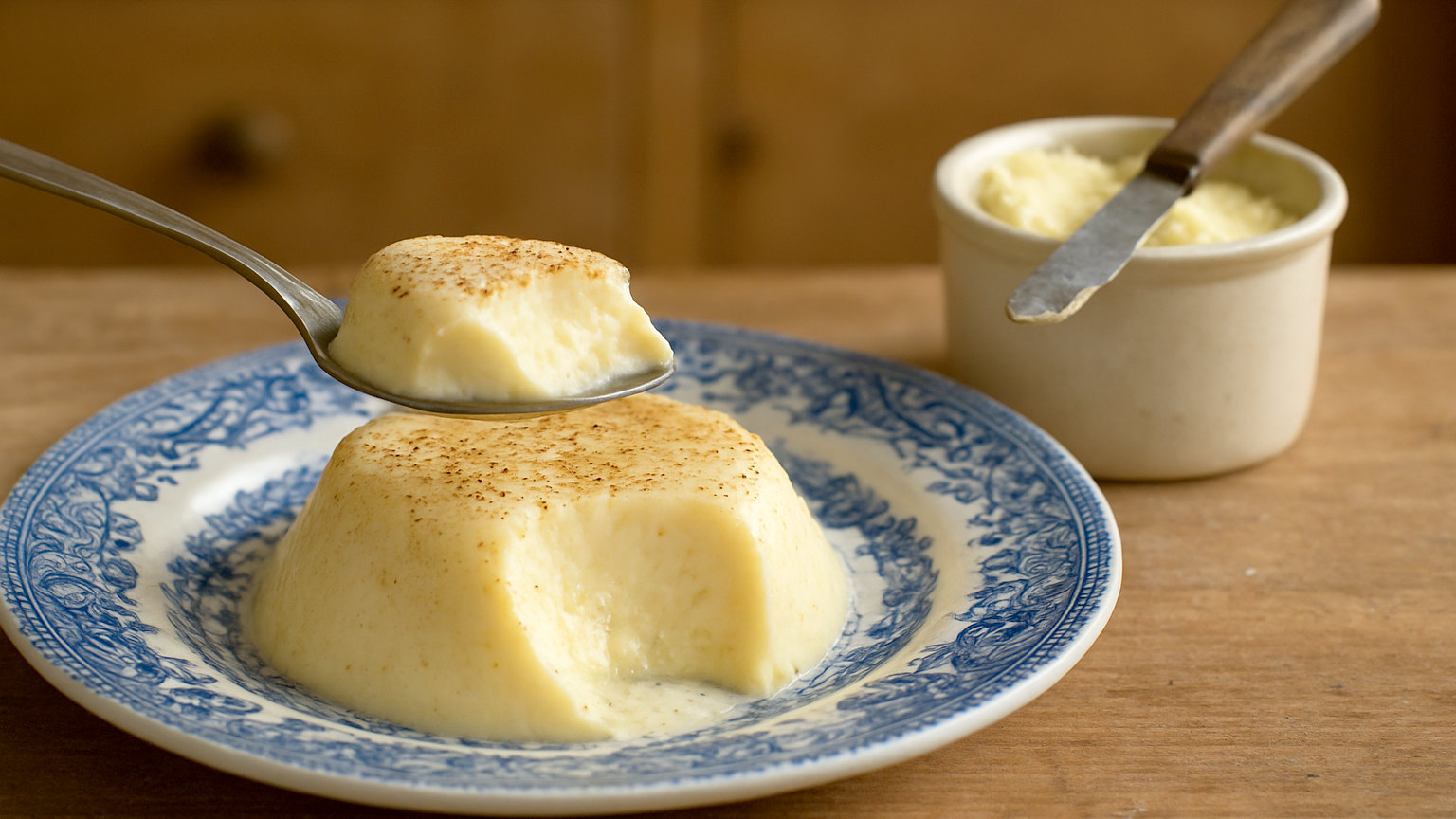
Junket is milk set with rennet into a soft, trembling curd, sweetened lightly and served cold with clotted cream and grated nutmeg. It was a common English pudding for centuries and has almost disappeared. It takes five minutes of work and the two things that matter are the temperature of the milk and leaving it completely undisturbed while it sets.
What do you need for 4 people?
- 600ml whole milk
- 2 tablespoons caster sugar
- 1 teaspoon vegetarian or animal rennet
- 1 tablespoon brandy or rum, optional
- Clotted cream and freshly grated nutmeg to serve
How do you make it?
- Warm the milk gently with the sugar to exactly 37C, which is blood temperature.
- Take it off the heat immediately.
- Stir in the brandy if using.
- Stir in the rennet with two or three turns only.
- Pour at once into the serving dish or individual glasses.
- Leave completely undisturbed at room temperature for 30 minutes.
- Once set, chill for 1 hour without moving it about.
- Top with clotted cream and grated nutmeg just before serving.
Once the rennet is in, do not move the dish at all. The curd sets as a single delicate structure and any knock while it is forming breaks it permanently into a watery mess.
What is rennet?
An enzyme that curdles milk, traditionally from a calf stomach and now widely available in vegetarian form.
It is the same agent used in cheesemaking, sold in small bottles.
Why does the temperature matter so much?
Rennet works at around blood temperature. Too cool and it will not set, and above about 40C the enzyme is destroyed and nothing happens at all.
Use a thermometer rather than guessing.
Can UHT milk be used?
No. UHT and some highly processed milks will not set with rennet.
Fresh whole pasteurised milk works perfectly well.
Is it suitable for vegetarians?
Only with vegetarian rennet, which is widely sold. Traditional rennet comes from a calf stomach.
Check the bottle carefully.
Why did it disappear?
Rennet became harder to buy, tastes changed, and it was displaced by gelatine and packet desserts through the twentieth century.
It is still made in parts of Devon and Cornwall.
Should it be made in one dish or several?
Individual glasses are easier, since they can be carried to the table without disturbing a large set curd.
One dish is traditional and requires more care.
What does it taste like?
Very mild and milky, with a texture somewhere between a panna cotta and a set yoghurt. The nutmeg and cream do most of the flavouring.
How much rennet do you need?
About a teaspoon for 600ml of milk, though strengths vary considerably between brands. Follow the bottle.
Too much gives a rubbery curd rather than a delicate one.
Can it be flavoured?
Brandy, rum, vanilla or rosewater are all traditional. Add them before the rennet.
Was it always a pudding?
It has been a sweet dish for centuries, and the same curd unsweetened and drained becomes fresh curd cheese.
The two are the same process at different stages.
Why is it not stirred once set?
Stirring breaks the curd and separates it into whey and solids, which is how you make cheese rather than junket.
How is it different from panna cotta?
Panna cotta is set with gelatine and contains cream, so it is richer and firmer. Junket is milk set by enzyme action and is far more delicate.
Junket also cannot be turned out of a mould.
Where does the name come from?
From an old word for a rush basket in which curds were drained, which also gives us the sense of junket as a feast or outing.
The pudding is the older meaning.
How long does it keep?
It should be eaten the day it is made and refrigerated once set.
It weeps whey if kept longer, in line with Food Standards Agency guidance on fresh dairy.
For something along the same lines, see Sally Lunn, or browse all our Regional recipes.


