
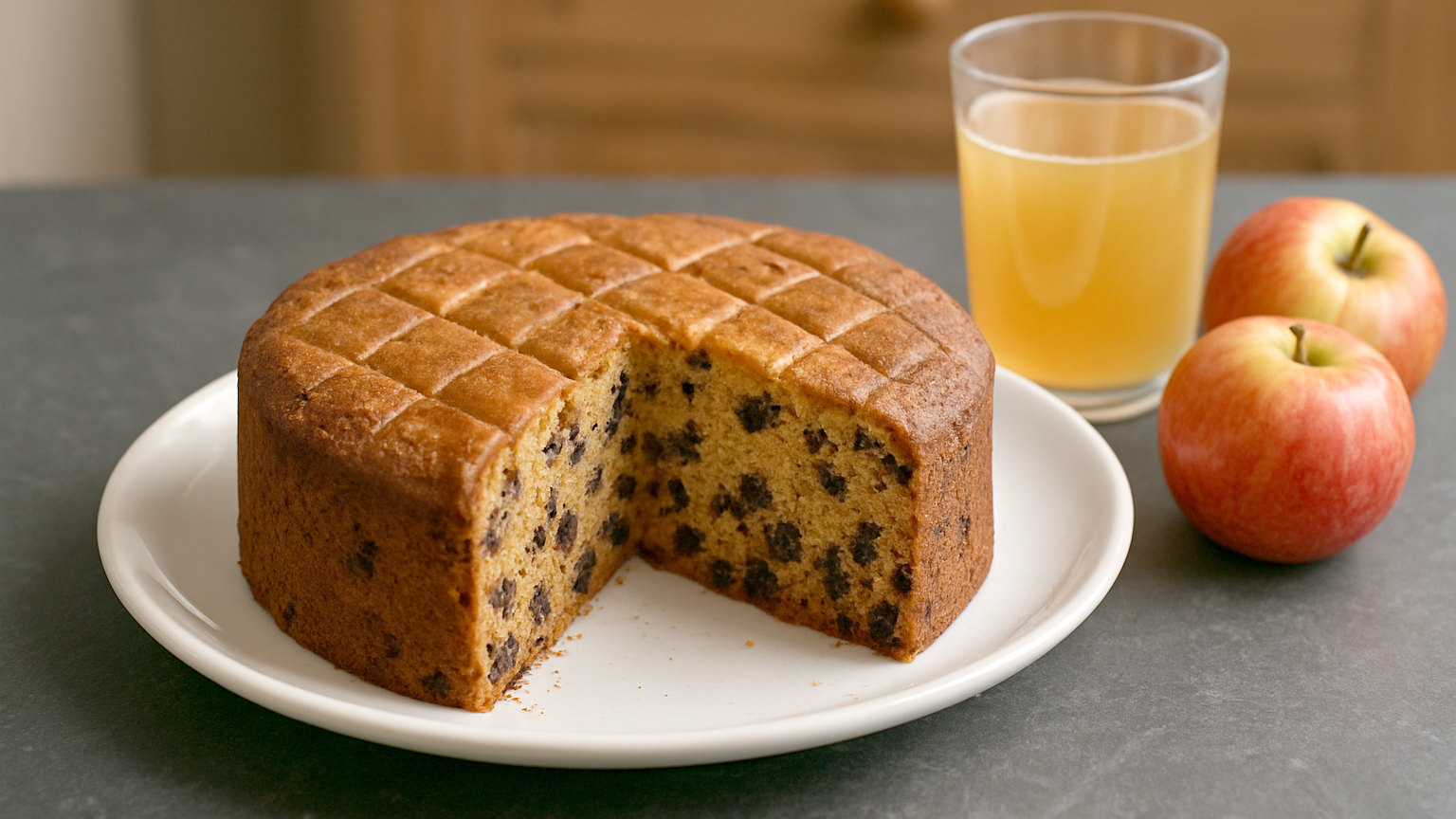
Hevva cake, also called heavy cake, is a flat Cornish currant cake with a criss cross pattern scored into the top to represent fishing nets. The name comes from the cry of hevva, shouted by the huer, a lookout posted on the cliffs to spot pilchard shoals and call the boats out.
What do you need for one cake?
- 350g plain flour
- 1 teaspoon baking powder
- 175g cold butter or lard, diced
- 75g caster sugar, plus extra for the top
- 200g currants
- About 150ml clotted cream or milk
- 1 beaten egg for glazing
How do you make it?
- Heat the oven to 190C fan, 210C conventional, gas mark 6.
- Rub the fat into the flour and baking powder until it resembles breadcrumbs.
- Stir in the sugar and currants.
- Add the clotted cream or milk to make a stiff dough.
- Press or roll into a rectangle about 2cm thick on a lined tray.
- Brush with beaten egg.
- Score a diagonal criss cross pattern across the top with a knife.
- Sprinkle with sugar and bake for 20 to 25 minutes until golden.
Score the pattern without cutting through. The lines should be shallow, about 3mm deep, so they hold their shape during baking rather than opening into splits.
What does hevva mean?
It was the cry of the huer, a man stationed on the clifftop to watch for the discolouration in the water that marked a pilchard shoal.
He shouted hevva and directed the boats with signals. The cake was made to feed the crews when they returned.
Is it the same as fuggan?
Closely related. Fuggan is a plain Cornish dough cake, sometimes savoury with pork, and hevva cake is the sweet currant version.
The names overlap in different parts of the county.
Why the criss cross?
It represents the pattern of fishing nets, or in some accounts the sand under the nets.
It is decorative rather than functional.
Does it need baking powder?
A teaspoon gives a slight lift. Traditional versions often leave it out entirely, which is why the cake is called heavy.
It is never meant to rise much.
Why is it called heavy cake?
It is dense and flat rather than risen, closer to a rich shortcrust than a sponge.
Heavy is descriptive rather than critical.
Can you use clotted cream in the dough?
Traditionally yes, which is what makes it particularly rich. Milk works and gives a plainer cake.
Some versions use both cream and butter.
What fat should you use?
Butter, lard, or a mixture. Lard gives the shortest texture and butter the best flavour, so many recipes use both.
Clotted cream in place of some of the liquid enriches it further.
How thick should it be?
About 2cm before baking. It rises very little, so this is close to the finished thickness.
Why is there no egg?
It is a plain, cheap cake built on flour, fat and fruit. The richness comes from the clotted cream rather than eggs.
Adding egg turns it into something closer to a sponge.
How is it different from a Welsh cake?
Hevva cake is baked as one large flat cake in the oven and cut into squares. Welsh cakes are small and griddled.
Should the currants be soaked?
Not necessary, since the dough is rich enough to keep them plump. Very dry currants can be soaked briefly and patted dry.
How should it be served?
Cut into squares, warm or cold, with butter or clotted cream and tea.
Who was the huer?
A lookout employed to watch the sea from the clifftop for the reddish stain that a pilchard shoal made in the water.
Huer's huts survive on the Cornish coast, notably at Newquay.
How is it cut?
Into squares or diamonds following the scored lines, once it has cooled slightly.
The scoring marks the portions as well as making the pattern.
How long does it keep?
Four days in a tin and it freezes for three months.
It is best on the day it is baked.
See also Cider and Scrumpy, or browse more Regional recipes.


