
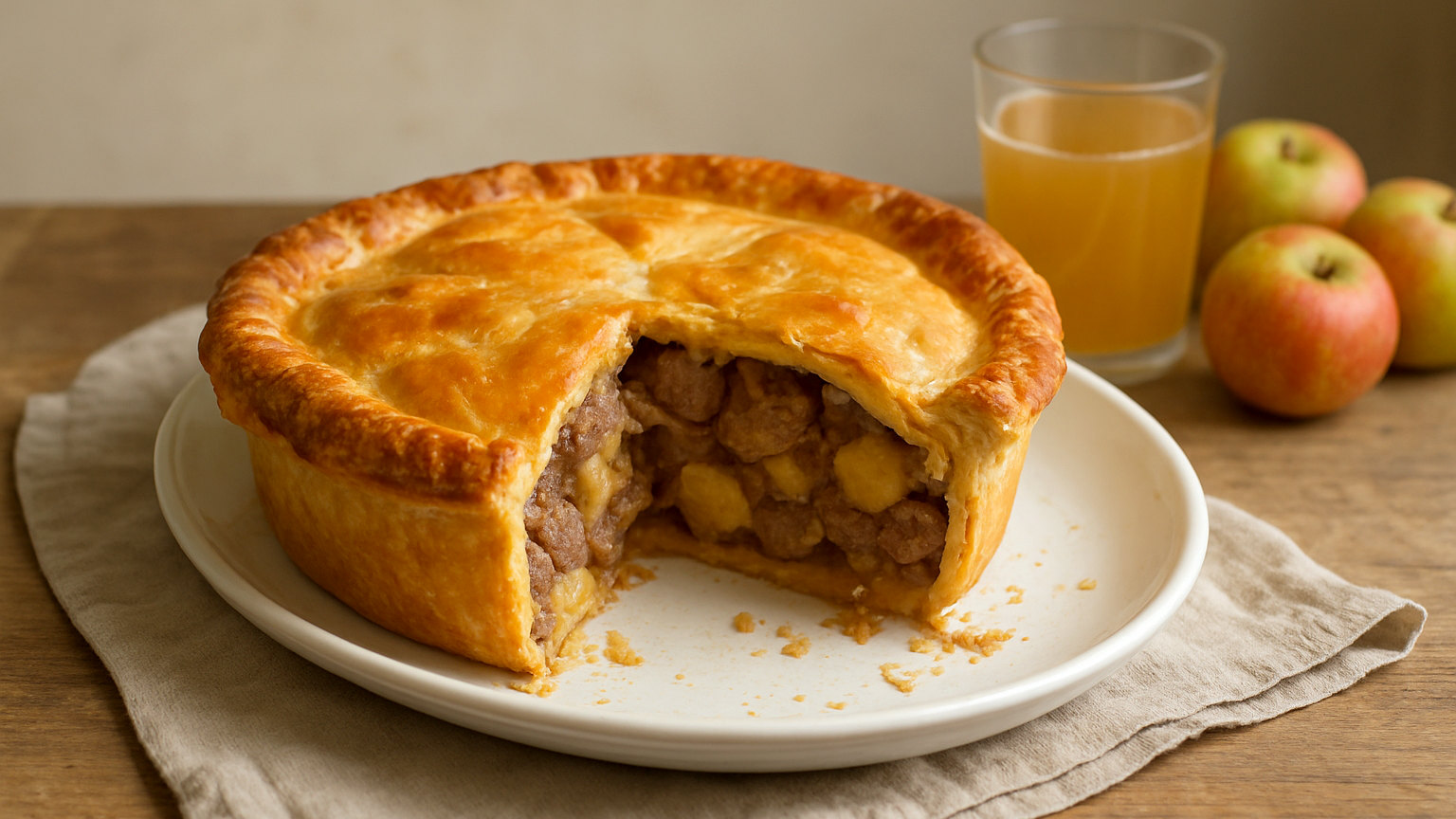
Devon squab pie contains lamb or mutton, apples, onions and warm spices under a pastry crust. It contains no squab, which is a young pigeon. The name is a puzzle, and the pie itself is a survival of a much older English style of cooking in which meat and fruit were combined as a matter of course.
What do you need for 6 people?
- 500g shortcrust pastry
- 800g lamb or mutton shoulder, cubed
- 2 onions, sliced
- 3 cooking apples, peeled and sliced
- 1 teaspoon ground cinnamon and half a teaspoon of allspice
- A grating of nutmeg
- 2 tablespoons brown sugar
- 300ml lamb or chicken stock
- Salt, black pepper and 1 beaten egg to glaze
How do you make it?
- Brown the lamb hard in batches and set aside.
- Soften the onions in the same pan for 10 minutes.
- Return the lamb, add the stock and simmer covered for 1 hour 30 minutes until tender.
- Season well and cool completely.
- Layer the cold lamb, apple slices, spices and sugar in a pie dish.
- Add enough of the cooking liquid to come two thirds up.
- Top with pastry, seal the edges and cut a steam hole.
- Glaze and bake at 190C fan for 35 to 40 minutes until golden.
Cook the lamb before it goes in the pie. Shoulder needs ninety minutes to become tender, and the pastry needs forty at most. Raw lamb under a crust gives tough meat and a burnt lid.
How thickly should the lamb be cut?
Into 3cm cubes, which hold together through ninety minutes of simmering and still give a decent forkful in the finished pie.
Why is there no squab in it?
Nobody is certain. It may have contained pigeon originally, or the name may derive from an unrelated dialect word.
Recorded recipes from the eighteenth century onwards use mutton.
What pastry should you use?
Shortcrust for a traditional pie, or puff for a lighter lid. Shortcrust holds up better against a wet filling.
Why lamb and apple together?
Combining meat with fruit and sweet spices was standard in medieval and early modern English cooking, and mince pies once contained meat for the same reason.
Devon squab pie is one of the few survivals.
Which apples should you use?
Cooking apples such as Bramley, which break down and go tart against the lamb.
Eating apples stay too sweet and hold their shape.
Should the filling be wet?
Moist rather than swimming. Enough liquid to come two thirds up the filling, since the apples release more as they cook.
Too much and the pastry lid sits on liquid and goes soft.
Lamb or mutton?
Mutton is traditional and needs an extra hour. Lamb shoulder is the practical modern choice.
Should the apples be layered or mixed?
Layered, so there are distinct bands of apple through the pie rather than everything cooked to a uniform mass.
How sweet should it be?
Noticeably sweet against the savoury lamb, without becoming a pudding. Two tablespoons of sugar for this quantity is about right.
Can other meat be used?
Pork works well with apple and some Cornish versions use it. Lamb or mutton is the Devon standard.
Should it have a base?
Traditionally it is a top crust only, which keeps the pastry crisp against a wet filling.
What should you serve with it?
Potatoes and a green vegetable, and clotted cream in the older Devon manner, which is unusual and genuinely traditional.
What spices should go in?
Cinnamon, allspice and nutmeg are the usual combination. Some versions add cloves or mace.
Keep them warm and gentle rather than assertive, since they support the apple.
Is it eaten elsewhere?
Cornwall has its own version, and both counties claim it. Squab pies appear across the West Country under slightly different recipes.
How long does it keep?
Two days refrigerated and it freezes for three months.
Cool it quickly, refrigerate within two hours and reheat once only until piping hot, in line with Food Standards Agency guidance.
Worth reading next: Devon and Cornish Splits. There is more in our Regional recipes.


