
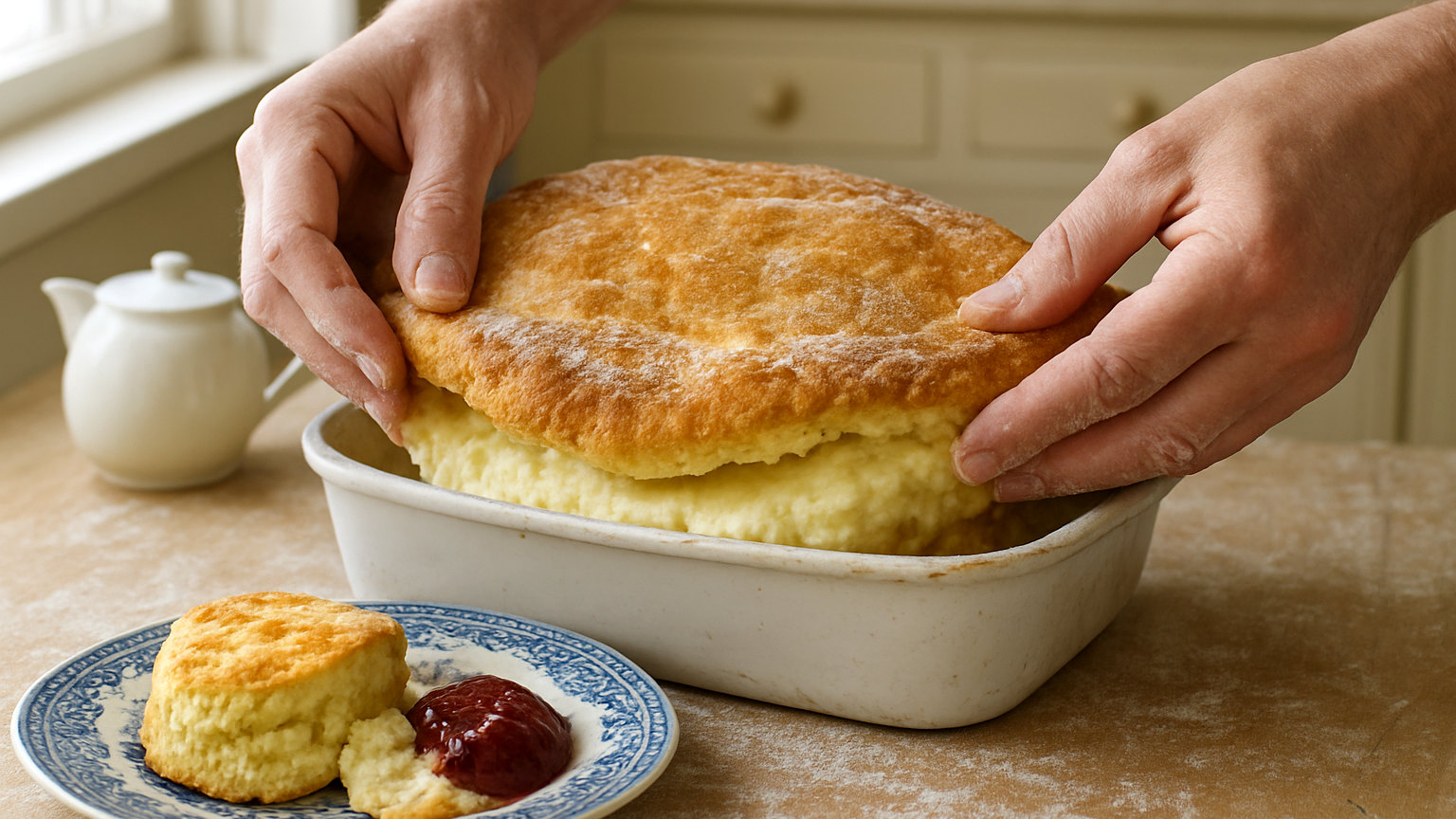
Clotted cream is made by heating full fat cream slowly for many hours until the fat separates and rises, forming a thick golden crust over a set, almost buttery cream beneath. There is one ingredient. The difficulty is entirely in the patience, since it needs twelve hours in a very low oven followed by a night in the fridge.
What do you need?
- 1 litre double cream, at least 48 per cent fat
- A wide, shallow ovenproof dish
How do you make it?
- Heat the oven to 80C, or its lowest setting.
- Pour the cream into a wide shallow dish to a depth of about 5cm.
- Put it in the oven uncovered.
- Leave for 12 hours without stirring or disturbing it.
- A thick wrinkled golden crust should have formed on top.
- Remove carefully and cool at room temperature for an hour.
- Refrigerate for at least 8 hours, still undisturbed.
- Scoop the clotted layer off the top, leaving the thin liquid beneath.
Do not stir it at any point. The whole process depends on the fat separating and rising undisturbed. A single stir at any stage and it will never clot properly.
Which cream should you use?
Double cream with the highest fat content you can find, ideally 48 per cent or more. Anything under 40 per cent will not clot.
Avoid UHT and anything labelled long life, which has been processed in a way that prevents it.
What temperature does it need?
Around 80C, which is below simmering. Most domestic ovens sit at 100C at their lowest, which still works though it browns the crust faster.
It should never boil or bubble.
Why does it need to be shallow?
The fat has to rise to the surface, and a deep dish gives it too far to travel. About 5cm is right.
A wide dish also gives more crust, which is the best part.
What is the liquid underneath?
Thin cream with most of the fat removed. Keep it for scones, cakes or mashed potato rather than throwing it away.
What does protected status cover?
Cornish clotted cream holds protected status, requiring the milk to come from Cornwall and the cream to have a minimum fat content of 55 per cent.
Devon clotted cream is equally traditional and not protected in the same way.
Can it be made on the hob?
It can, over the lowest possible heat with a heat diffuser, though holding a pan below simmering for twelve hours is harder than using an oven.
How much does a litre make?
Around 500g of clotted cream plus the thin cream underneath.
How do you know it is ready?
The surface should be a wrinkled, buff coloured crust that has visibly firmed, and the cream beneath should have thickened noticeably.
It looks unpromising when it comes out of the oven and sets properly overnight in the fridge.
Why does it fail?
Almost always because the cream had too little fat, or it was UHT, or the oven ran too hot and it boiled.
Stirring it is the other reliable way to ruin it.
Is it worth making?
It is cheaper than buying it and the texture is excellent. Good bought clotted cream is very good, so it is a matter of interest rather than necessity.
Why does the crust form?
The fat separates out of the cream and rises, and prolonged gentle heat evaporates some water from the surface, concentrating and lightly caramelising it.
That crust is the most prized part and should be scooped up with the cream beneath.
Can it be done in a slow cooker?
Yes, on the lowest setting for around 12 hours with the lid slightly ajar so steam escapes.
The crust is generally paler than an oven version.
What is it used for?
Scones above all, and also on hot puddings, with fruit, stirred into fudge, or alongside apple pie.
How long does it keep?
Four days refrigerated in a covered container, and it freezes for a month.
Keep it chilled throughout, in line with Food Standards Agency guidance on dairy.
If that was useful, Cream Tea: Devon or Cornwall covers related ground, and there is plenty more in Regional recipes.


