
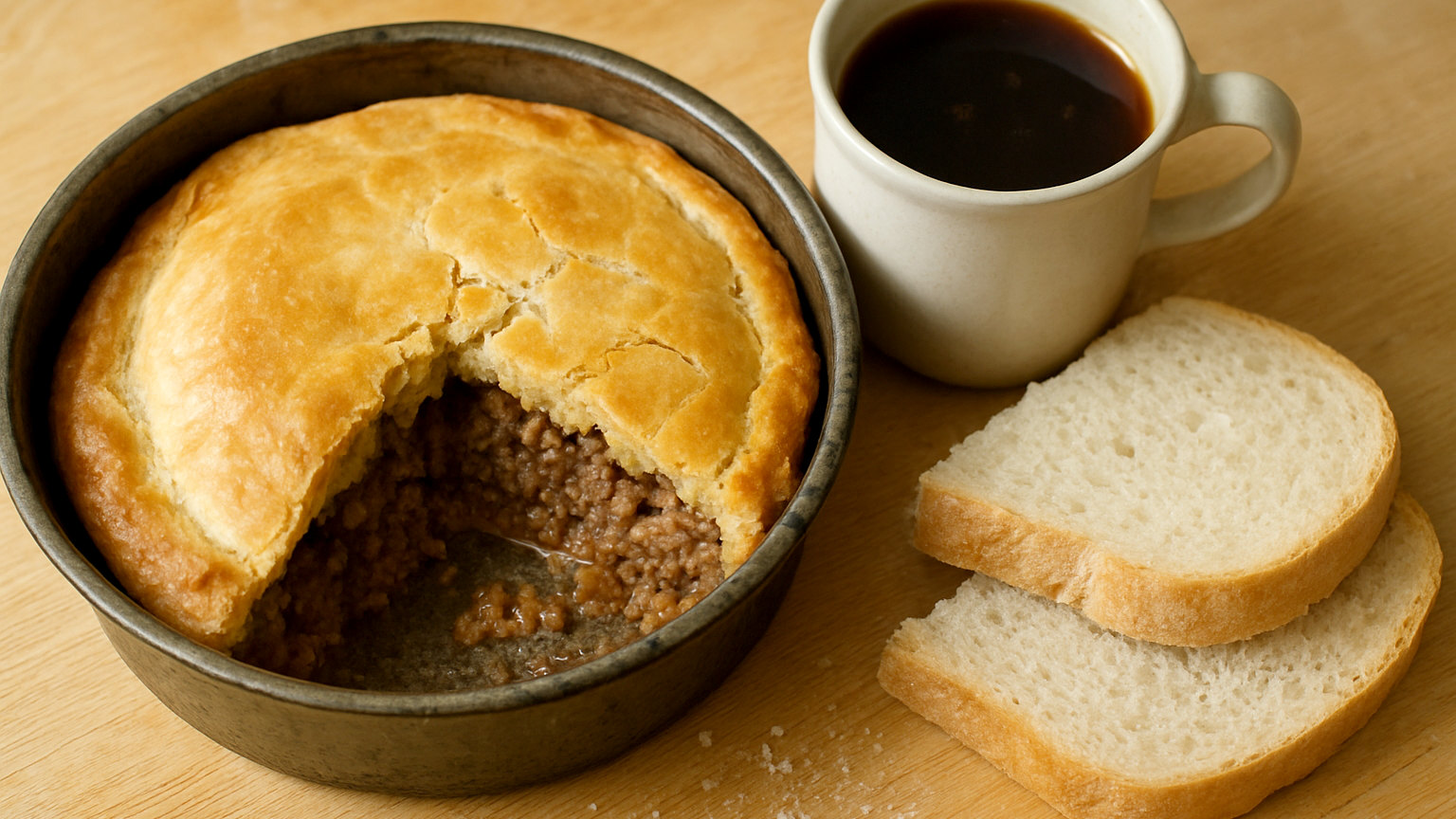
A rag pudding is minced beef and onion wrapped in suet pastry and boiled in a cloth, or rag, rather than steamed in a basin. It comes from Oldham and it is a straightforwardly cheap dish: mince, an onion and a suet crust, boiled for two hours. It predates the widespread availability of pudding basins, which is why the cloth is used.
What do you need for 4 people?
- For the pastry: 250g self raising flour, 125g shredded suet, a pinch of salt, about 150ml cold water
- 500g beef mince
- 2 onions, finely chopped
- 1 tablespoon plain flour
- 200ml beef stock
- 1 tablespoon Worcestershire sauce
- Salt and plenty of black pepper
- A large piece of muslin or clean cotton cloth and string
How do you make it?
- Brown the mince hard in a dry pan, then add the onions and cook for 10 minutes.
- Stir in the flour, then the stock and Worcestershire sauce.
- Simmer for 20 minutes until thick, season well and cool completely.
- Mix the flour, suet and salt, then add water to a soft dough.
- Roll into a rectangle about 30cm by 25cm.
- Spread the cold filling over, leaving a border, and roll up like a swiss roll.
- Wrap in a scalded, floured cloth and tie both ends and the middle.
- Boil in a large pan of water for 2 hours, topping up as needed.
The filling must be completely cold before it goes on the pastry. Warm filling melts the suet immediately, the pastry tears as you roll it, and the whole thing leaks into the water.
Why boil it in a cloth?
It predates cheap pudding basins and it lets the pudding be made as a long roll rather than a dome, which portions into slices.
Scald the cloth and flour it first, as you would for a clootie dumpling.
How tightly should it be tied?
Firmly, but leaving a little slack, since the suet pastry expands considerably as it cooks.
Tie the ends first, then a loose tie around the middle.
Why mince rather than steak?
Cost. Mince was what an Oldham household could afford, and it cooks in twenty minutes rather than two hours before it goes in the pastry.
The pudding is a cheap dish by design.
Can it be steamed instead?
Yes, wrapped in greaseproof paper and foil and steamed for the same two hours, which is easier and less traditional.
Why is it called a rag pudding?
After the cloth it is boiled in. Oldham was a cotton town and offcuts of cloth were plentiful.
How is it different from a steak pudding?
A steak pudding uses chunks of stewing beef in a basin lined with suet pastry. A rag pudding uses mince and is rolled and boiled in cloth.
Can other fillings be used?
Steak and kidney, or minced lamb, both work in the same pastry and cloth. Beef mince is the traditional Oldham version.
What should you serve with it?
Mushy peas, chips and gravy, which is how it is served in Oldham chip shops.
How thick should the pastry be?
About 5mm rolled out. Suet pastry swells during boiling, so anything thicker gives a heavy, doughy crust.
How do you know it is cooked?
Two hours at a steady boil is reliable. The pastry should be firm and cooked through when unwrapped.
Why suet rather than shortcrust?
Suet pastry survives two hours of boiling, which shortcrust would not. It also stays soft and absorbs the gravy from the filling.
It is the standard pastry for any boiled or steamed pudding.
How is it served?
Unwrapped from the cloth and cut into thick slices, with plenty of gravy poured over.
It is soft rather than crisp, which is the nature of a boiled pudding.
How long does it keep?
Two days refrigerated and it reheats by steaming for 30 minutes.
Cool it quickly and refrigerate within two hours, in line with Food Standards Agency guidance.
See also Black Pudding, or browse more Regional recipes.


