
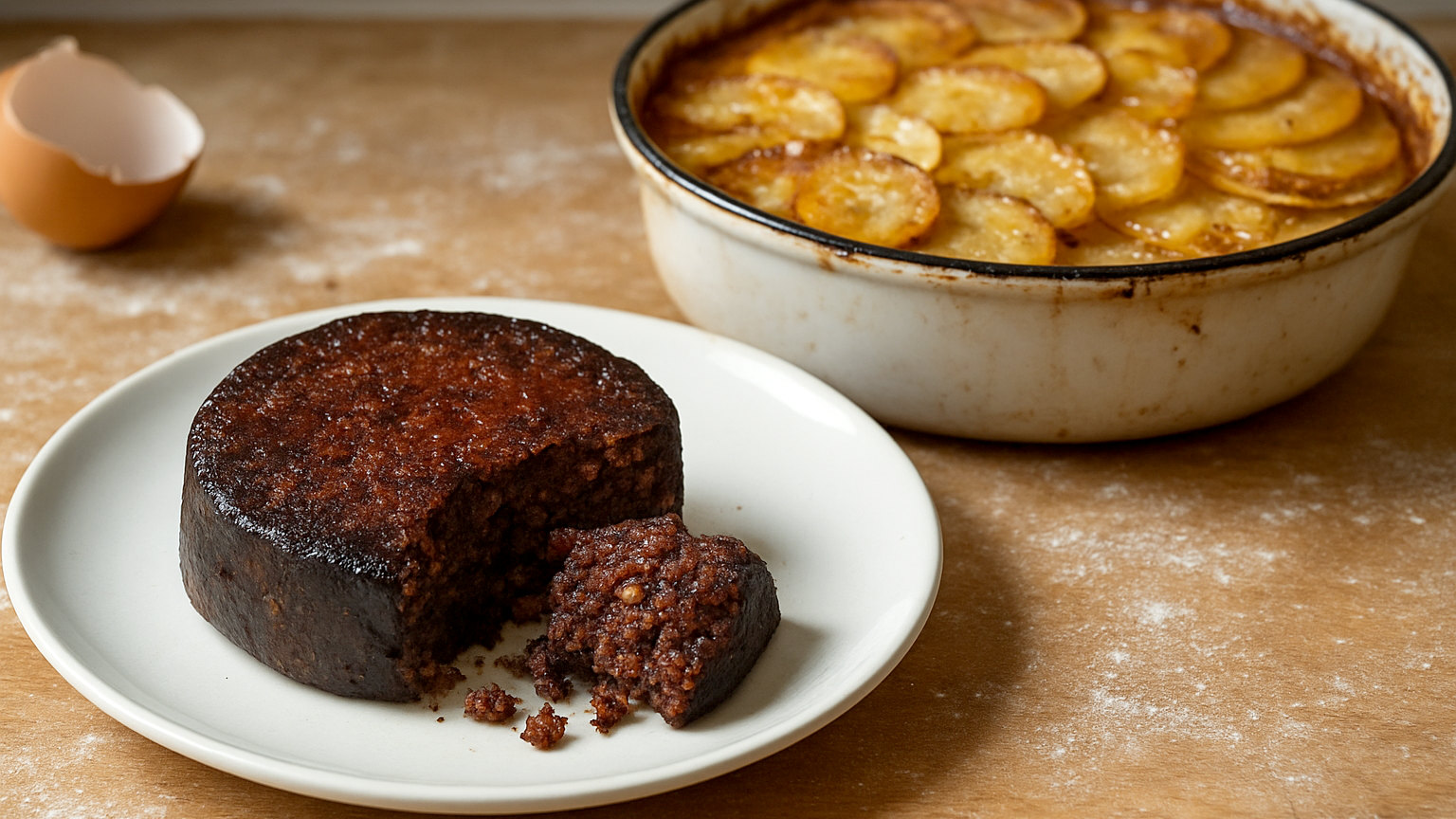
Black pudding is blood, fat and a cereal, usually oatmeal or barley, seasoned and cooked in a casing. It is eaten across Europe in various forms and the northern English version is distinctive for its high oatmeal content, which gives it a coarser, crumblier texture than the smooth blood sausages of France and Spain.
What is actually in it?
Pork blood, pork fat or beef suet, pinhead oatmeal or barley, onion and seasoning, most often black pepper, mace and pennyroyal.
The oatmeal absorbs the blood and gives it structure.
Is it already cooked?
Yes, and that changes how you treat it entirely. Black pudding is cooked during manufacture, so it needs heating through and crisping rather than cooking from raw.
Three minutes a side in a hot pan is enough.
Why is Bury famous for it?
Bury market has sold it since the nineteenth century and Bury black pudding holds protected status, which ties the name to a defined area and method.
It is traditionally sold boiled and eaten with mustard, standing at the stall.
How should it be cooked?
Sliced about 1cm thick and fried in a hot dry or lightly oiled pan until crisp at the edges and slightly split.
It can also be grilled, baked or, in the Bury tradition, boiled in its skin.
Can it be baked or grilled?
Both work. Bake slices at 190C fan for 12 minutes, or grill for 3 minutes a side. Frying gives the crispest edges.
Should the skin be removed?
Natural casings are edible and traditional. Plastic casings must be peeled off before cooking.
Check which you have. If it does not crisp and peels away in a sheet, it was plastic.
What is a hog pudding?
A West Country relative made with pork meat, fat and oatmeal but no blood, similar in idea to white pudding.
Regional blood and oatmeal sausages exist across Britain under many names.
What is white pudding?
The same idea without blood: oatmeal, pork, fat and seasoning. It is pale, milder and common in Northern Ireland and Scotland.
Can you make it at home?
It is possible and it requires fresh blood, which is difficult to source and must be very fresh for safety reasons.
Buying it from a butcher is the sensible course.
What does it go with?
A cooked breakfast above all. Also with scallops, apple, a poached egg, or in a salad with bacon and a mustard dressing.
It suits anything sweet or sharp, since it is rich and mineral.
How thickly should it be sliced?
About 1cm. Thin slices dry out and fall apart, and thick ones stay cold in the middle while the outside burns.
Two slices per person is a normal portion in a fry.
Is it good for you?
It is very high in iron and protein and also high in saturated fat and salt.
It is a rich food eaten in small quantities rather than a health food.
Can it be frozen?
Yes, for three months, sliced and layered with paper so you can take out what you need.
Why oatmeal rather than rice or barley?
Oats grew readily in the north and west of Britain where wheat did not, so oatmeal became the standard filler in northern black puddings.
Continental versions use rice, barley or breadcrumbs and are correspondingly smoother.
Why does it crumble in the pan?
It is meant to break apart slightly at the edges, which is where the crisp bits come from. Turning it too often breaks it up entirely.
Slice it thickly, about 1cm, and turn it once.
Is it eaten across Britain?
Widely, and it is most strongly associated with Lancashire and with Ireland and Scotland, where Stornoway black pudding also holds protected status.
How should it be stored?
Refrigerated and used by the date on the pack. Once cooked, cool it quickly and refrigerate within two hours.
Reheat once only until piping hot, in line with Food Standards Agency guidance.
See also Rag Pudding, or browse more Regional recipes.


