
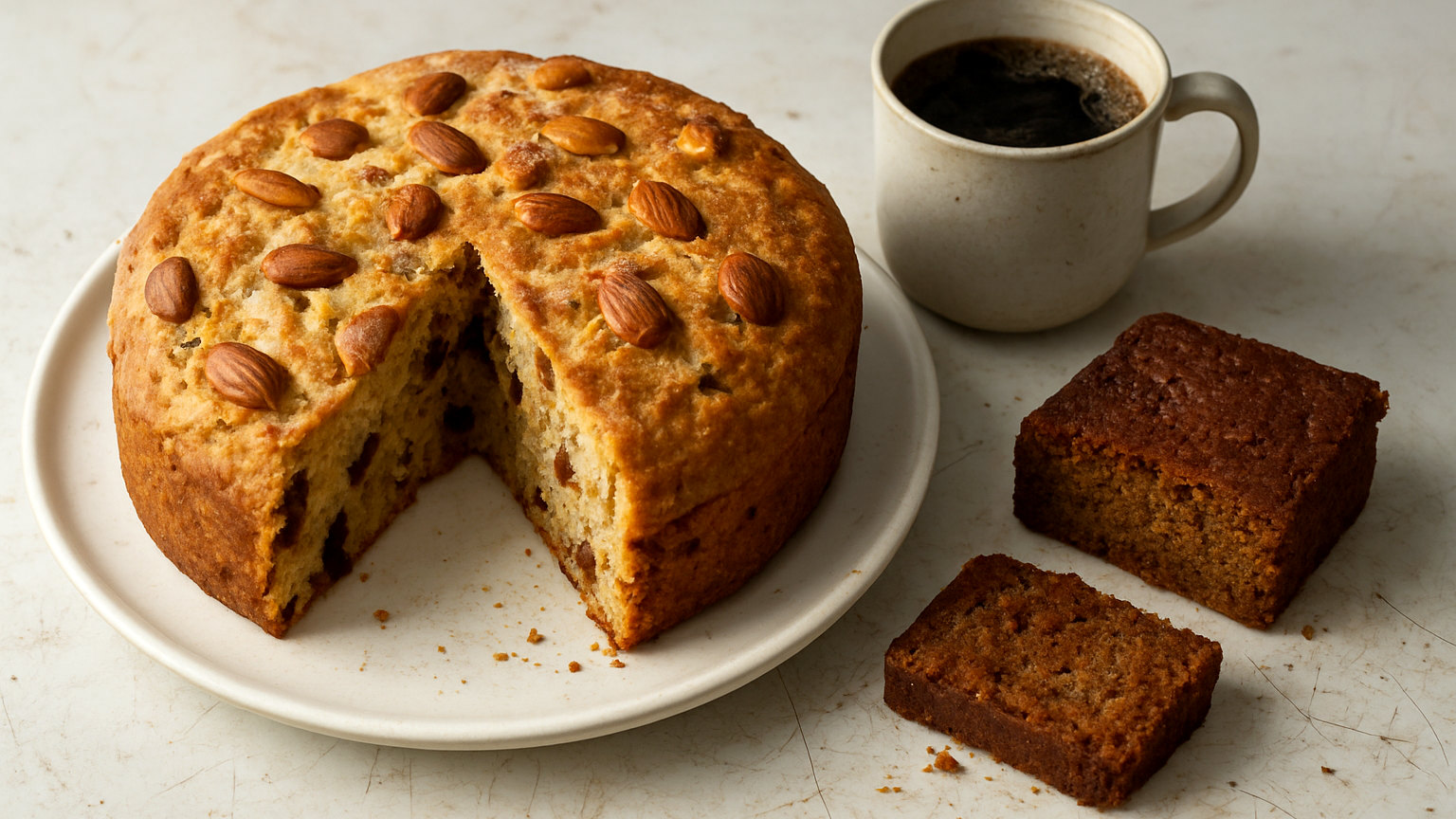
Fat rascals are large, rich fruited buns from Yorkshire, somewhere between a rock cake and a scone, traditionally decorated with glace cherries and blanched almonds. They are associated with Yorkshire tea rooms, where the decorated version has become famous. The dough is rubbed in like pastry and takes about ten minutes to make.
What do you need for 8 rascals?
- 350g self raising flour
- 175g cold butter, diced
- 125g caster sugar
- 150g mixed dried fruit
- Zest of 1 orange and 1 lemon
- 1 teaspoon mixed spice
- 2 eggs, beaten, plus 1 for glazing
- About 3 tablespoons milk
- Glace cherries and blanched almonds to decorate
How do you make them?
- Heat the oven to 180C fan, 200C conventional, gas mark 6.
- Rub the cold butter into the flour until it resembles breadcrumbs.
- Stir in the sugar, dried fruit, zests and mixed spice.
- Add the beaten eggs and enough milk to make a stiff dough.
- Shape into 8 rounds about 8cm across and 3cm thick.
- Sit them on a lined tray, well spaced.
- Brush with beaten egg and press on cherries and almonds.
- Bake for 18 to 20 minutes until golden.
Keep the dough stiff rather than soft. A wet dough spreads on the tray into flat biscuits. It should hold its shape when patted into a round and feel firmer than a scone dough.
Why are they called that?
The name is old Yorkshire dialect and the usual explanation is simply that they are rich and generously sized.
Recipes appear under the name from the nineteenth century.
How are they different from rock cakes?
Fat rascals are richer, with more butter, sugar and fruit, and they are shaped into neat rounds rather than spooned in rough heaps.
They are also considerably larger.
Should the dough rest?
No. Self raising flour starts working as soon as the liquid goes in, so they should be shaped and baked straight away.
Chilling the shaped rounds briefly is different and does help with spreading.
How are they different from scones?
The dough is stiffer, sweeter and much fruitier, and they are not split or buttered.
A scone is a vehicle for cream and jam and a fat rascal is eaten as it is.
Should they be glazed?
Beaten egg gives a deep golden shine and helps the almonds and cherries stick. Milk gives a paler, softer finish.
What is the decoration for?
Two cherries and three almonds are pressed on to make a face, which is how the well known Yorkshire tea room version is finished.
Older versions were plain.
Why both orange and lemon zest?
The citrus lifts what would otherwise be a heavy, sweet bun. Both together give more depth than either alone.
Can they be made smaller?
Twelve smaller ones bake in about 14 minutes and suit a tea table better, though the size is part of the character.
How large should they be?
Generous, about 120g each, which is the point of them. Eight from this quantity is right.
Do the almonds need blanching?
Blanched almonds are sold ready prepared. To do it yourself, pour boiling water over whole almonds, wait a minute and the skins slip off.
Skin on almonds look wrong on the traditional decoration.
Should they be eaten warm?
Warm from the oven with butter, or cold with tea. They are good either way.
Can other fruit go in?
Sultanas, raisins and currants in any combination, plus chopped glace cherries or candied peel.
About 150g of fruit for this quantity of flour is generous and correct.
Why do they spread?
The dough was too wet or the butter too soft. Add the milk a tablespoon at a time and stop as soon as it comes together.
Chilling the shaped rounds for twenty minutes helps considerably.
How long do they keep?
Three days in a tin and they are best on the day. They freeze for a month and refresh at 160C fan for 5 minutes.
Worth reading next: Black Pudding. There is more in our Regional recipes.


