
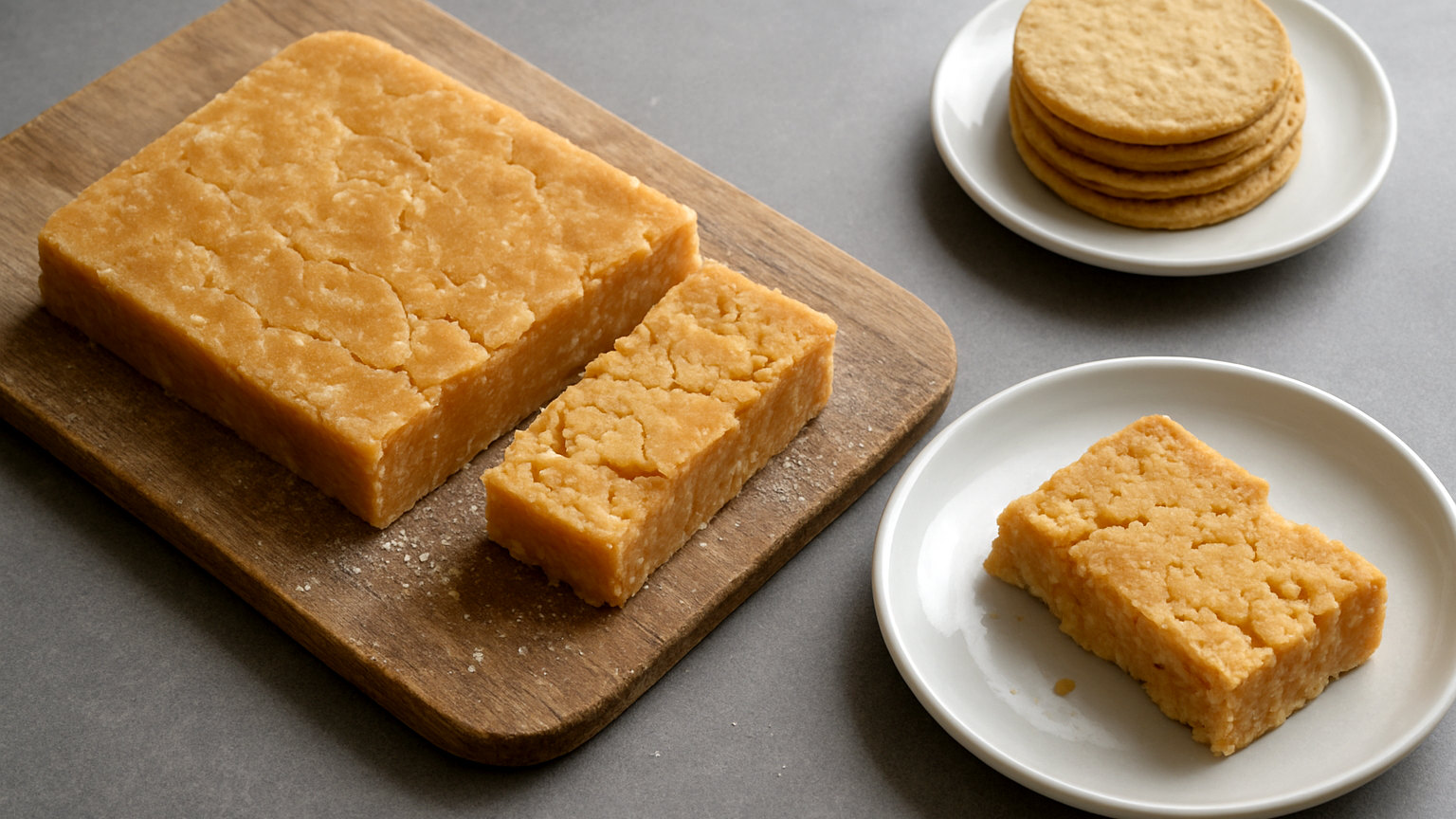
Tablet is a Scottish confection made from sugar, milk and butter, boiled to a specific temperature and then beaten until it grains. The result is crumbly and brittle rather than chewy, which is what distinguishes it from fudge. It is not difficult and it is entirely unforgiving about temperature, so a sugar thermometer is close to essential.
What do you need for about 40 pieces?
- 900g granulated sugar
- 250ml whole milk
- 100g butter
- 397g tin of condensed milk
- 1 teaspoon vanilla extract
- A pinch of salt
How do you make it?
- Line a 20cm by 30cm tin with baking paper.
- Melt the butter with the milk in a large heavy pan over a low heat.
- Add the sugar and stir until completely dissolved before it boils.
- Bring to the boil and add the condensed milk.
- Boil, stirring constantly, for 20 to 25 minutes until it reaches 115C.
- Take off the heat and add the vanilla and salt.
- Beat hard with a wooden spoon for 5 to 10 minutes until it thickens and loses its gloss.
- Pour into the tin, score into squares as it sets, and cut when cold.
Dissolve the sugar completely before it boils. Any undissolved crystals at that stage will seed the whole batch and give a gritty, sandy tablet rather than a fine grained one.
What is soft ball stage?
115C to 118C, at which a drop of the mixture in cold water forms a soft ball that flattens between the fingers.
A digital thermometer is far more reliable than the water test.
Why beat it?
Beating as it cools forces the sugar to crystallise into fine grains, which is what gives tablet its characteristic crumble.
Fudge is beaten less and at a lower temperature, so it stays smooth and chewy.
How do you know when to stop beating?
The mixture thickens noticeably, loses its shine and starts to drag on the spoon. It happens fairly suddenly.
Pour it immediately at that point, since it sets fast.
What pan should you use?
The largest heavy based pan you have. The mixture rises dramatically when it boils and a small pan will overflow.
It should be no more than a third full at the start.
Why did it not set?
It did not reach 115C. Return it to the pan, add a splash of milk and reboil to temperature.
Why is it grainy and hard?
It went above 118C, or the sugar was not fully dissolved at the start.
Overcooked tablet is brittle and difficult to cut.
Is a thermometer essential?
Close to it. The window between soft ball and overcooked is narrow, and a digital probe removes the only real difficulty in the recipe.
The cold water test works and is considerably less precise.
How is it different from fudge?
Tablet is boiled hotter and beaten harder, giving a brittle, grainy texture. Fudge is softer, chewier and smoother.
Does the weather matter?
It does. Humid days make sugar work harder and tablet can stay tacky, which is why it is traditionally made in cold weather.
A dry kitchen gives a cleaner set.
How much does this make?
About 1.5kg, which is 40 generous pieces. It halves cleanly if that is too much.
Can you flavour it?
Whisky, vanilla, ginger or a little coffee. Add it after the pan comes off the heat.
Why is it a Scottish sweet?
It appears in Scottish cookery from the eighteenth century, when sugar became widely available, and it has stayed a fixture of home baking and church sales.
It is sold in tourist shops across Scotland and is far better homemade.
How do you cut it neatly?
Score the squares while it is still warm and soft, then cut through properly once it is completely cold and firm.
Cutting cold tablet without scoring first shatters it.
How long does it keep?
Two weeks in an airtight tin, and it hardens over that time. It freezes for three months.
Keep it away from damp, which makes it sticky.
See also Scotch Broth, or browse more Regional recipes.


