
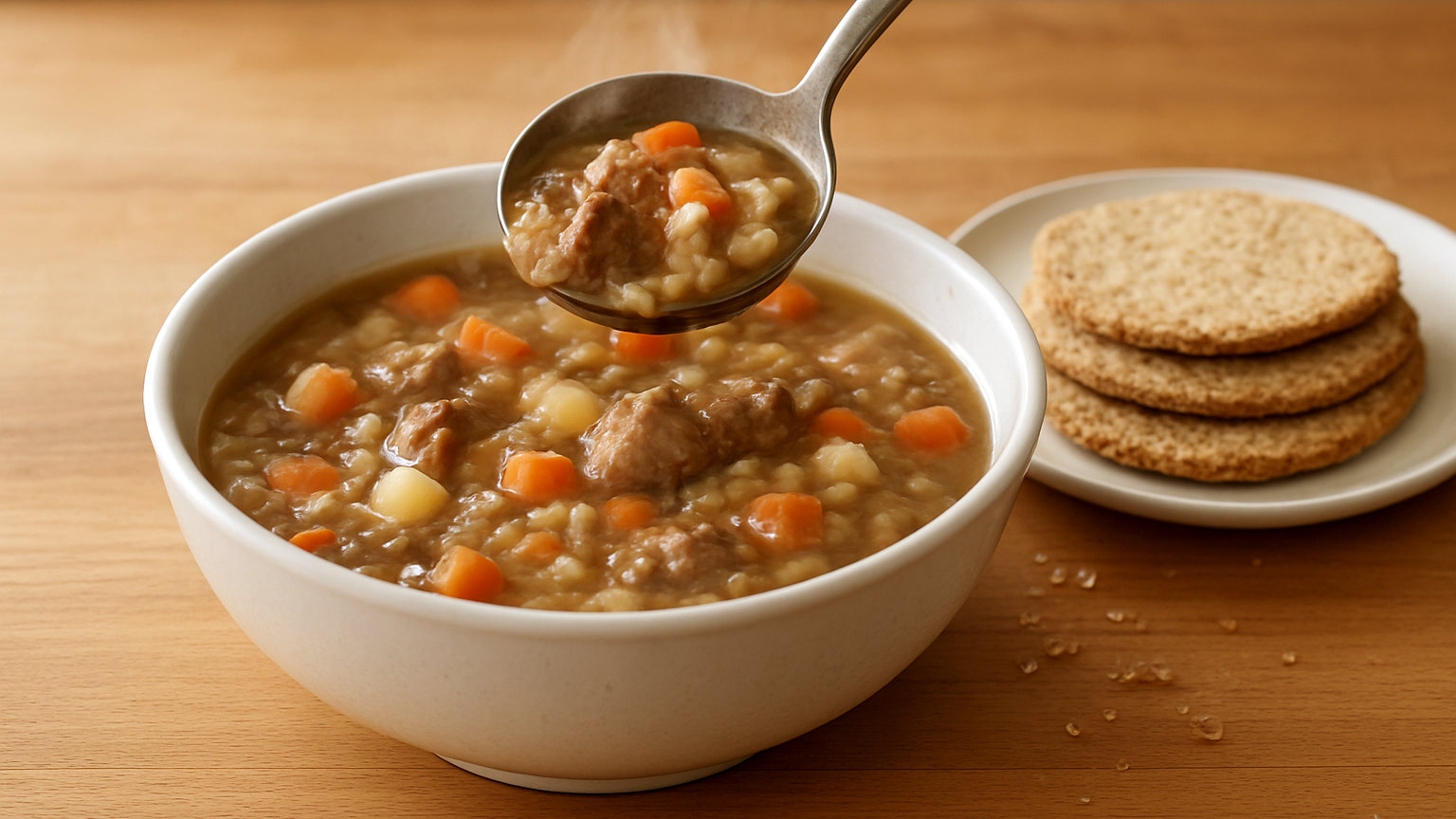
Scotch broth is a thick soup of lamb or mutton, pearl barley, dried pulses and root vegetables, simmered slowly in one pot. It is closer to a stew than a soup by the end, and the barley is what does the thickening. Like most things of this kind it is better reheated the next day than eaten fresh.
What do you need for 6 people?
- 800g lamb neck on the bone, or scrag end
- 100g pearl barley
- 75g dried yellow split peas, soaked overnight
- 2 carrots, 1 large leek, 1 onion and 200g swede, all diced
- 2 sticks of celery, diced
- 2 litres cold water or light stock
- 1 bay leaf and a few sprigs of thyme
- Salt, black pepper and chopped parsley
How do you make it?
- Put the lamb, barley, soaked peas, bay and thyme in a large pan with the cold water.
- Bring slowly to the boil and skim off the scum thoroughly.
- Simmer gently, partly covered, for 1 hour 30 minutes.
- Add all the diced vegetables.
- Simmer for a further 45 minutes until everything is tender.
- Lift out the lamb, strip the meat from the bones and chop it.
- Return the meat to the pan and discard the bones.
- Season well and finish with parsley.
Start it in cold water and skim it properly. Bringing meat to the boil from cold draws out the scum, and taking five minutes to remove it is the difference between a clear broth and a cloudy, greyish one.
Which cut of lamb?
Neck, scrag end or shoulder on the bone. Cheap cuts with plenty of connective tissue and bone give the best broth.
Mutton is traditional and needs longer, around two and a half hours.
Why pearl barley?
It releases starch as it cooks, which thickens the broth, and it swells to about three times its size.
100g is plenty. More gives you porridge rather than soup.
Can it be made without meat?
A vegetable version with a good stock, barley and plenty of root vegetables works, though the depth from lamb bones is what defines the original.
Add a strip of kombu or a spoonful of miso for savoury depth.
Do the peas need soaking?
Yellow split peas benefit from an overnight soak, though they will soften in a long simmer regardless.
Some versions use dried marrowfat peas or lentils instead.
Why add vegetables later?
They only need 45 minutes. Added at the start they disintegrate completely into the broth.
Cut them into even dice so they cook at the same rate.
Should the fat be removed?
Chill it overnight and the fat sets on top and lifts off in a sheet, which is the easiest method by far.
Keep a little for flavour.
Was it always made with lamb?
Mutton was the usual meat historically, being cheaper and more available than lamb. It has a stronger flavour and needs longer cooking.
Mutton is worth seeking out if you can find it.
Is it a soup or a stew?
It sits between the two and thickens considerably overnight. Loosen it with stock or water when reheating.
How thick should it be?
Thick enough that a spoon leaves a brief trail. It should be substantial rather than watery, since the barley is doing the work.
It will thicken further as it stands.
What should you serve with it?
Bread and butter, or oatcakes. It is a complete meal in a bowl.
What is the difference from Irish stew?
Irish stew uses lamb, potato and onion with very little else and no barley. Scotch broth contains barley, pulses and a wider range of vegetables.
Scotch broth is soupier and Irish stew is drier.
Can it be made with beef?
Shin of beef works and gives a darker, heavier broth. Lamb or mutton is the traditional and lighter choice.
Can it be made ahead or frozen?
It improves overnight and freezes for three months.
Cool it quickly, refrigerate within two hours and reheat once only until piping hot, in line with Food Standards Agency guidance.
If that was useful, Tablet covers related ground, and there is plenty more in Regional recipes.


