
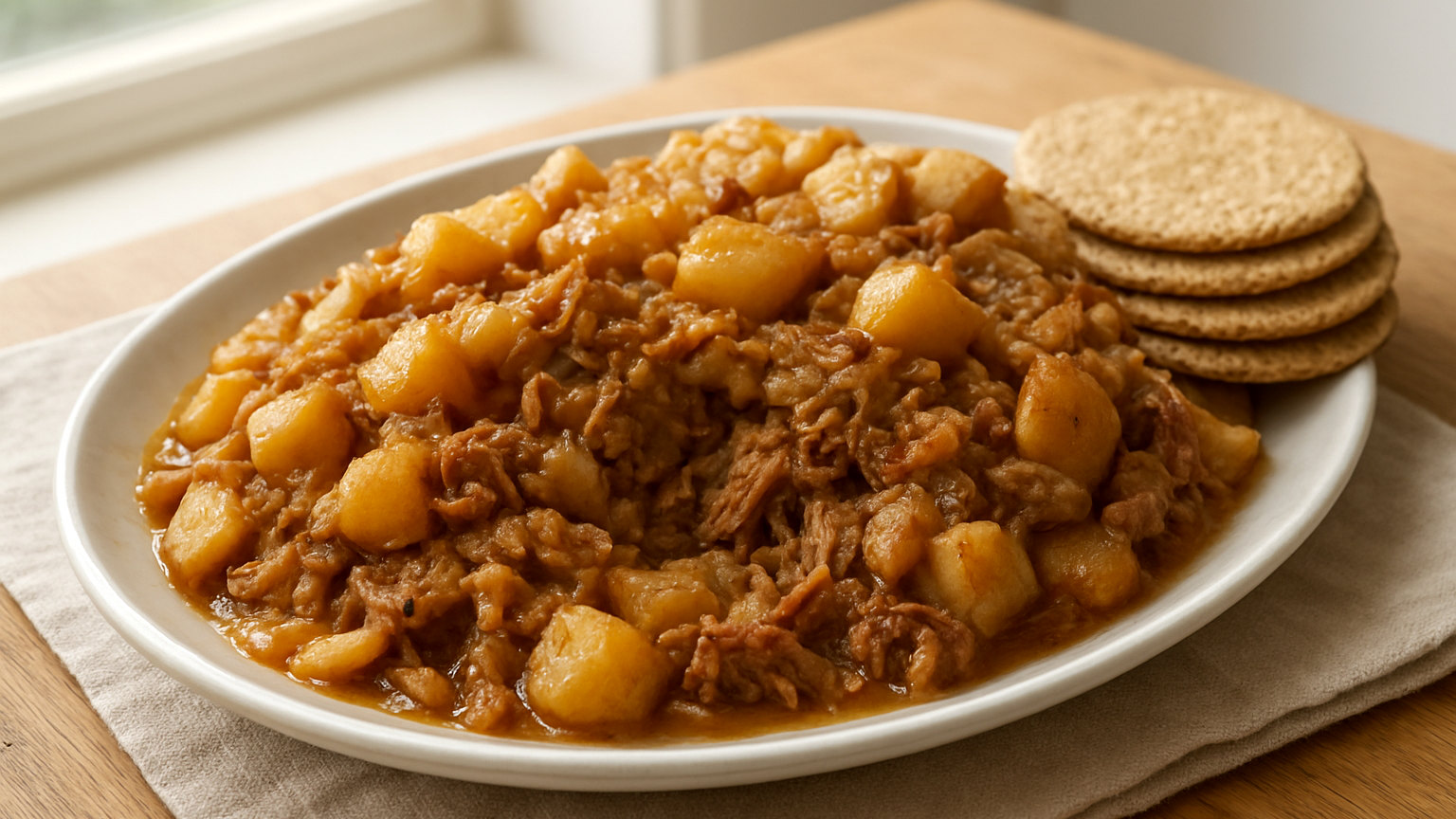
Stovies are potatoes stewed slowly with onions and whatever meat is left from a roast, cooked until the potatoes collapse and thicken everything around them. The name comes from stoving, an old term for slow cooking in a closed pot. There is no single correct version and most Scottish families are certain theirs is it.
What do you need for 4 people?
- 1kg floury potatoes, peeled and thickly sliced
- 2 large onions, sliced
- 2 tablespoons beef dripping or the fat from a roast
- 300g leftover roast beef or lamb, shredded
- About 300ml beef stock or leftover gravy
- Salt and plenty of black pepper
- Oatcakes and pickled beetroot to serve
How do you make them?
- Melt the dripping in a heavy pan with a tight lid.
- Cook the onions gently for 15 minutes until soft and golden.
- Add the potato slices and turn them in the fat.
- Pour in enough stock to come about a third of the way up.
- Season well, cover tightly and cook on the lowest heat for 45 minutes.
- Stir occasionally, crushing some of the potato against the pan.
- Add the shredded meat and cook for a further 15 minutes.
- Season again and serve hot.
Use far less liquid than you think. The potatoes release a great deal of their own moisture, and stovies should be thick and stodgy rather than swimming. A third of the way up the pan is plenty.
Is it a Sunday or a Monday dish?
Traditionally Monday, made from what was left of the Sunday roast along with the dripping from the tin.
It is one of the better uses for leftover roast meat.
What meat should go in?
Leftover roast beef or lamb is traditional. Corned beef is a common and entirely legitimate version, and some households use sausage or bacon.
Meat is optional altogether in some versions.
Why dripping rather than oil?
Beef dripping or the fat from the roasting tin carries the flavour of the roast into the dish, which is what makes stovies taste of Sunday.
Butter works and oil is the least interesting choice.
Which potatoes work best?
Floury varieties such as Maris Piper or King Edward, which break down and thicken the pot.
Waxy potatoes stay in neat slices, which is the wrong texture entirely.
How thick should they be?
Thick enough to eat with a fork. Some cooks aim for a rough mash and others keep more slices intact.
Both are correct depending on where you are from.
What should you serve with them?
Oatcakes and pickled beetroot, which is the traditional combination and provides the sharpness the dish needs.
Brown sauce is common.
How long do they actually need?
About an hour in total on a low heat. They cannot be rushed, since the point is that the potatoes break down rather than simply boil.
Stir every fifteen minutes and check nothing is catching.
Why do they burn on the bottom?
The heat was too high or the pan too thin. Use the lowest setting and a heavy pan with a tight lid.
A slightly caught base is considered by some to be the best part.
Can they be made without leftovers?
Yes, using stock and a tin of corned beef, which is how a great many households make them.
Where does the name come from?
From stove, in the old sense of to stew slowly in a closed pot, which is exactly what the dish is.
The word appears in Scots cookery from the eighteenth century.
Are there regional versions?
Considerable variation. Some areas keep the potatoes in distinct slices, others mash them completely, and the choice of meat varies by household.
Aberdeenshire stovies are often drier than those made further south.
How long do they keep?
Two days refrigerated and they reheat well in a pan.
Cool quickly, refrigerate within two hours and reheat once only until piping hot, in line with Food Standards Agency guidance.
Worth reading next: Clootie Dumpling. There is more in our Regional recipes.


