
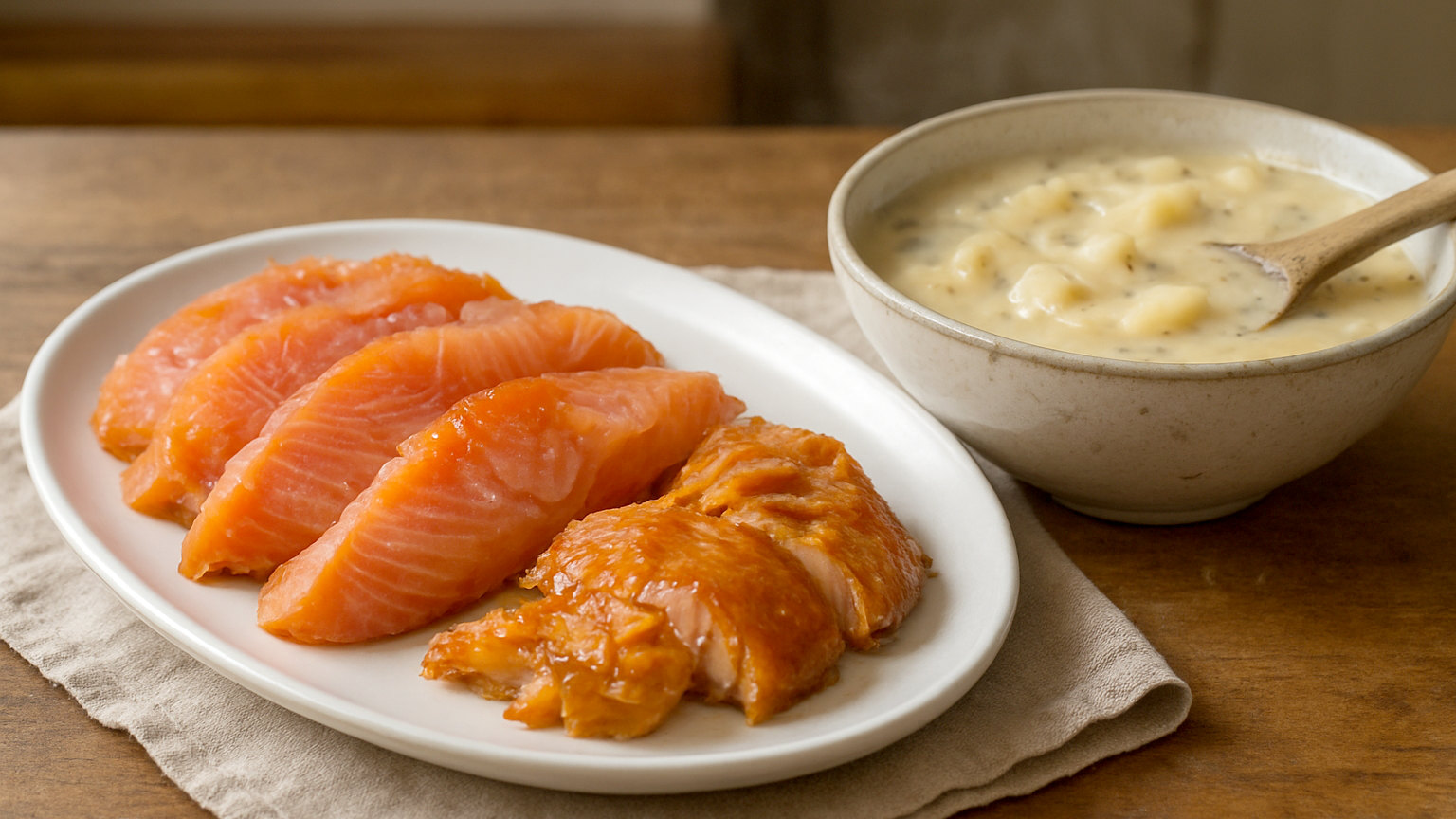
Scotland produces a great deal of the smoked fish eaten in Britain, and the terms on the packet are frequently confusing. Cold smoked and hot smoked are entirely different processes producing entirely different things, and several regional specialities have protected status. Knowing the distinctions makes the fish counter considerably easier.
What is cold smoked salmon?
Salmon cured in salt and then smoked below 30C, which flavours it without cooking it. The flesh stays translucent and silky and it is sliced thinly.
This is what most people mean by smoked salmon.
What is hot smoked salmon?
Hot smoking cooks the fish as well as flavouring it. Smoked at around 80C, the flesh turns opaque and flakes like a cooked fillet.
It is used in salads, kedgeree and fish cakes rather than sliced.
Is Scottish salmon farmed or wild?
Almost all of it is farmed. Wild Atlantic salmon stocks are severely depleted and wild netted salmon is scarce and expensive.
Label Rouge Scottish salmon is a quality mark applied to certain farmed fish.
What is an Arbroath smokie?
A whole haddock, headed, salted and hot smoked over hardwood in pairs, from the Angus fishing town. It holds protected status.
It is fully cooked and can be eaten cold or warmed through with butter.
What is a Finnan haddie?
Cold smoked haddock from Findon in Aberdeenshire, split and smoked on the bone. It needs cooking, unlike a smokie.
It is the traditional fish for cullen skink.
Is smoking a preservation method?
Historically yes, combined with salting, which is why so much traditional British fish is smoked. Modern smoking is mostly for flavour and the fish still needs refrigeration.
Do not treat smoked fish as shelf stable.
What is a kipper?
A herring split, salted and cold smoked. Loch Fyne kippers are among the best known Scottish ones.
They need brief cooking, usually grilled or poached in water with butter.
Is farmed salmon sustainable?
It is debated. Farming reduces pressure on wild stocks but raises concerns about sea lice, escapes and feed. Certification schemes such as the RSPCA Assured and ASC marks indicate higher standards.
Check the label rather than assuming either way.
Should smoked fish be dyed?
Undyed is better in almost every case. Dyed smoked haddock is coloured artificially and the dye leaches into any sauce or soup.
Undyed fish is pale straw coloured and tastes cleaner.
Can you smoke fish at home?
Hot smoking is straightforward in a stovetop smoker or a kettle barbecue with woodchips, and it cooks the fish as it goes.
Cold smoking needs a separate smoke generator and careful curing, since the fish is never cooked.
How do you judge quality?
Look for fish that smells of smoke and the sea rather than sharply fishy, with firm rather than slippery flesh.
Very pale, wet, cheap smoked salmon has often been brine injected and smoked briefly.
How should it be stored?
Refrigerated and used by the date on the pack. Cold smoked fish is not cooked, so it should be treated as a fresh product.
Once opened, use within two or three days, in line with Food Standards Agency guidance.
What wood is used?
Oak is the most common in Scotland, and beech and whisky barrel oak are also used. The wood affects the flavour noticeably.
Arbroath smokies are traditionally smoked over hardwood in a half barrel.
How is smoked salmon sliced?
Very thinly, at a shallow angle, with a long flexible knife, working from the tail towards the head.
Pre sliced is usually the practical choice at home.
What should you serve with it?
Brown bread and butter, lemon and black pepper for cold smoked. Hot smoked suits salads, scrambled eggs and kedgeree.
Is cold smoked fish safe for everyone?
The Food Standards Agency advises that pregnant women may wish to avoid cold smoked fish, since it is not cooked and carries a small listeria risk.
Hot smoked and thoroughly cooked fish do not carry the same concern.
For something along the same lines, see Oatcakes, or browse all our Regional recipes.


