
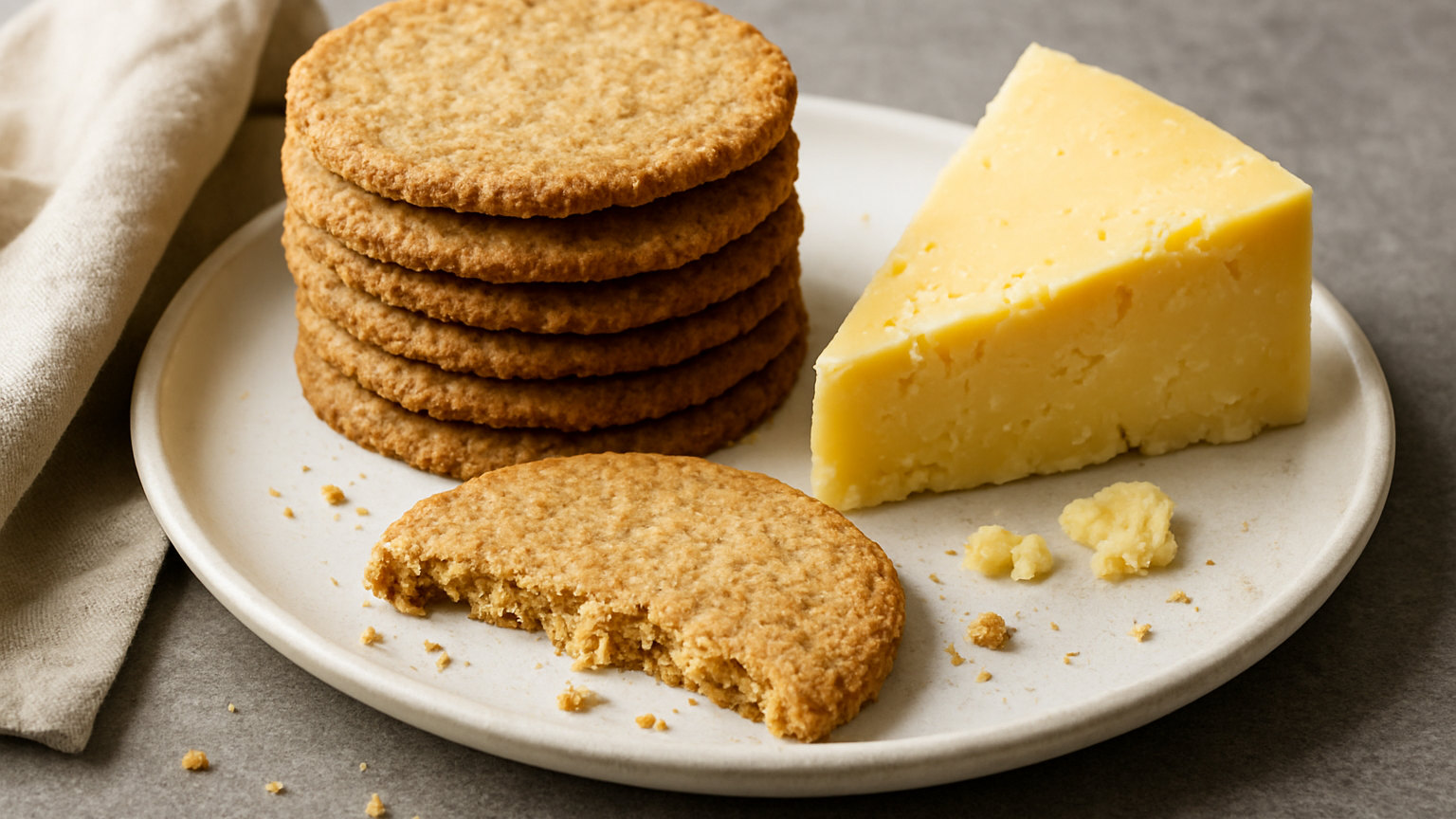
Oatcakes are oatmeal, a little fat, salt and hot water, and nothing else. They have been a staple of Scottish baking for centuries, made on a girdle over a fire long before ovens were common. The only real trick is speed: the dough has to be rolled and cut while it is still warm, because it crumbles once it cools.
What do you need for about 16 oatcakes?
- 250g medium oatmeal, plus extra for rolling
- Half a teaspoon of salt
- Half a teaspoon of bicarbonate of soda
- 50g melted butter, lard or beef dripping
- About 100ml boiling water
How do you make them?
- Heat the oven to 170C fan, 190C conventional, gas mark 5.
- Combine the oatmeal, salt and bicarbonate of soda.
- Stir in the melted fat.
- Add boiling water a little at a time until it forms a stiff dough.
- Work quickly while it is warm.
- Roll out on a surface dusted with oatmeal to about 3mm.
- Cut into rounds or triangles.
- Bake for 20 to 25 minutes until dry and only lightly coloured.
Roll them while the dough is still hot. Oatmeal has no gluten, so the dough holds together only while the starch is warm and gelatinised. Left to cool for ten minutes it becomes impossible to roll without cracking.
Which oatmeal should you use?
Medium oatmeal for a standard oatcake. Fine gives a smoother, more delicate biscuit and pinhead gives a very rough, rustic one.
Rolled porridge oats will not work, since they are flattened rather than ground.
Why boiling water?
It gelatinises the starch in the oatmeal, which is what binds the dough in the absence of gluten.
Cold water gives a mixture that will not hold together at all.
Why should they stay pale?
An oatcake should be dried out rather than browned. Deep colour means the oats have toasted too far and taste bitter.
They crisp further as they cool, so take them out while they still feel slightly soft.
How thin should they be?
About 3mm. Thicker oatcakes stay soft in the middle and thinner ones break when handled.
How do you cut them?
Into rounds with a cutter, or rolled into a large circle and cut into triangles, which are called farls.
Farls waste no dough, since there are no trimmings to re roll.
What is a girdle?
A flat iron plate heated over a fire, the Scottish name for a griddle. Oatcakes were cooked on one for centuries before domestic ovens.
They can still be made this way, dry, for about 5 minutes a side.
How thick should the dough be mixed?
Stiff enough to hold together in a ball but not dry. Add the boiling water a tablespoon at a time, since oatmeal absorbs it unevenly.
What fat should you use?
Butter is the usual modern choice. Lard or beef dripping is traditional and gives a savoury, more old fashioned flavour.
Can they be made gluten free?
Oatmeal contains no wheat, so the recipe is naturally free of it provided the oats are certified gluten free and not contaminated during milling.
Check the pack if it matters medically, since most oats are processed alongside wheat.
What do you eat them with?
Cheese above all, particularly a crumbly Scottish cheddar or crowdie. Also smoked salmon, pate, or butter and honey.
How are they different from Staffordshire oatcakes?
Entirely. Staffordshire oatcakes are soft savoury pancakes made with a yeasted batter, not crisp biscuits.
Why bicarbonate of soda?
It lightens the texture slightly and helps them crisp. Traditional recipes often leave it out entirely.
Half a teaspoon for 250g of oatmeal is enough.
How do you stop them cracking?
Work fast while the dough is warm, and press any cracks in the edge back together as you roll.
Some raggedness at the edges is normal and expected.
How long do they keep?
Two weeks in an airtight tin. They soften in damp air and refresh at 150C fan for 5 minutes.
Next, try Scottish Salmon and Smoked Fish, or see the rest of our Regional recipes.


