
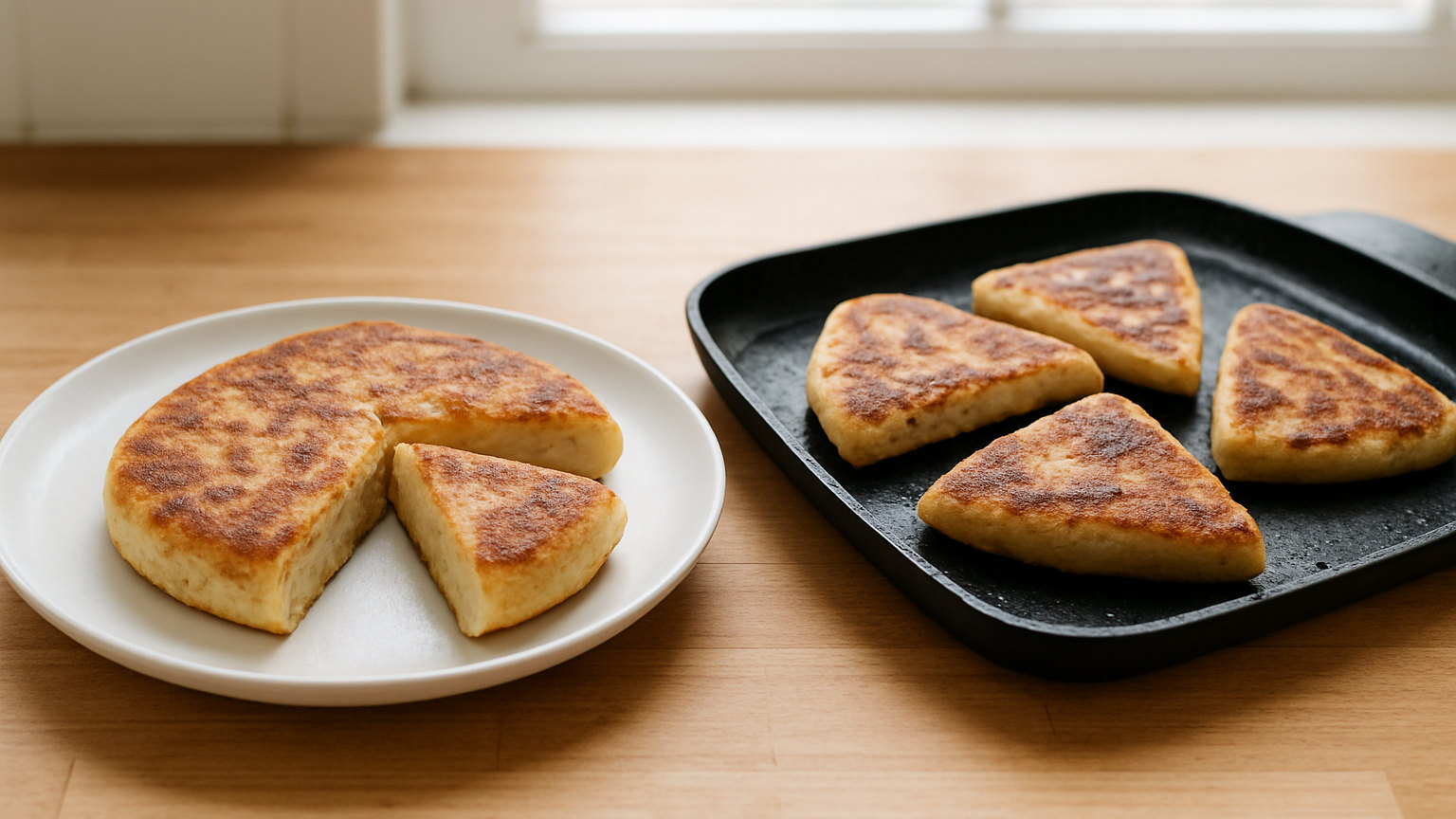
Potato bread, or fadge, is mashed potato bound with a small amount of flour and cooked flat on a griddle. It is a fixture of the Ulster fry and one of the best uses for leftover mash. The proportion of flour is the thing that matters: enough to hold it together and no more, or it tastes of raw pastry.
What do you need for 8 pieces?
- 500g floury potatoes, peeled and boiled
- 50g butter
- 100g plain flour, plus extra for rolling
- Half a teaspoon of salt
How do you make it?
- Boil the potatoes until tender, drain and steam dry thoroughly.
- Mash with the butter and salt while still hot, adding no milk.
- Work in the flour quickly while the mash is warm.
- Turn onto a floured surface and roll to about 5mm.
- Cut into a large round and divide into farls, or stamp out squares.
- Heat a heavy dry pan over a medium heat.
- Cook for 3 to 4 minutes a side until browned in patches.
- Cool on a rack, or eat straight away with butter.
Add the flour while the mash is still warm. Warm potato binds with far less flour than cold mash does, and every extra spoonful of flour makes the bread heavier and less potatoey.
What is the ratio?
About one part flour to five parts cooked potato by weight. That is the minimum that will hold together and roll.
More flour is easier to handle and worse to eat.
Why no milk in the mash?
Drier mash needs less flour. Milk adds moisture that then has to be absorbed by more flour.
Butter adds richness without the same problem.
Can it be baked instead of griddled?
It can, at 200C fan for about 15 minutes, though it will be drier and lacks the patchy griddled surface.
How is it different from a tattie scone?
Very little, and the two are close cousins. Northern Irish potato bread is often cut into farls or squares and made slightly thicker.
The method and ratio are effectively the same.
How is it eaten?
Fried in bacon fat as part of an Ulster fry, which is the main use, or buttered on its own while warm.
It is reheated in a pan rather than a toaster.
Should it be seasoned?
Salt in the dough and black pepper if you like. It is fairly plain by design, since it is usually fried in bacon fat.
Some households add a little chopped spring onion.
What is fadge?
The traditional Ulster name for it, still widely used, particularly for the thicker versions.
How much does it make?
Eight pieces from 500g of potato, which is enough for four people at breakfast.
It scales easily and freezes well, so a double batch is worth doing.
Why cook it dry?
A dry pan gives the floury, patchy surface it should have. The fat comes later, when it is fried for breakfast.
Why is it called bread?
It falls into the broad Irish and Scottish use of bread for anything griddled from a dough, which also covers soda bread and farls.
It contains flour, so the name is not unreasonable.
Which potatoes work best?
Floury varieties such as Maris Piper or Kerr Pink, which mash dry and fluffy.
Waxy potatoes give a wet, gluey dough that needs too much flour.
How thick should it be rolled?
About 5mm for farls that fry well. Some households make it thicker, closer to 1cm, which needs longer on the griddle.
Keep it even so it cooks at the same rate.
Can it be made with leftover mash?
Yes, and it is the usual way. Warm it gently first so it binds, and expect to need a little more flour if it contains milk.
It is one of the better uses for Sunday leftovers.
How long does it keep?
Two days refrigerated and it freezes for three months, layered with paper.
Cook it from frozen in a hot dry pan until piping hot, in line with Food Standards Agency guidance.
If that was useful, Wheaten Bread covers related ground, and there is plenty more in Regional recipes.


